The One-Handed Man Who Gave the World Don Quixote
He lost the use of an arm at sea, lost his freedom to pirates, and lost decades to poverty — yet from that wreckage came the first modern novel.
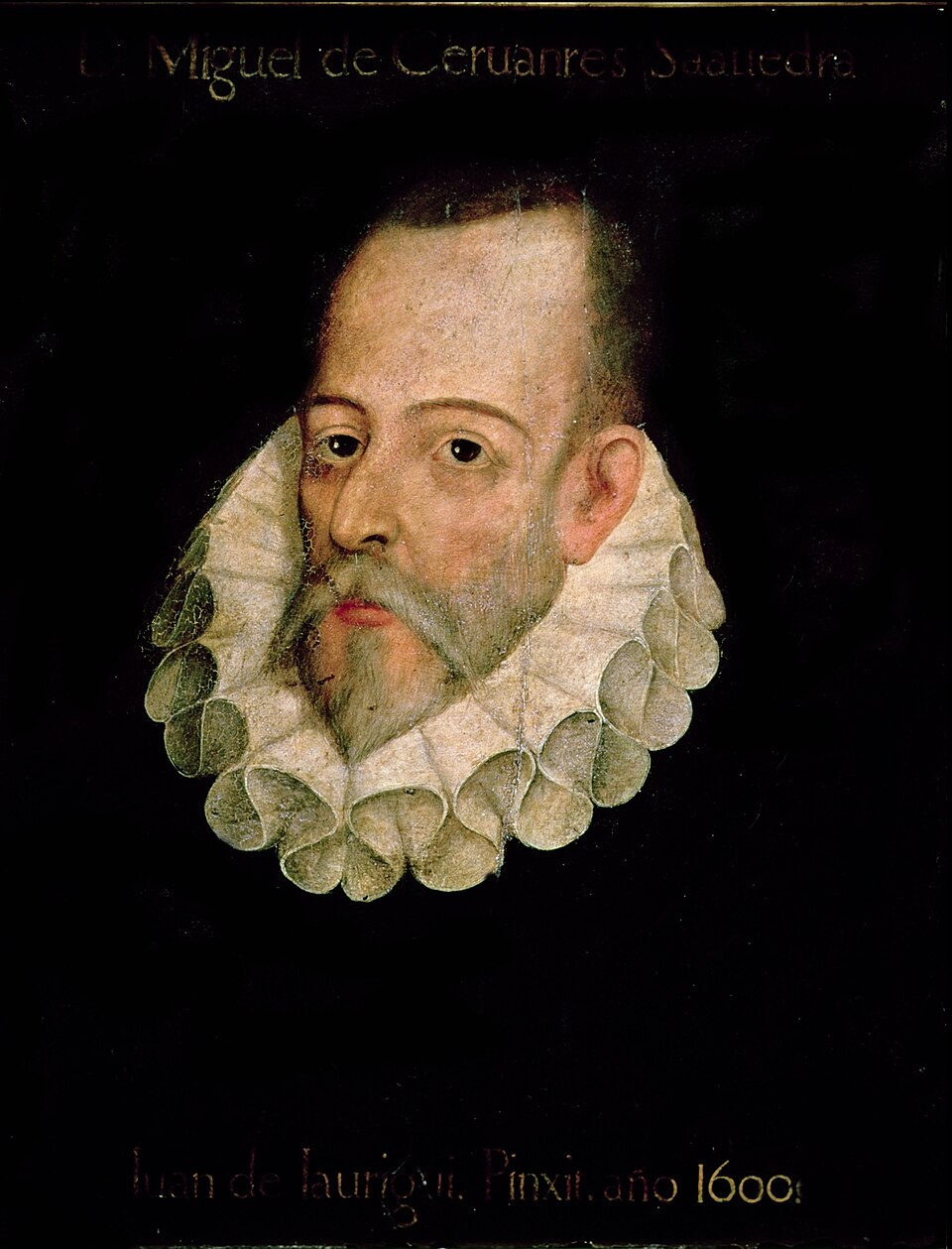
Miguel de Cervantes Saavedra was born around 29 September 1547 in Alcalá de Henares, the second son of a struggling barber-surgeon named Rodrigo and his resourceful wife Leonor de Cortinas. The family moved constantly, chasing work and dodging debt; Rodrigo was even imprisoned for it between 1553 and 1554, leaving Leonor to hold seven children together. Cervantes later described himself as a stutterer, and whether literal or figurative, the image of a hesitant boy destined to become the greatest voice in the Spanish language is one of literature's stranger ironies.
By 1569, trouble caught up with him: an arrest warrant, dated 15 September of that year, accused a Miguel de Cervantes of wounding a man named Antonio de Sigura in a duel. The punishment, if convicted, was severe — reportedly the loss of his right hand and ten years of exile. Whether guilty or simply unlucky in name, Cervantes fled Spain for Rome, where he found work in the household of Giulio Acquaviva, soon to become a cardinal.
War offered him a new path. When Pope Pius V called for a coalition against the Ottomans after Selim II seized Cyprus in 1570, Cervantes enlisted with the Spanish infantry gathering in Rome. He sailed to Naples, where Álvaro de Sande, a friend of the family and the military commander there, gave him a commission in the Tercio of Sicily.
On 7 October 1571, Cervantes fought aboard the galley Marquesa at the Battle of Lepanto, one of history's largest naval battles, where Christian and Ottoman fleets clashed in the Gulf of Patras. He was wounded twice in the chest, and a cannonball shattered his left hand, leaving it permanently useless — a wound he would carry, half-jokingly, as a badge of honor for the rest of his life. He continued serving as a soldier until 1575.
That year, misfortune struck again. On 26 September 1575, Barbary corsairs captured Cervantes in the Mediterranean and carried him into captivity in Algiers, where he lived from 1575 to 1580. Ransomed at last in 1580, he returned to Madrid a changed man — physically diminished, financially ruined, but alive.
More from People

Frida Kahlo: Painting Through the Pain
An iron handrail pierced a teenage girl's body on a Mexico City street — and out of that wreckage came one of the most searingly honest artists of the twentieth century.

The Ox-Cart and the Snow: Şerife Bacı's Last Road
Somewhere on a frozen road outside Kastamonu, a young mother pressed her body against a quilt to keep her infant warm through the night. By morning, she had become a legend.

Pompey the Great: The Friendship That Broke Rome
He was called 'the teenage butcher' by his enemies and 'the Great' by his mentor — and the empire he helped build would ultimately be the death of him.

The Third Pole: How Hunt, Hillary and Tenzing Conquered Everest
For decades the world's highest mountain had turned back every climber who dared it — sometimes swallowing them whole. In the spring of 1953, one expedition finally reached the point where the sky simply stopped going up.

Two Rivals Under One Roof: Picasso and Matisse
Long before they were named together as the twin poles of modern art, they were simply two names on the walls of the same small Paris gallery — one already known for wild colour, the other not yet known at all.

Fire and Ice: The Borg–McEnroe Rivalry
One man never raised his voice. The other rarely lowered his. Between them they produced two of the greatest matches tennis has ever seen.