The Pebble That Measured Infinity
Two men, an ocean apart, each claimed to have unlocked the mathematics of change itself — and the argument over who got there first would outlive them both.
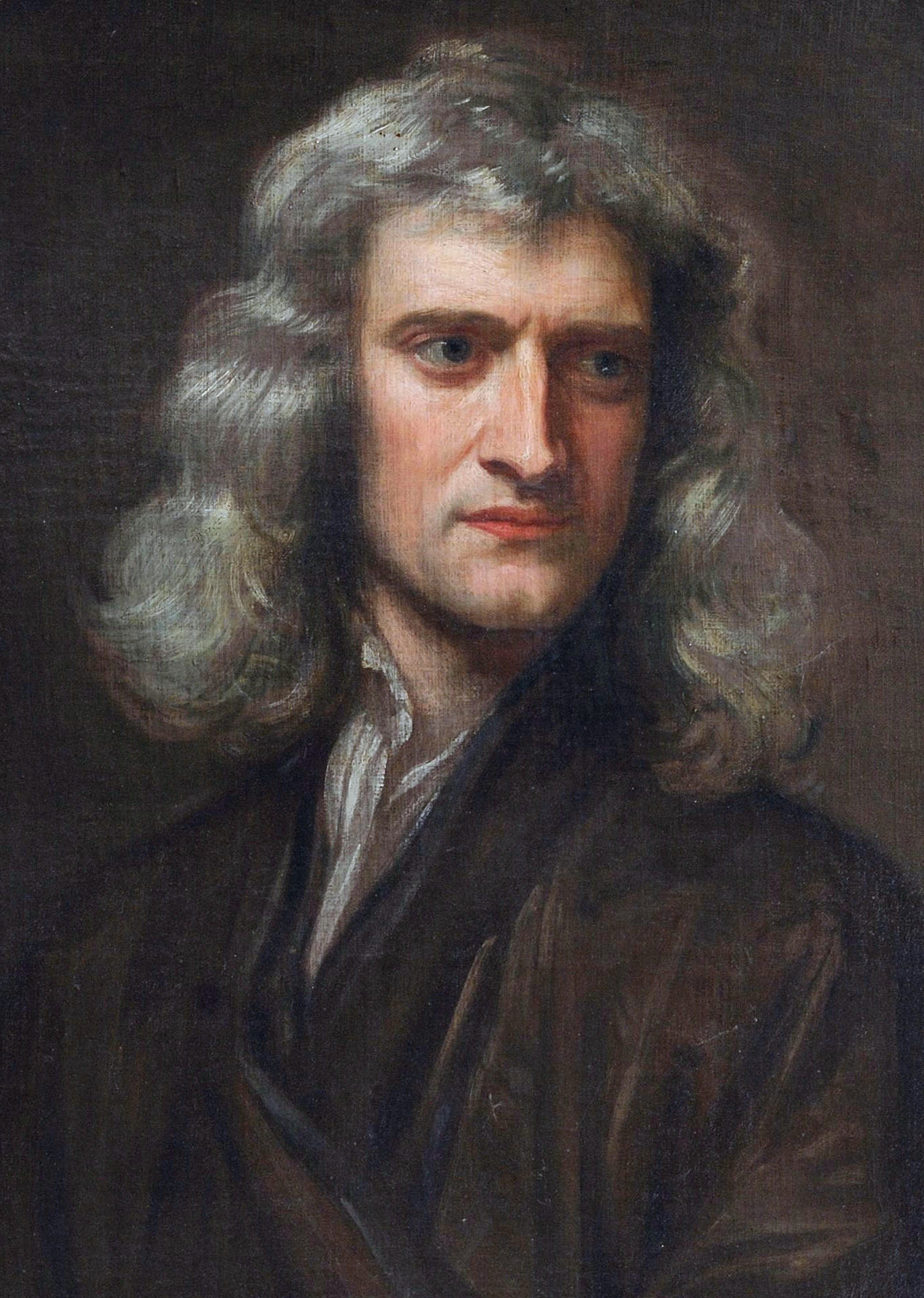
The word calculus comes from the Latin for 'pebble' — the small stones Romans once pushed across counting boards to keep track of sums. It is a humble origin for a branch of mathematics that would eventually become, as it has been called, the basic instrument of physical science. Calculus is the study of continuous change: how things move, grow, curve, and accumulate. It rests on two great pillars — differential calculus, which studies rates of change and the slopes of curves, and integral calculus, which studies the accumulation of quantities and the areas beneath them. The two are bound together by what is known as the fundamental theorem of calculus.
In the late seventeenth century, Isaac Newton and Gottfried Wilhelm Leibniz each, independently of one another, formulated infinitesimal calculus. Working separately, without collaboration, they arrived at strikingly similar mathematical machinery for describing how quantities change from one instant to the next. Both men wrote their mathematical texts in Latin, in keeping with the scholarly custom of their era, and both grasped that ordinary algebra and geometry were not enough to describe a world of shifting slopes and varying velocities.
At the heart of their work lay the idea of the infinitesimal: a quantity treated almost like an ordinary number, yet so small that it could be considered less than any positive real number one could name — greater than zero, yet smaller than every term in the sequence 1, 1/2, 1/3, and onward. Calculus, in this original form, was essentially a set of techniques for manipulating these vanishingly small quantities.
Differential calculus, one of the two branches Newton and Leibniz helped establish, concerns itself with the derivative — a way of capturing how a function behaves in the immediate neighborhood of a point. Where elementary algebra can only tell you the distance traveled by an object moving at constant speed, calculus can tell you the distance traveled by an object whose speed is constantly changing. The derivative generalizes the everyday idea of a slope, extending it from straight lines to the curving, shifting shapes of real motion.
The notation later devised for the derivative — Lagrange's prime symbol, the small mark after a function's name, as in f′ — became one of the enduring shorthand systems of mathematics. If a function doubles its input, its derivative might describe something entirely different: not the function itself, but the rate at which it changes. This abstraction, treating a function as something that can itself be operated upon to produce a new function, marked a leap beyond the arithmetic taught in ordinary schoolrooms.
More from People

Frida Kahlo: Painting Through the Pain
An iron handrail pierced a teenage girl's body on a Mexico City street — and out of that wreckage came one of the most searingly honest artists of the twentieth century.

The Ox-Cart and the Snow: Şerife Bacı's Last Road
Somewhere on a frozen road outside Kastamonu, a young mother pressed her body against a quilt to keep her infant warm through the night. By morning, she had become a legend.

Pompey the Great: The Friendship That Broke Rome
He was called 'the teenage butcher' by his enemies and 'the Great' by his mentor — and the empire he helped build would ultimately be the death of him.

The Third Pole: How Hunt, Hillary and Tenzing Conquered Everest
For decades the world's highest mountain had turned back every climber who dared it — sometimes swallowing them whole. In the spring of 1953, one expedition finally reached the point where the sky simply stopped going up.

Two Rivals Under One Roof: Picasso and Matisse
Long before they were named together as the twin poles of modern art, they were simply two names on the walls of the same small Paris gallery — one already known for wild colour, the other not yet known at all.

Fire and Ice: The Borg–McEnroe Rivalry
One man never raised his voice. The other rarely lowered his. Between them they produced two of the greatest matches tennis has ever seen.