The Pilot Who Turned His Guns on His Own Army
On a March morning in 1968, a young helicopter pilot looked down at a Vietnamese village and saw something no soldier ever wants to see — his own countrymen killing unarmed civilians. What he did next would haunt him, and redeem him, for the rest of his life.
Hugh Clowers Thompson Jr. was born on April 15, 1943, in Atlanta, Georgia, the son of an electrician who had served in the Navy during World War II. Raised in Stone Mountain, Georgia, in a working-class Episcopal family that openly denounced racism, Thompson grew up disciplined and principled. He worked in the fields as a boy and later as an assistant at a funeral mortuary, eventually training as a licensed funeral director after a stint in the Navy and a quiet start to married life with his wife, Palma Baughman, whom he wed in 1963.
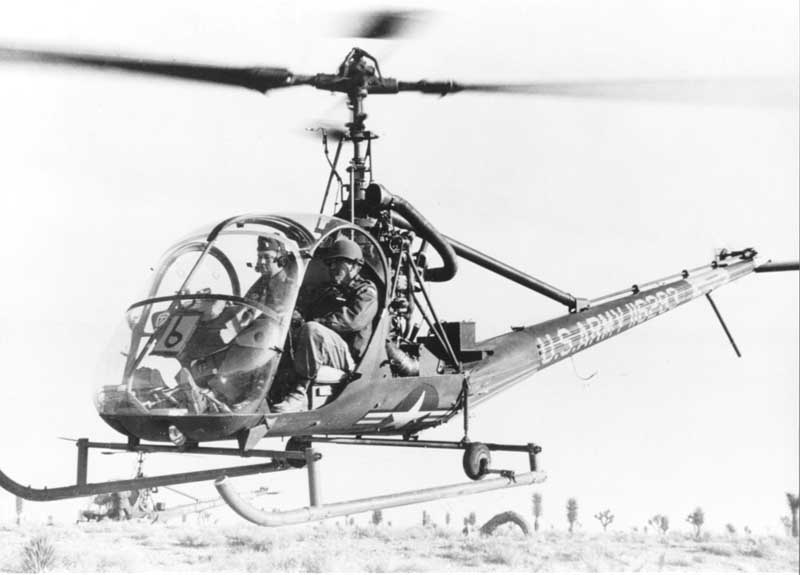
When the Vietnam War intensified, Thompson felt compelled to return to service. He enlisted in the Army in 1966, completed Warrant Officer Flight training at Fort Wolters, Texas, and Fort Rucker, Alabama, and by late December 1967, at age 25, found himself in Vietnam, assigned to Company B, 123rd Aviation Battalion, 23rd Infantry Division, flying a small Hiller OH-23 Raven observation helicopter.
On March 16, 1968, Thompson and his crew, gunner Lawrence Colburn and crew chief Glenn Andreotta, were sent to support a search-and-destroy operation in Sơn Mỹ, Quảng Ngãi Province — a cluster of hamlets including Mỹ Lai. Army intelligence claimed Viet Cong were hiding there, but the reconnaissance flights, including Thompson's, had drawn no enemy fire. The village was overwhelmingly unarmed rice farmers.
What Thompson witnessed from above defied belief: soldiers of Company C, under Captain Ernest Medina and Lieutenant William Calley, moving through Sơn Mỹ murdering civilians, raping women, and burning homes. Thompson landed his helicopter repeatedly, placing himself and his crew between American troops and fleeing villagers. He and his crew threatened to fire on their own soldiers if the killing continued, and personally escorted Vietnamese civilians away from advancing ground units, arranging for their evacuation by air.
Thompson radioed reports of the atrocities to Task Force Barker headquarters multiple times. After personally flying a wounded child to a hospital in Quảng Ngãi, he furiously confronted his superiors, insisting a massacre was underway. Only after his direct appeal did Lieutenant Colonel Frank A. Barker order all ground units to cease operations in the village — a command that came far too late for hundreds of victims.
More from People

Frida Kahlo: Painting Through the Pain
An iron handrail pierced a teenage girl's body on a Mexico City street — and out of that wreckage came one of the most searingly honest artists of the twentieth century.

The Ox-Cart and the Snow: Şerife Bacı's Last Road
Somewhere on a frozen road outside Kastamonu, a young mother pressed her body against a quilt to keep her infant warm through the night. By morning, she had become a legend.

Pompey the Great: The Friendship That Broke Rome
He was called 'the teenage butcher' by his enemies and 'the Great' by his mentor — and the empire he helped build would ultimately be the death of him.

The Third Pole: How Hunt, Hillary and Tenzing Conquered Everest
For decades the world's highest mountain had turned back every climber who dared it — sometimes swallowing them whole. In the spring of 1953, one expedition finally reached the point where the sky simply stopped going up.

Two Rivals Under One Roof: Picasso and Matisse
Long before they were named together as the twin poles of modern art, they were simply two names on the walls of the same small Paris gallery — one already known for wild colour, the other not yet known at all.

Fire and Ice: The Borg–McEnroe Rivalry
One man never raised his voice. The other rarely lowered his. Between them they produced two of the greatest matches tennis has ever seen.