The Slave Girl Who Rewrote the Ottoman Throne
She arrived in Constantinople as captured cargo from a Tatar slave raid. She left history as the woman who broke a five-century Ottoman law of the harem.
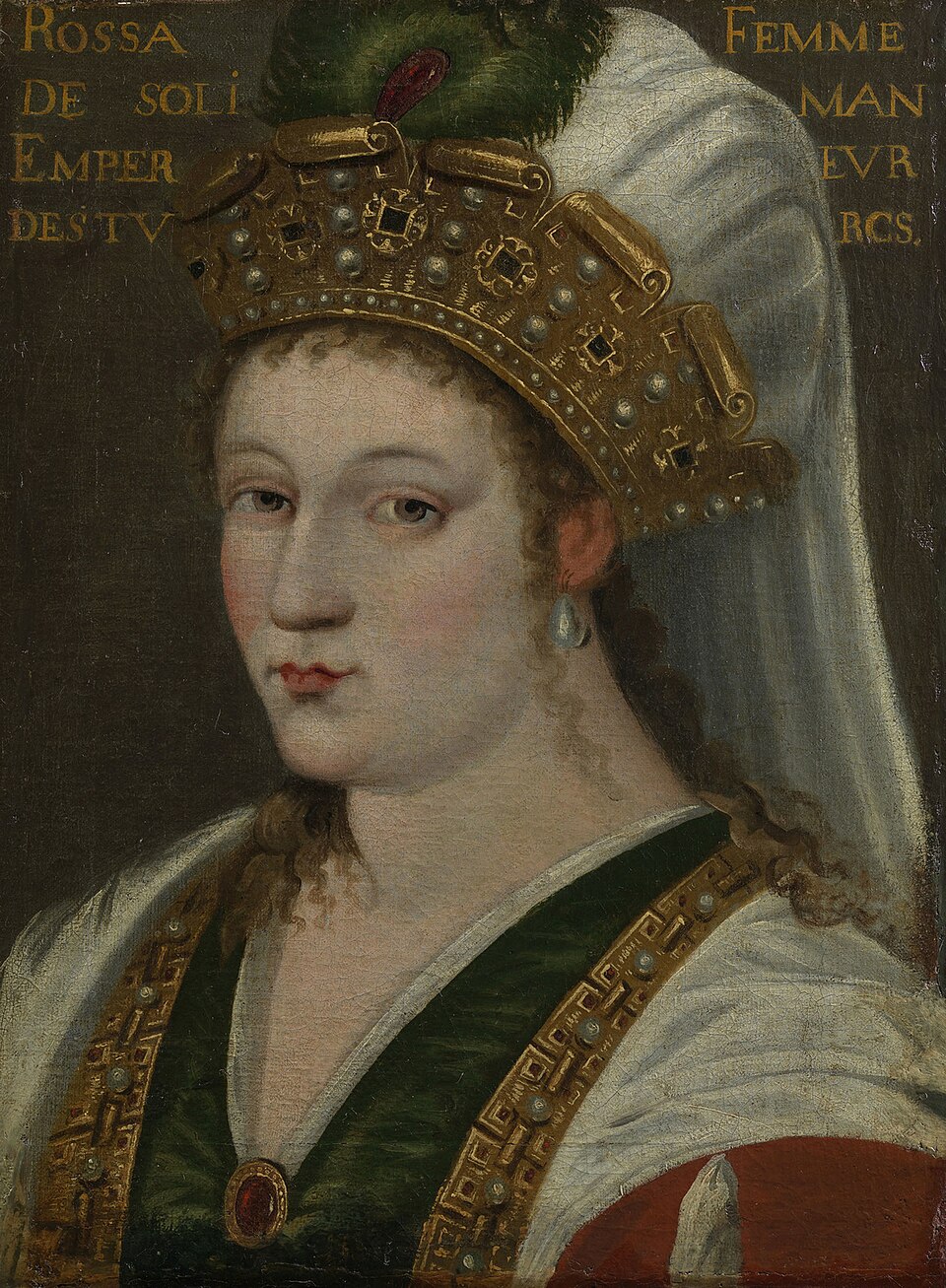
Sometime between 1502 and 1506, in the Ruthenian lands under the Polish Crown, a girl was born into an Orthodox Christian family. Her birth name is lost — European chroniclers later called her Roxelana, a name derived simply from her Ruthenian origins, while Ottoman sources never recorded what she was called before she crossed the empire's threshold. What is certain is the violence of her arrival: Crimean Tatars swept through in a slave raid, captured her, and moved her along the Crimean trade routes to Constantinople, the Ottoman capital.
There she entered the imperial harem, and there she rose. She became the favorite concubine of Suleiman the Magnificent, and was given a new name — Hürrem, Persian for 'the joyful and endearing one' — reportedly chosen by the sultan himself. In 1521 she bore him a son, Şehzade Mehmed. Of her six children with Suleiman, one was a daughter, Mihrimah, born the following year, and five were sons — Mehmed, Abdullah, Selim, Bayezid, and Cihangir — a pattern that directly violated the old Ottoman custom that each concubine bear the sultan only one male heir, meant to balance power among the women of the harem.
Then came the truly unprecedented act. Suleiman freed Hürrem and married her — something no sultan had done for a slave concubine before. Sultans had occasionally married foreign noblewomen, but they fathered children through concubines, never wives. Hürrem became the first haseki sultan, a title created expressly for her, and she remained at Suleiman's side for the rest of her life in what appears, from their surviving correspondence, to have been a deeply loving and intimate marriage.
Those letters — unavailable to historians until the nineteenth century — along with Suleiman's own diaries, reveal something startling: Hürrem was not merely his wife but his most trusted adviser. During his long absences on campaign, they exchanged passionate letters, and she filled hers with political intelligence, warnings of unrest, and counsel on matters of state.
Her influence reached beyond the palace walls. She apparently helped her former homeland, Poland, secure a privileged diplomatic status with the Ottoman court, and she sent diplomatic letters accompanied by articles she had personally embroidered, bringing what has been described as a distinctly feminine touch to statecraft. Among her notable correspondents were Sigismund II Augustus, King of Poland, and Mahinbanu Sultan, the influential sister of the Safavid ruler Tahmasp I, who exchanged official letters with Hürrem as well as with an Ottoman imperial princess believed to be Hürrem's own daughter, Mihrimah Sultan.
More from People

Frida Kahlo: Painting Through the Pain
An iron handrail pierced a teenage girl's body on a Mexico City street — and out of that wreckage came one of the most searingly honest artists of the twentieth century.

The Ox-Cart and the Snow: Şerife Bacı's Last Road
Somewhere on a frozen road outside Kastamonu, a young mother pressed her body against a quilt to keep her infant warm through the night. By morning, she had become a legend.

Pompey the Great: The Friendship That Broke Rome
He was called 'the teenage butcher' by his enemies and 'the Great' by his mentor — and the empire he helped build would ultimately be the death of him.

The Third Pole: How Hunt, Hillary and Tenzing Conquered Everest
For decades the world's highest mountain had turned back every climber who dared it — sometimes swallowing them whole. In the spring of 1953, one expedition finally reached the point where the sky simply stopped going up.

Two Rivals Under One Roof: Picasso and Matisse
Long before they were named together as the twin poles of modern art, they were simply two names on the walls of the same small Paris gallery — one already known for wild colour, the other not yet known at all.

Fire and Ice: The Borg–McEnroe Rivalry
One man never raised his voice. The other rarely lowered his. Between them they produced two of the greatest matches tennis has ever seen.