The Tractor Maker Who Humiliated Ferrari
A wealthy tractor manufacturer took his broken Ferrari straight to Enzo Ferrari to complain — and walked away insulted, determined to build something better.
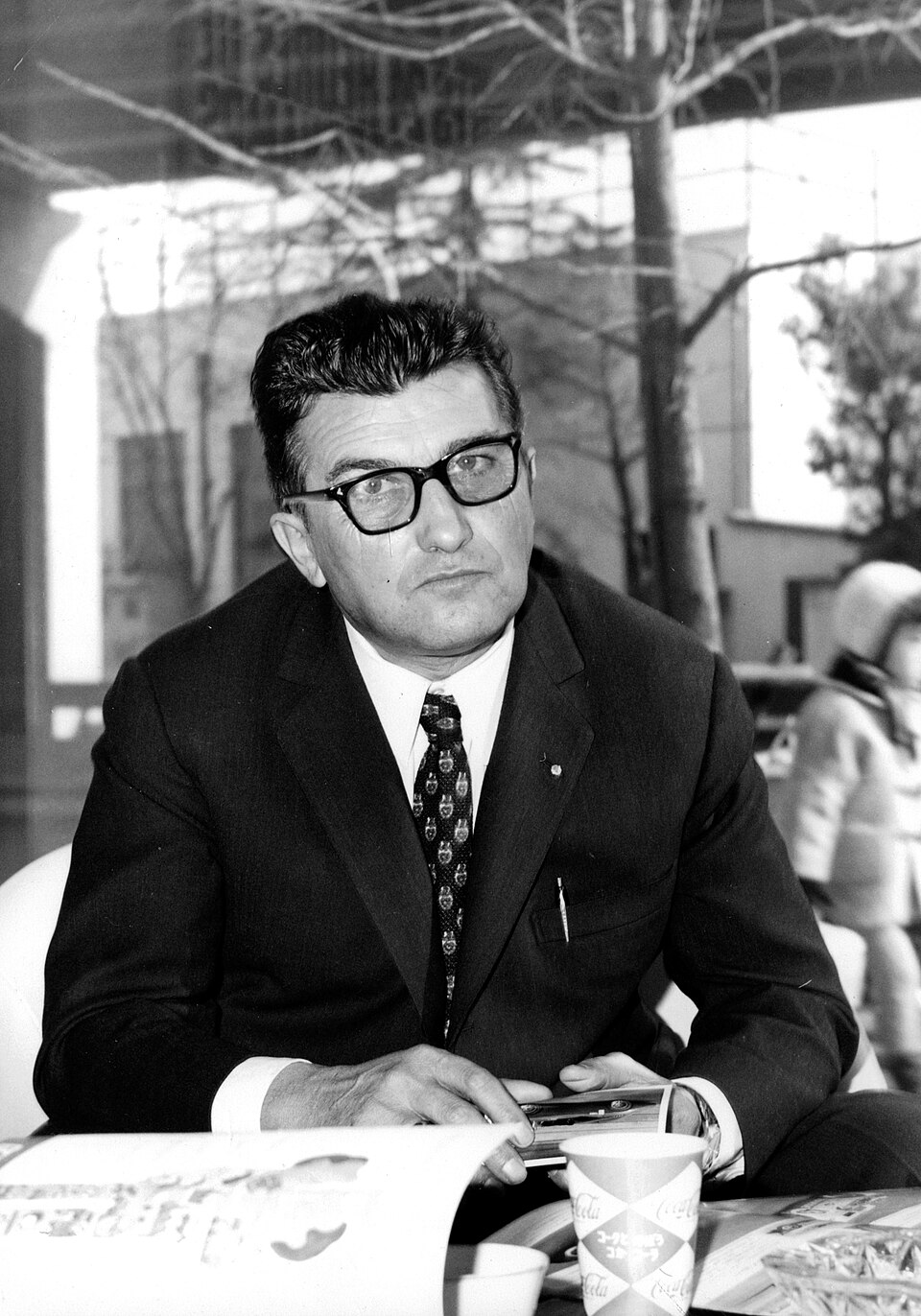
By the early 1960s, Ferruccio Lamborghini had already built two successful companies out of postwar Italy's hunger for machinery. Born in 1916 to viticulturists — grape farmers — in Renazzo di Cento, in the Emilia-Romagna region, he had always been drawn to engines rather than the soil. After serving as a mechanic in the Italian Royal Air Force on Rhodes during the war, he returned home and, in 1948, founded Lamborghini Trattori, turning surplus military engines and parts into agricultural tractors. The venture thrived amid Italy's economic boom. In 1959 he added a second business, Lamborghini Bruciatori, making oil burners and later air-conditioning equipment. After founding Automobili Lamborghini in 1963, he added a fourth company still, Lamborghini Oleodinamica, in 1969.
Success brought money, and money brought fast cars. Lamborghini filled his garage with an Alfa Romeo 1900, a Lancia Aurelia B20, a Mercedes-Benz 300SL, a Jaguar E-Type, and two Maserati 3500 GTs — enough to drive a different car every day of the week. Eventually his taste turned to Ferrari. He bought a 250 GT, then quickly acquired three more, becoming an enthusiastic collector of Enzo Ferrari's machines.
But every one of his Ferraris suffered from the same recurring clutch problem. Frustrated, Lamborghini drove to the Ferrari factory to have it fixed. He waited for hours while mechanics struggled with the issue, and eventually asked to speak with Enzo Ferrari himself. According to the account passed down, Ferrari's reply was blunt: a tractor manufacturer had no business criticizing a Ferrari.
Stung by the insult, Lamborghini returned to his own factory and set about fixing the clutch himself. In doing so, he discovered something telling — the clutch in his Ferrari was identical to the one used in his own tractors. He replaced it with a sturdier version of his own design, solving the problem outright. The experience left him with a new ambition: to build cars faster, more reliable, and better engineered than anything coming out of Ferrari's factory, and to prove that sports cars need not be Ferrari's domain alone.
To do it, Lamborghini set up shop near the Ferrari factory itself and hired away talent, including former Ferrari engineer Gianpaolo Dallara and test driver Bob Wallace. His first production model, the 350 GT, was in every respect an improvement over comparable Ferraris. His third model, the Miura, became a legend — a breathtaking machine that launched the era of the mid-engined sports car.
More from People

Frida Kahlo: Painting Through the Pain
An iron handrail pierced a teenage girl's body on a Mexico City street — and out of that wreckage came one of the most searingly honest artists of the twentieth century.

The Ox-Cart and the Snow: Şerife Bacı's Last Road
Somewhere on a frozen road outside Kastamonu, a young mother pressed her body against a quilt to keep her infant warm through the night. By morning, she had become a legend.

Pompey the Great: The Friendship That Broke Rome
He was called 'the teenage butcher' by his enemies and 'the Great' by his mentor — and the empire he helped build would ultimately be the death of him.

The Third Pole: How Hunt, Hillary and Tenzing Conquered Everest
For decades the world's highest mountain had turned back every climber who dared it — sometimes swallowing them whole. In the spring of 1953, one expedition finally reached the point where the sky simply stopped going up.

Two Rivals Under One Roof: Picasso and Matisse
Long before they were named together as the twin poles of modern art, they were simply two names on the walls of the same small Paris gallery — one already known for wild colour, the other not yet known at all.

Fire and Ice: The Borg–McEnroe Rivalry
One man never raised his voice. The other rarely lowered his. Between them they produced two of the greatest matches tennis has ever seen.