The Vaccine He Refused to Own
He held in his hands a discovery worth billions—and gave it away to the world for free.
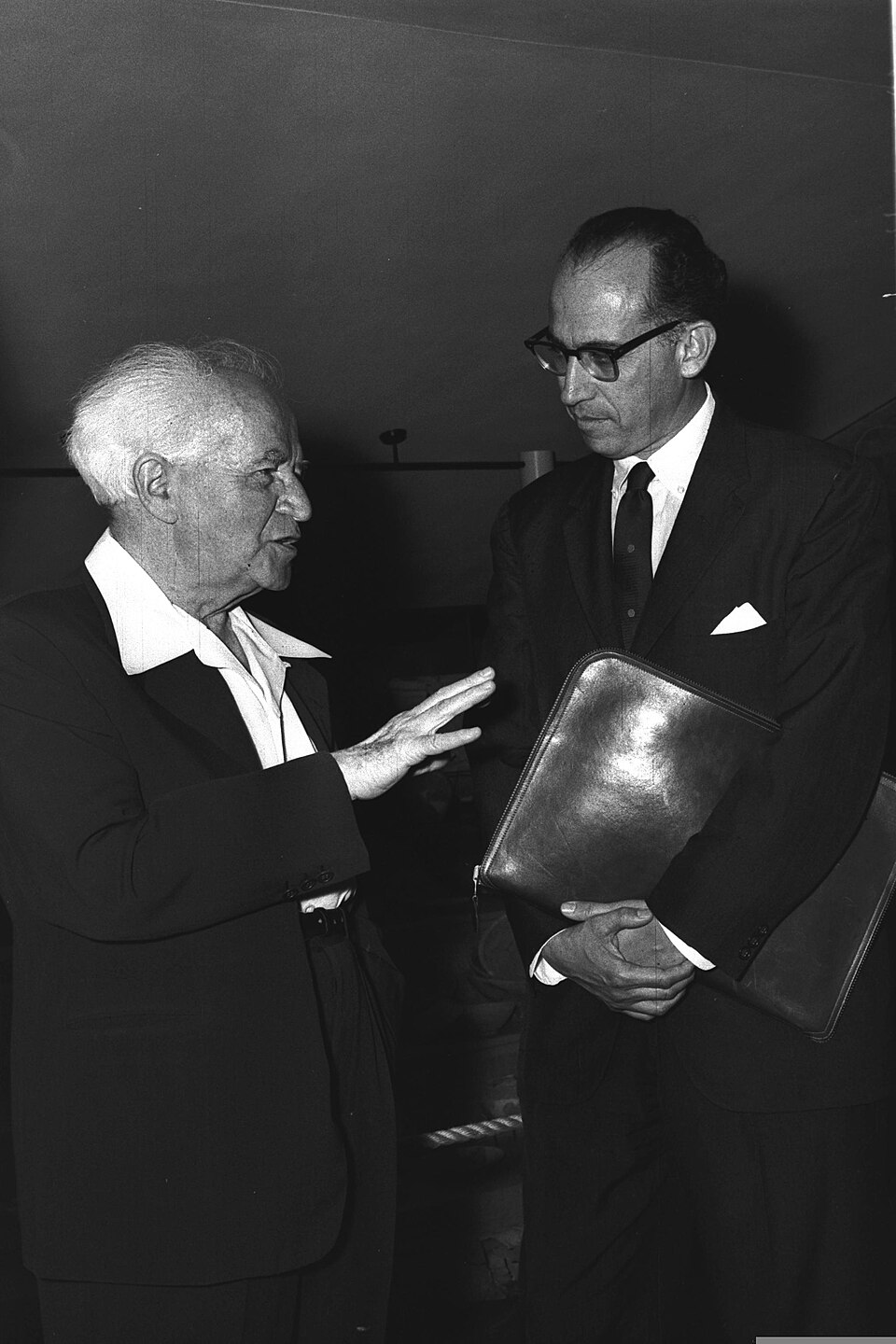
In 1952, the United States faced its worst polio epidemic on record: 57,628 cases in a single year, a disease that crippled and killed children by the thousands and left parents terrified of summer itself. Somewhere amid that fear was a young researcher at the University of Pittsburgh named Jonas Salk, who had spent years chasing the different types of poliovirus, determined to find a way to stop them.
Salk was born on October 28, 1914, in New York City to Daniel and Dora Salk, Ashkenazi Jewish immigrants who had fled persecution in the Russian Empire. Neither parent had much formal education, but they pushed their sons hard. Jonas, along with his brothers Herman and Lee, grew up first in East Harlem, then in the Bronx, with a stretch of time in Queens. As a boy, he later said, he wasn't drawn to science at all — he was interested in 'things human.'
At thirteen, Salk entered Townsend Harris Hall, a demanding public school for gifted students that crammed four years of study into three. He went on to City College of New York, earning a chemistry degree in 1934, then to New York University School of Medicine — one of the few schools that didn't impose quotas against Jewish applicants, unlike Cornell, Columbia, Penn, and Yale. He interned at Mount Sinai Hospital in 1939, then won a fellowship to study virology and influenza under Thomas Francis Jr. at the University of Michigan.
In 1947, Salk accepted a professorship at the University of Pittsburgh School of Medicine and was named head of its Virus Research Laboratory. There, he achieved a critical breakthrough: growing poliovirus in monkey kidney tissue, which allowed him to develop a vaccine using virus killed with formaldehyde. For seven years he devoted himself entirely to the project.
Before asking any child to be vaccinated, Salk tested the vaccine on his own family, inoculating his wife and three children in front of the media. Large-scale trials in 1954 and 1955 confirmed what he had hoped: the vaccine worked. When its success was announced in April 1955, Salk was instantly hailed as a miracle worker and a national hero. By 1957, polio cases in the United States had dropped by 80 to 90 percent.
More from People

Frida Kahlo: Painting Through the Pain
An iron handrail pierced a teenage girl's body on a Mexico City street — and out of that wreckage came one of the most searingly honest artists of the twentieth century.

The Ox-Cart and the Snow: Şerife Bacı's Last Road
Somewhere on a frozen road outside Kastamonu, a young mother pressed her body against a quilt to keep her infant warm through the night. By morning, she had become a legend.

Pompey the Great: The Friendship That Broke Rome
He was called 'the teenage butcher' by his enemies and 'the Great' by his mentor — and the empire he helped build would ultimately be the death of him.

The Third Pole: How Hunt, Hillary and Tenzing Conquered Everest
For decades the world's highest mountain had turned back every climber who dared it — sometimes swallowing them whole. In the spring of 1953, one expedition finally reached the point where the sky simply stopped going up.

Two Rivals Under One Roof: Picasso and Matisse
Long before they were named together as the twin poles of modern art, they were simply two names on the walls of the same small Paris gallery — one already known for wild colour, the other not yet known at all.

Fire and Ice: The Borg–McEnroe Rivalry
One man never raised his voice. The other rarely lowered his. Between them they produced two of the greatest matches tennis has ever seen.