The Vice-Consul Who Signed 62,000 Lives
In the chaos of Nazi-occupied Budapest, a quiet Swiss diplomat found a loophole in a number — and used it to outsmart Adolf Eichmann himself.
On a winter afternoon along the Danube, Arrow Cross militiamen were firing on a line of Jewish prisoners when a tall man in a soaked suit waded into the river. He pulled out a bleeding woman, carried her to the bank, and calmly informed the officer in charge that she was a foreign national under Swiss protection. No one dared stop him. That man was Carl Lutz, the Swiss vice-consul whose composure in the face of gunfire became one of the defining images of the Holocaust's largest rescue operation.
Lutz was born on 30 March 1895 in Walzenhausen, a village in the Swiss canton of Appenzell Ausserrhoden, the son of a sandstone quarry owner. His mother died of tuberculosis when he was fourteen, and by fifteen he was already apprenticing in a textile mill. In 1913, at eighteen, he left for the United States, working in Granite City, Illinois, from 1913 to 1918 to earn money for college. He then studied at Central Wesleyan College in Missouri from 1918 to 1920, before joining the Swiss Legation in Washington, D.C., where he eventually earned a degree from George Washington University.
His diplomatic career took him from Philadelphia to St. Louis, and in 1935, shortly after marrying Gertrud Fankhauser, to Jaffa in Mandatory Palestine as vice-consul. There, in 1936, he and his wife witnessed an unarmed Jew being lynched by an Arab crowd — an early, searing exposure to the violence that would later define his life's work. In 1942, Lutz was posted to Budapest as Swiss vice-consul, where he began cooperating with the Jewish Agency for Israel, issuing safe-conduct documents that would eventually help nearly 10,000 Hungarian Jewish children emigrate.
When the Nazis occupied Budapest in 1944 and began mass deportations to the death camps, Lutz negotiated permission from Hungarian and German authorities to issue protective letters to 8,000 Hungarian Jews bound for Palestine. He then quietly reinterpreted that permission to apply to families rather than individuals — and issued tens of thousands more letters, each bearing a number between one and 8,000. He also established roughly 76 'safe houses' across the city, declared annexes of the Swiss legation and thus off-limits to Hungarian and Nazi forces. The most famous, the 'Glass House' at Vadász Street 29, along with a neighboring building, sheltered about 3,000 Hungarian Jews.
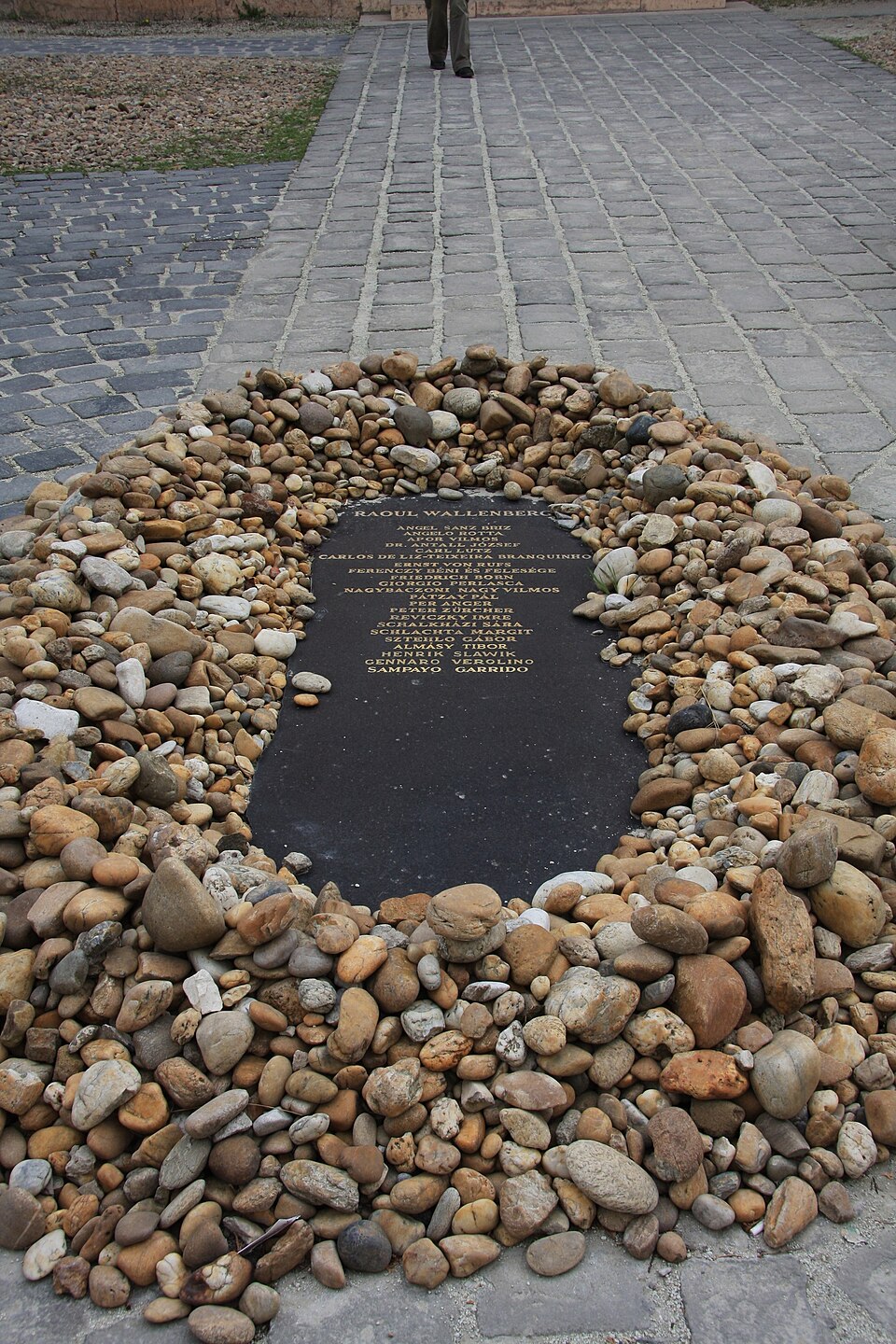
Lutz worked alongside other neutral diplomats doing similar work — Raoul Wallenberg of Sweden, Carlos de Liz-Texeira Branquinho and Sampaio Garrido of Portugal, the papal nuncio Angelo Rotta, Spain's Angel Sanz Briz and later Giorgio Perlasca, and the Red Cross delegate Friedrich Born. Together they maneuvered around German and Hungarian officials, including Adolf Eichmann, persuading them to tolerate — at least partially — the protections Lutz extended. His defiance was bold enough that in November 1944 Proconsul Edmund Veesenmayer, the German representative in Hungary, requested permission from Berlin to assassinate him. The request was never answered.
More from People

Frida Kahlo: Painting Through the Pain
An iron handrail pierced a teenage girl's body on a Mexico City street — and out of that wreckage came one of the most searingly honest artists of the twentieth century.

The Ox-Cart and the Snow: Şerife Bacı's Last Road
Somewhere on a frozen road outside Kastamonu, a young mother pressed her body against a quilt to keep her infant warm through the night. By morning, she had become a legend.

Pompey the Great: The Friendship That Broke Rome
He was called 'the teenage butcher' by his enemies and 'the Great' by his mentor — and the empire he helped build would ultimately be the death of him.

The Third Pole: How Hunt, Hillary and Tenzing Conquered Everest
For decades the world's highest mountain had turned back every climber who dared it — sometimes swallowing them whole. In the spring of 1953, one expedition finally reached the point where the sky simply stopped going up.

Two Rivals Under One Roof: Picasso and Matisse
Long before they were named together as the twin poles of modern art, they were simply two names on the walls of the same small Paris gallery — one already known for wild colour, the other not yet known at all.

Fire and Ice: The Borg–McEnroe Rivalry
One man never raised his voice. The other rarely lowered his. Between them they produced two of the greatest matches tennis has ever seen.