The Vice President Who Killed a Founding Father
He was second-in-command of a nation — yet history remembers him mostly for a single gunshot that ended a rivalry, and his own career, forever.
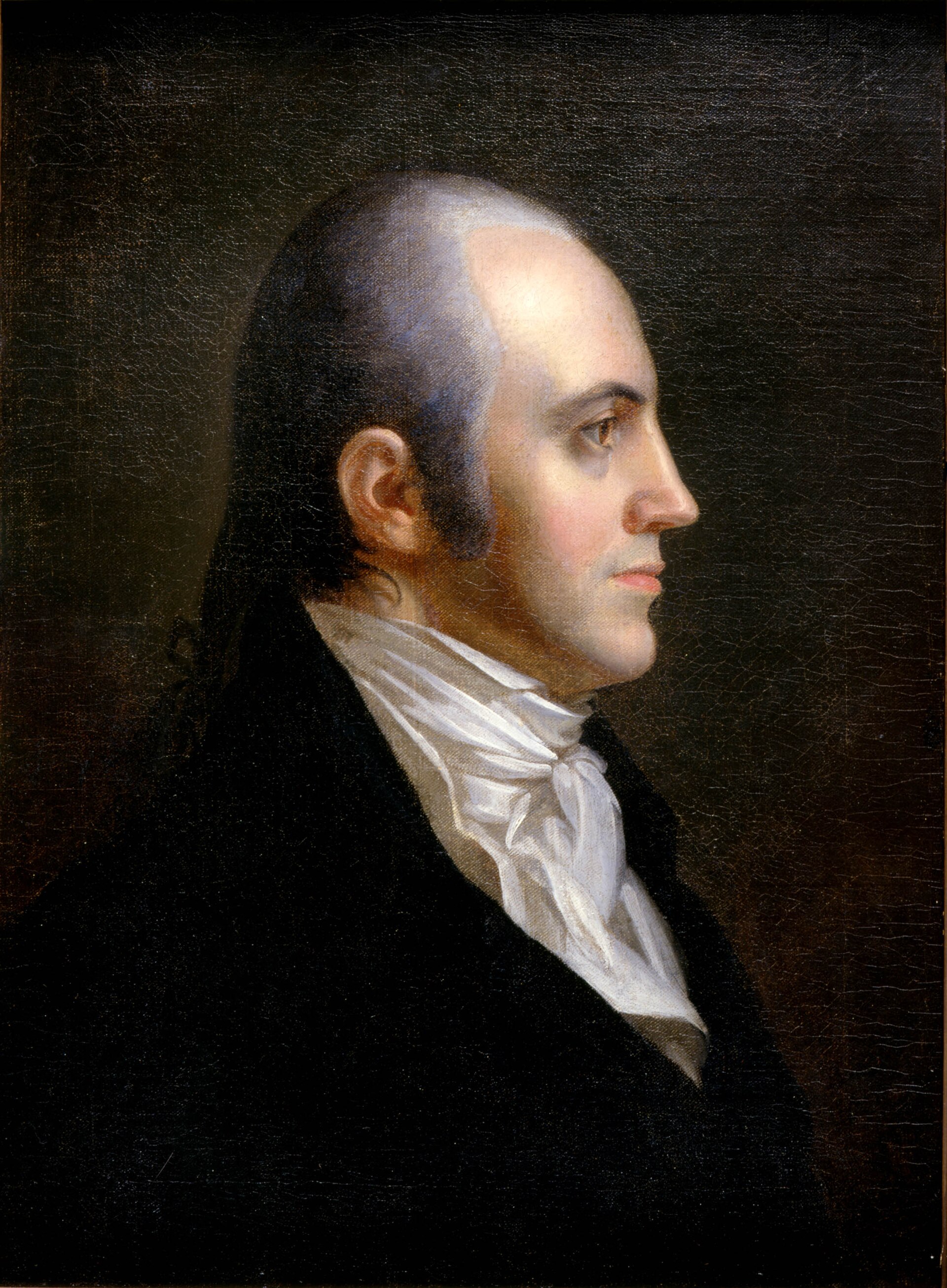
Aaron Burr Jr. was born on February 6, 1756, in Newark, in the Province of New Jersey, into a family of formidable intellect. His father, Reverend Aaron Burr Sr., co-founded the College of New Jersey — later Princeton — and served as its second president. His mother, Esther Edwards Burr, was the daughter of the philosopher-theologian Jonathan Edwards. By the age of two, Aaron had lost both parents to fever, and soon after his grandparents as well, leaving him and his sister Sally orphaned and passed between guardians, including an abusive uncle, Timothy Edwards.
Despite this turbulent start, Burr was a prodigy. At 13, he entered the College of New Jersey as a sophomore, joining its debating societies, and graduated with a Bachelor of Arts at 16. He pursued theology briefly before turning to law, studying with his brother-in-law Tapping Reeve in Litchfield, Connecticut. But in 1775, news of the Battles of Lexington and Concord reached him, and he abandoned his studies to join the Continental Army under George Washington.
Burr's military career was marked by hardship and distinction. He marched over 300 miles through the wilderness of what is now Maine as part of Colonel Benedict Arnold's expedition to Quebec, impressing Arnold with his 'great spirit and resolution.' Promoted to captain, he served as aide-de-camp to General Richard Montgomery and fought at the Battle of Quebec on December 31, 1775, attempting — unsuccessfully — to recover Montgomery's body after he was killed. He briefly joined Washington's staff in Manhattan before returning to the field under General Israel Putnam.
After leaving military service in 1779, Burr settled into law in New York City, quickly becoming a prominent political figure and helping build the Jeffersonian Democratic-Republican Party. In 1791, he was elected to the U.S. Senate, serving until 1797. His political ambitions culminated in the 1800 presidential election, where an Electoral College tie with Thomas Jefferson threw the decision to the House of Representatives. Jefferson won the presidency, and Burr, with the second-highest vote count, became vice president.
The relationship between Burr and Jefferson was uneasy from the start. Burr found himself sidelined during his vice presidency, and after the ratification of the 12th Amendment, Jefferson dropped him as running mate for the 1804 election. It was around this fraught period that Burr's long-simmering rivalry with Alexander Hamilton, a fellow Founding Father, reached its breaking point — resulting in the duel for which Burr is most remembered, in which Hamilton was mortally wounded and later died.
More from People

Frida Kahlo: Painting Through the Pain
An iron handrail pierced a teenage girl's body on a Mexico City street — and out of that wreckage came one of the most searingly honest artists of the twentieth century.

The Ox-Cart and the Snow: Şerife Bacı's Last Road
Somewhere on a frozen road outside Kastamonu, a young mother pressed her body against a quilt to keep her infant warm through the night. By morning, she had become a legend.

Pompey the Great: The Friendship That Broke Rome
He was called 'the teenage butcher' by his enemies and 'the Great' by his mentor — and the empire he helped build would ultimately be the death of him.

The Third Pole: How Hunt, Hillary and Tenzing Conquered Everest
For decades the world's highest mountain had turned back every climber who dared it — sometimes swallowing them whole. In the spring of 1953, one expedition finally reached the point where the sky simply stopped going up.

Two Rivals Under One Roof: Picasso and Matisse
Long before they were named together as the twin poles of modern art, they were simply two names on the walls of the same small Paris gallery — one already known for wild colour, the other not yet known at all.

Fire and Ice: The Borg–McEnroe Rivalry
One man never raised his voice. The other rarely lowered his. Between them they produced two of the greatest matches tennis has ever seen.