The Wizard and the Immigrant: How Edison and Tesla Split the Currents of the World
A young Serbian engineer walked into an American workshop with a plan to remake electricity itself — and walked out to build a rival empire of his own that would light up history.
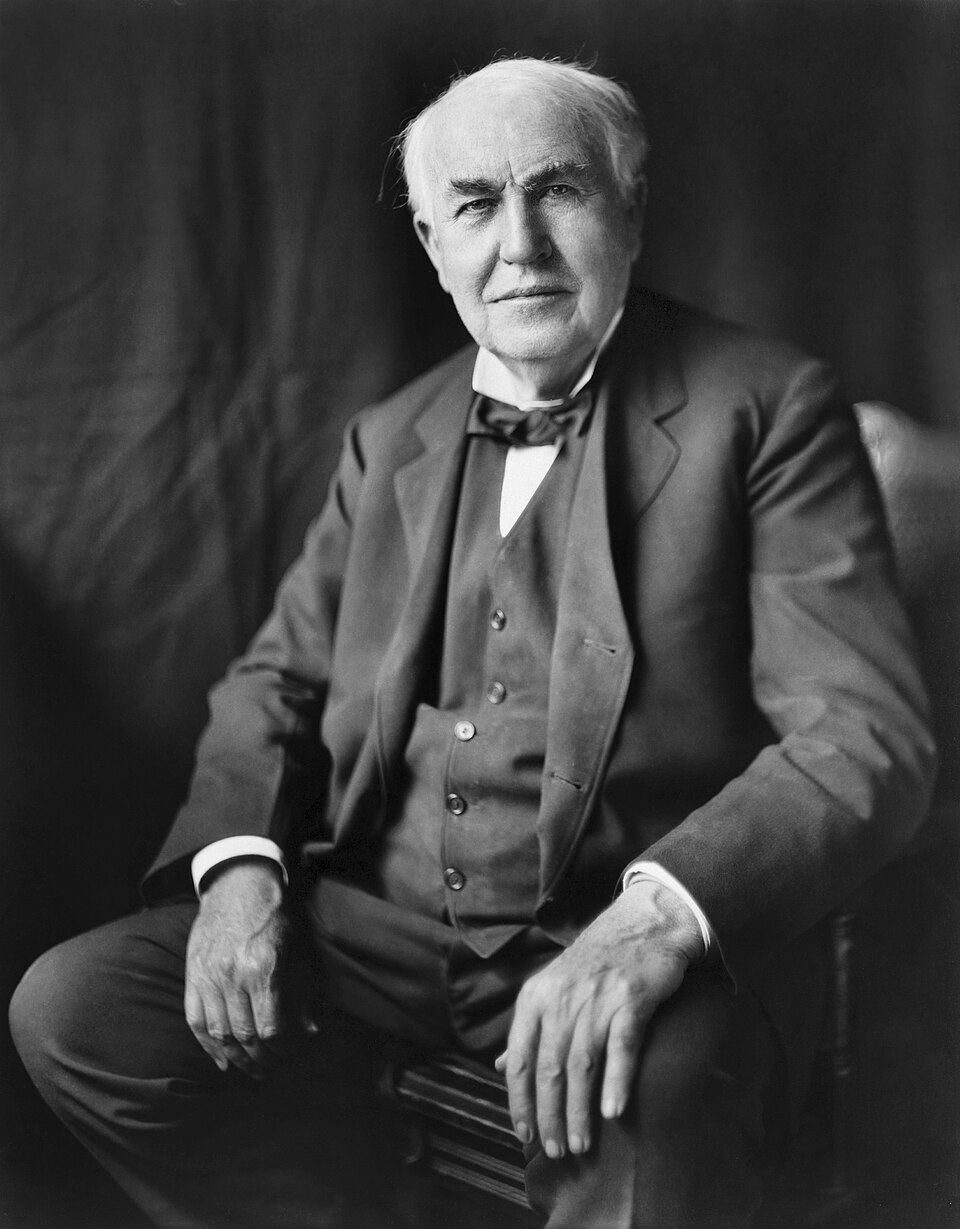
In the early 1880s, a young immigrant engineer named Nikola Tesla found his way to Thomas Edison's laboratory on Pearl Street in New York City. Edison, already famous as 'The Wizard of Menlo Park,' was consumed with finding a market for his incandescent lamp, the invention that had made him a household name after 1879. Tesla, brimming with the enthusiasm of youth, tried to explain to Edison his own idea: an alternating current system that he believed could outperform Edison's direct current entirely.
Edison was unimpressed. According to the account of their meeting, he dismissed Tesla's theorizing outright, telling him he was wasting his time on theory. Still, Edison found a use for the young engineer's talents and set him to a specific task: fixing serious problems in Edison's direct-current power plants.
Tesla did not relish the assignment, but he took it seriously once he learned that Edison had promised him $50,000 for solving it. Within months, Tesla had resolved the technical issues plaguing the DC stations. When he went to collect his promised payment, Edison, stunned, reportedly told him that he simply hadn't understood American humor — and refused to pay a cent.
Tesla resigned immediately. What had been a brief working relationship between two brilliant men curdled into a rivalry that would stretch on for years, eventually known as the War of the Currents — Edison's direct current against the alternating current system that Tesla championed, later backed by George Westinghouse.
Edison's empire had been built on more than just the light bulb. Since 1878 he had worked to build an entire electrical distribution system meant to replace gas lighting, and the fortunes to be made from generators, wiring, and bulbs were enormous. But the competition with Westinghouse's AC system eventually forced Edison to yield ground, a pressure that helped drive the 1892 merger of Edison General Electric with Thomson-Houston Electric to form General Electric — a company that no longer bore his name alone.
More from People

Frida Kahlo: Painting Through the Pain
An iron handrail pierced a teenage girl's body on a Mexico City street — and out of that wreckage came one of the most searingly honest artists of the twentieth century.

The Ox-Cart and the Snow: Şerife Bacı's Last Road
Somewhere on a frozen road outside Kastamonu, a young mother pressed her body against a quilt to keep her infant warm through the night. By morning, she had become a legend.

Pompey the Great: The Friendship That Broke Rome
He was called 'the teenage butcher' by his enemies and 'the Great' by his mentor — and the empire he helped build would ultimately be the death of him.

The Third Pole: How Hunt, Hillary and Tenzing Conquered Everest
For decades the world's highest mountain had turned back every climber who dared it — sometimes swallowing them whole. In the spring of 1953, one expedition finally reached the point where the sky simply stopped going up.

Two Rivals Under One Roof: Picasso and Matisse
Long before they were named together as the twin poles of modern art, they were simply two names on the walls of the same small Paris gallery — one already known for wild colour, the other not yet known at all.

Fire and Ice: The Borg–McEnroe Rivalry
One man never raised his voice. The other rarely lowered his. Between them they produced two of the greatest matches tennis has ever seen.