The Woman Behind HeLa
A single biopsy taken without her knowledge would outlive her by generations — and change medicine forever.
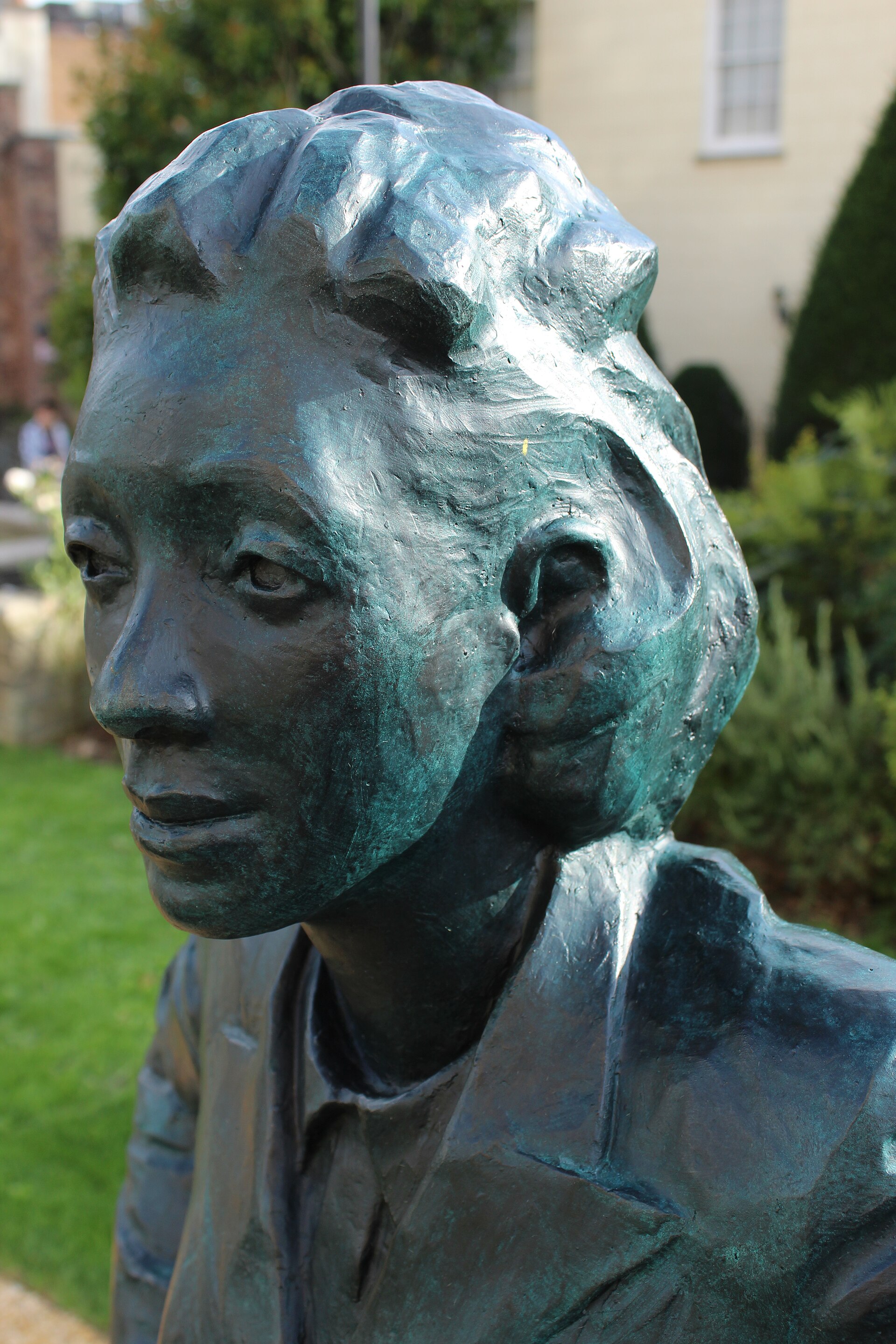
On January 29, 1951, Henrietta Lacks walked into Johns Hopkins Hospital in Baltimore because she felt a 'knot' in her womb. She was thirty years old, a mother of five, born Loretta Pleasant in Roanoke, Virginia, on August 1, 1920, and known to her family simply as Hennie.
Her early life had been shaped by loss and labor. When she was four, her mother died giving birth to a tenth child, and her father, unable to raise the children alone, sent them to relatives in Clover, Virginia. Henrietta ended up with her grandfather, sharing a room with her cousin David 'Day' Lacks in a log cabin that had once been slave quarters on a plantation owned by her white great-grandfather. She worked the tobacco fields from childhood, leaving school in sixth grade to help support the family.
At fourteen, Henrietta had her first child, Lawrence, with Day; a daughter, Elsie, followed in 1939. Elsie had epilepsy and cerebral palsy and was later placed in a state hospital, where she died in 1955. Henrietta and Day married in 1941 and soon moved to Turner Station near Baltimore, where Day worked at Bethlehem Steel. They had three more children there, the last, Joseph, born at Johns Hopkins in November 1950 — just four and a half months before Henrietta's cancer diagnosis.
At Johns Hopkins, Dr. Howard W. Jones took a biopsy of a mass on her cervix. She was told she had a malignant epidermoid carcinoma; decades later, doctors realized it had actually been an adenocarcinoma, though the treatment would not have differed. Lacks was treated with radium tube inserts and sent home with instructions for follow-up X-ray treatments.
During that treatment, without her permission or knowledge, two samples were cut from her cervix — one healthy, one cancerous. They were handed to George Otto Gey, a physician and researcher at Johns Hopkins who had spent years trying, and failing, to grow human cells that would survive outside the body. Henrietta's cancerous cells did something no others had: they kept dividing, indefinitely, becoming the first immortalized human cell line, later named HeLa after her.
More from People

Frida Kahlo: Painting Through the Pain
An iron handrail pierced a teenage girl's body on a Mexico City street — and out of that wreckage came one of the most searingly honest artists of the twentieth century.

The Ox-Cart and the Snow: Şerife Bacı's Last Road
Somewhere on a frozen road outside Kastamonu, a young mother pressed her body against a quilt to keep her infant warm through the night. By morning, she had become a legend.

Pompey the Great: The Friendship That Broke Rome
He was called 'the teenage butcher' by his enemies and 'the Great' by his mentor — and the empire he helped build would ultimately be the death of him.

The Third Pole: How Hunt, Hillary and Tenzing Conquered Everest
For decades the world's highest mountain had turned back every climber who dared it — sometimes swallowing them whole. In the spring of 1953, one expedition finally reached the point where the sky simply stopped going up.

Two Rivals Under One Roof: Picasso and Matisse
Long before they were named together as the twin poles of modern art, they were simply two names on the walls of the same small Paris gallery — one already known for wild colour, the other not yet known at all.

Fire and Ice: The Borg–McEnroe Rivalry
One man never raised his voice. The other rarely lowered his. Between them they produced two of the greatest matches tennis has ever seen.