Two Emperors, One World: Suleiman the Magnificent and Charles V
In the sixteenth century, two young rulers each claimed to be the rightful master of the world — and for nearly five decades their armies, fleets, and ambitions collided across Europe and the Mediterranean.
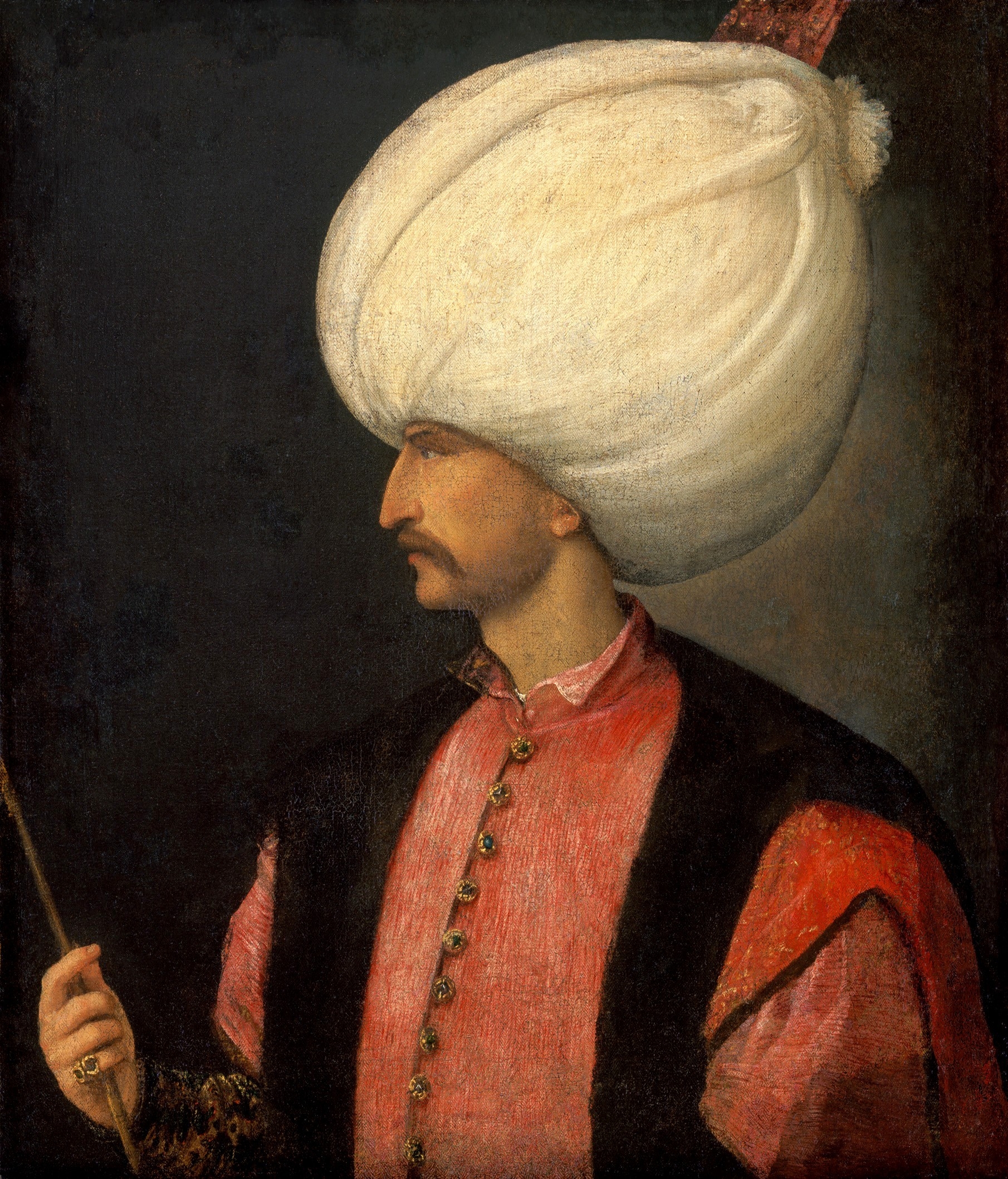
In the autumn of 1520, a young prince entered Constantinople to take his father's throne. A few weeks after his accession, the Venetian envoy Bartolomeo Contarini described Suleiman — then twenty-five years old, though soon to turn twenty-six — as tall and slender but tough, thin-faced, friendly, well-read, and full of promise. Far to the west, another young ruler, Charles V, held the title of Holy Roman Emperor, presiding over Spain, the Low Countries, Austria, and vast American territories. Both men, barely into adulthood, stood atop empires that together stretched from the Danube to the Andes, and both saw themselves as heirs to a universal imperial destiny.
Suleiman moved first. Within a year of his accession, he turned his armies toward Belgrade, a fortress his great-grandfather Mehmed II had failed to take. Surrounding the city in August 1521 with some 250,000 soldiers and over a hundred ships, he pounded its walls from an island in the Danube until it fell. Belgrade was made the seat of a new Ottoman province, the Pashalik of Belgrade, and quickly swelled into the second largest Ottoman town in Europe, with a population over 100,000, surpassed only by Constantinople.
Rhodes came next. Between 1522 and 1523, the island, held by the Knights Hospitaller, endured a five-month siege before capitulating; Suleiman permitted the knights to leave, but the conquest cost his own forces between 50,000 and 60,000 dead from battle and sickness. With the eastern Mediterranean secured, the road toward Central Europe now lay open — and Charles V's Habsburg domains stood directly in its path.
The collision came at Mohács in August 1526. There, Suleiman shattered the military strength of the Kingdom of Hungary, a kingdom bound by marriage and alliance to the Habsburg family that Charles V led. Hungary was subsequently carved up, much of it absorbed into Ottoman territory — a blow that struck at the heart of Habsburg ambitions in Central Europe and set the two empires on a direct collision course.
That course reached its dramatic peak in 1529, when Suleiman's armies laid siege to Vienna itself, the gateway to the Habsburg heartlands. It was here, before the walls of the city, that Ottoman expansion into Europe finally met its limit. The siege failed, and Suleiman was forced to withdraw — the high-water mark of Ottoman advance against the empire Charles V embodied.
More from People

Frida Kahlo: Painting Through the Pain
An iron handrail pierced a teenage girl's body on a Mexico City street — and out of that wreckage came one of the most searingly honest artists of the twentieth century.

The Ox-Cart and the Snow: Şerife Bacı's Last Road
Somewhere on a frozen road outside Kastamonu, a young mother pressed her body against a quilt to keep her infant warm through the night. By morning, she had become a legend.

Pompey the Great: The Friendship That Broke Rome
He was called 'the teenage butcher' by his enemies and 'the Great' by his mentor — and the empire he helped build would ultimately be the death of him.

The Third Pole: How Hunt, Hillary and Tenzing Conquered Everest
For decades the world's highest mountain had turned back every climber who dared it — sometimes swallowing them whole. In the spring of 1953, one expedition finally reached the point where the sky simply stopped going up.

Two Rivals Under One Roof: Picasso and Matisse
Long before they were named together as the twin poles of modern art, they were simply two names on the walls of the same small Paris gallery — one already known for wild colour, the other not yet known at all.

Fire and Ice: The Borg–McEnroe Rivalry
One man never raised his voice. The other rarely lowered his. Between them they produced two of the greatest matches tennis has ever seen.