Two Men Who Never Shook Hands
They shaped the fate of a continent, waged war against each other for years, and never once stood in the same room. This is the story of how Winston Churchill rose to power in response to Adolf Hitler's aggression — without either man ever meeting the other.
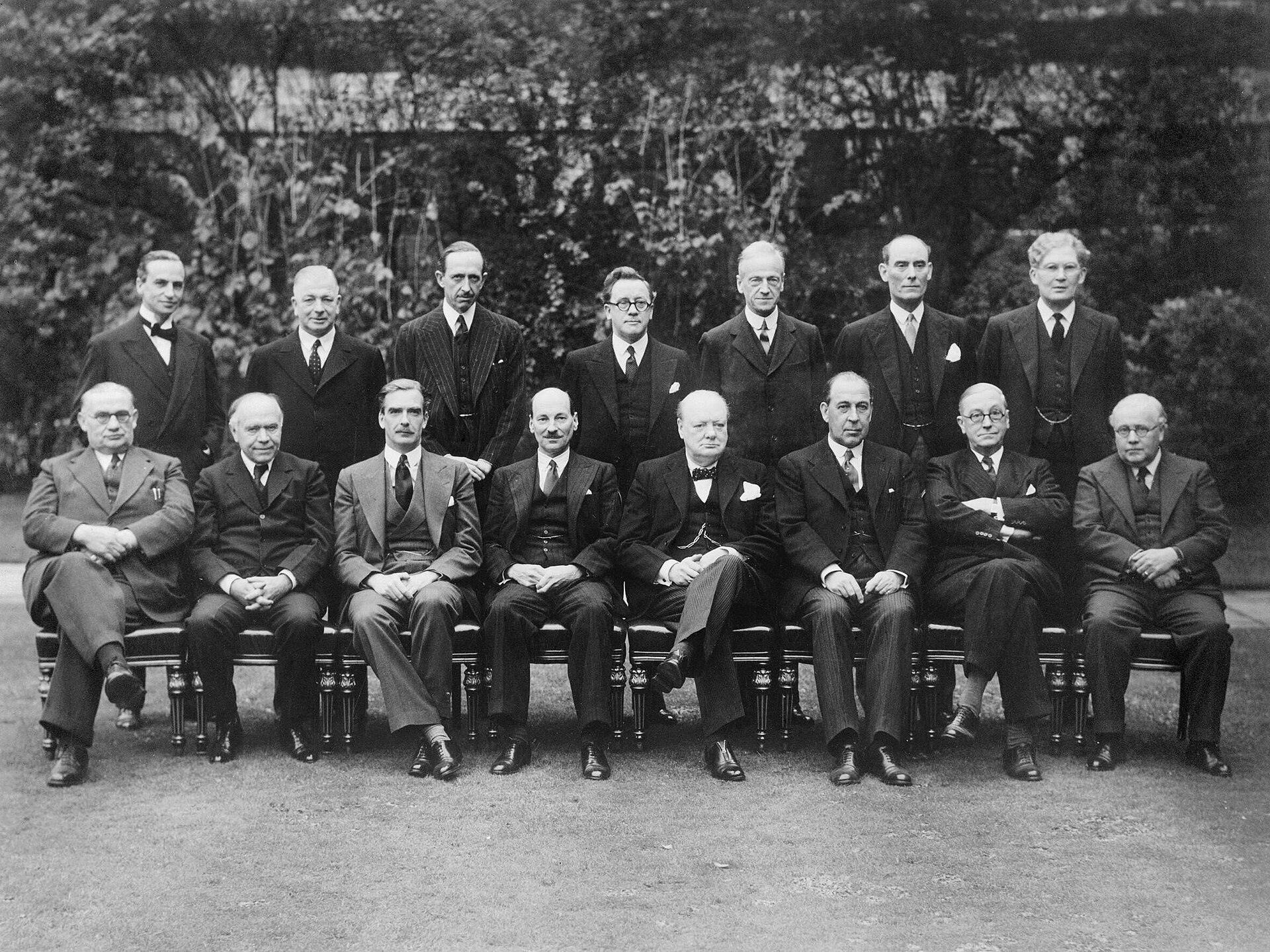
On the morning of 10 May 1940, German forces poured into the Netherlands, Belgium, and Luxembourg. It was the latest and most dramatic escalation of a war that had begun the previous September, when Neville Chamberlain declared war on Germany following Hitler's continued aggression despite the 1938 Munich Agreement and the March 1939 Anglo-Polish military alliance. Chamberlain, the architect of appeasement, had hoped his diplomacy might restrain Hitler. It had not.
By the spring of 1940, confidence in Chamberlain's leadership was collapsing. Germany's successful invasion of Norway triggered the Norway Debate in the House of Commons from 7 to 9 May, and when the Labour opposition forced a vote that amounted to a no-confidence motion, Chamberlain's usual majority of 213 shrank to just 81 — a survivable but shattering result.
On 9 May, Chamberlain met at Downing Street with Viscount Halifax and Winston Churchill, signaling he was ready to resign if it would bring Labour into a national coalition. Labour's Clement Attlee and Arthur Greenwood said they would need to consult their party's National Executive Committee, then meeting in Bournemouth, but doubted they could serve under Chamberlain himself — though another Conservative might be acceptable.
The question then became who that Conservative would be. Churchill's own account suggests Chamberlain favored Halifax, and that a long silence followed before Halifax demurred, saying he could not lead effectively from the House of Lords rather than the Commons. Halifax's own version, recorded later, said much the same: without control over war operations or a voice in the Commons, he would be 'a cypher' — and he believed Churchill 'a better choice'. Government Chief Whip David Margesson reportedly confirmed that Commons opinion was shifting toward Churchill, a sentiment echoed in a letter Bob Boothby wrote to Churchill that night, citing Liberal MP Clement Davies. Not everyone agreed — Labour's Hugh Dalton noted in his diary that Attlee still preferred Halifax, though he considered either 'tolerable'.
Then came the invasion. On the morning of 10 May, as German troops crossed into the Low Countries, Chamberlain briefly wondered whether a change of government amid such crisis was wise. But once it was clear Labour would not serve under him, he went to Buckingham Palace and resigned. King George VI, initially inclined toward Halifax as the obvious successor, instead summoned Churchill and asked him to form a government — with no requirement, in Churchill's telling, that it be a coalition. That night at nine o'clock, Chamberlain announced the change of leadership over the BBC.
More from People

Frida Kahlo: Painting Through the Pain
An iron handrail pierced a teenage girl's body on a Mexico City street — and out of that wreckage came one of the most searingly honest artists of the twentieth century.

The Ox-Cart and the Snow: Şerife Bacı's Last Road
Somewhere on a frozen road outside Kastamonu, a young mother pressed her body against a quilt to keep her infant warm through the night. By morning, she had become a legend.

Pompey the Great: The Friendship That Broke Rome
He was called 'the teenage butcher' by his enemies and 'the Great' by his mentor — and the empire he helped build would ultimately be the death of him.

The Third Pole: How Hunt, Hillary and Tenzing Conquered Everest
For decades the world's highest mountain had turned back every climber who dared it — sometimes swallowing them whole. In the spring of 1953, one expedition finally reached the point where the sky simply stopped going up.

Two Rivals Under One Roof: Picasso and Matisse
Long before they were named together as the twin poles of modern art, they were simply two names on the walls of the same small Paris gallery — one already known for wild colour, the other not yet known at all.

Fire and Ice: The Borg–McEnroe Rivalry
One man never raised his voice. The other rarely lowered his. Between them they produced two of the greatest matches tennis has ever seen.