Yunus Emre: The Dervish Who Taught Turkish to Speak of Love
A wandering dervish who called himself unschooled somehow gave Turkish poetry its first great voice — and 750 years later, UNESCO would dedicate an entire year to his memory.
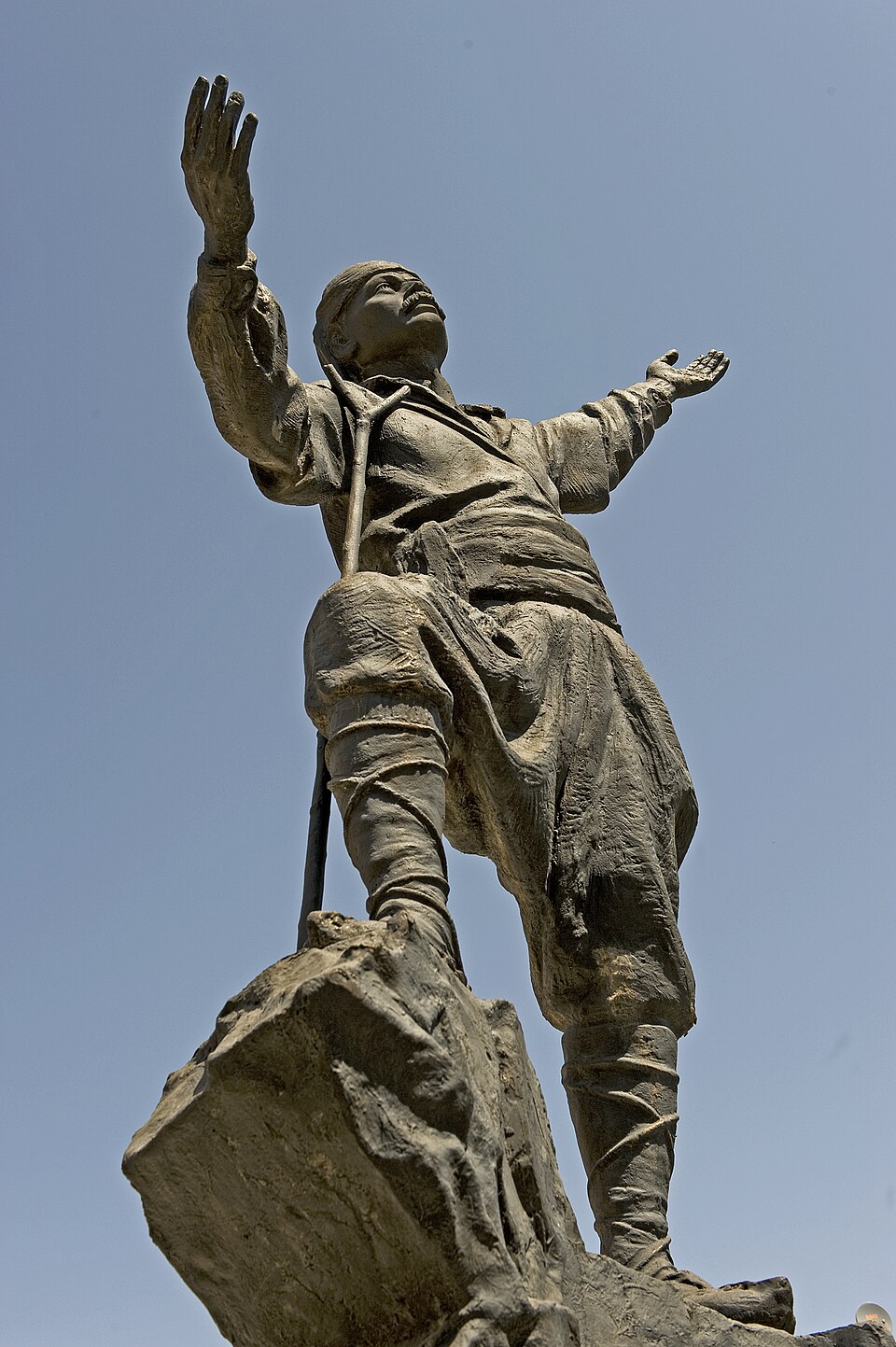
In 1240, in a village called Sarıköy near the Sakarya River basin of Central Anatolia, a boy was born who would become one of the most beloved figures in Turkish culture. His name was Yunus Emre, and though the record of his life is thin and often contradictory — a patchwork of legend, scattered verses, and a handful of archival fragments — his poetry survived vividly enough to shape the Turkish language itself.
Yunus lived through one of Anatolia's most turbulent eras. The Mongol invasion, following the Sultanate of Rûm's defeat at the 1243 Battle of Köse Dağ, upended the region, and in the chaos a rich tradition of Islamic mystic literature took root. Yunus Emre became one of its most distinguished poets, following in the footsteps of earlier figures like Ahmed Yesevi and Sultan Walad as one of the first known poets to compose in spoken Old Anatolian Turkish rather than the Persian of official correspondence or the Arabic of scholarly texts.
His spiritual guide was Tapduk Emre, a mention Yunus made in seventeen separate couplets of his divan. Tapduk Emre trained him at a dervish lodge near Nallıhan, in a place later known as Emremsultan. According to the legendary Velayetname of Hacı Bektaş Veli, Yunus once refused a mystical 'breath' offered by Hacı Bektaş, saying instead 'ehlim var, ayalim var, bana buğday gerek' — I have a family, I have a wife, I need wheat — suggesting he was a married man with responsibilities rather than a solitary ascetic. A 1518 Ottoman archival document from the Konya register even names a son, İsmail.
Though tradition often describes Yunus as unlettered, his poems suggest otherwise. He used Arabic and Persian vocabulary fluently alongside Turkish, understood Quranic Arabic and the Persian of Rumi's Masnavi well enough to reference them, and even rendered a ghazal by the Persian poet Saadi of Shiraz into Turkish verse. Some of his lines say plainly that he studied at a madrasa. Verses hint that he traveled widely — to Maraş, Kayseri, Tabriz, Nakhchivan, Upper Azerbaijan, and south to Baghdad and Damascus — carrying his message of divine love across a broad swath of the Islamic world.
What set Yunus apart was his language. Where the literary and administrative culture of his time leaned on Persian and Arabic, Yunus wrote in the plain, spoken Turkish of ordinary people in Central and Western Anatolia — the same idiom found in anonymous folk songs, riddles, fairy tales, and proverbs. He used the syllabic meter native to Turkish folk poetry, and also experimented with the Arabic-derived aruz meter, even though its quantitative patterns fit awkwardly with a language built on single syllables. In doing so, he became a founding figure of a distinctly Turkish literary tradition, distinct from the Persian-influenced Sufi poetry that had dominated Anatolia before him.
More from People

Frida Kahlo: Painting Through the Pain
An iron handrail pierced a teenage girl's body on a Mexico City street — and out of that wreckage came one of the most searingly honest artists of the twentieth century.

The Ox-Cart and the Snow: Şerife Bacı's Last Road
Somewhere on a frozen road outside Kastamonu, a young mother pressed her body against a quilt to keep her infant warm through the night. By morning, she had become a legend.

Pompey the Great: The Friendship That Broke Rome
He was called 'the teenage butcher' by his enemies and 'the Great' by his mentor — and the empire he helped build would ultimately be the death of him.

The Third Pole: How Hunt, Hillary and Tenzing Conquered Everest
For decades the world's highest mountain had turned back every climber who dared it — sometimes swallowing them whole. In the spring of 1953, one expedition finally reached the point where the sky simply stopped going up.

Two Rivals Under One Roof: Picasso and Matisse
Long before they were named together as the twin poles of modern art, they were simply two names on the walls of the same small Paris gallery — one already known for wild colour, the other not yet known at all.

Fire and Ice: The Borg–McEnroe Rivalry
One man never raised his voice. The other rarely lowered his. Between them they produced two of the greatest matches tennis has ever seen.