Achilles' Left Heel: The One Weak Point of the Unbeatable
He was the greatest warrior the Greeks ever produced — nearly untouchable, nearly immortal. But 'nearly' would cost him everything.
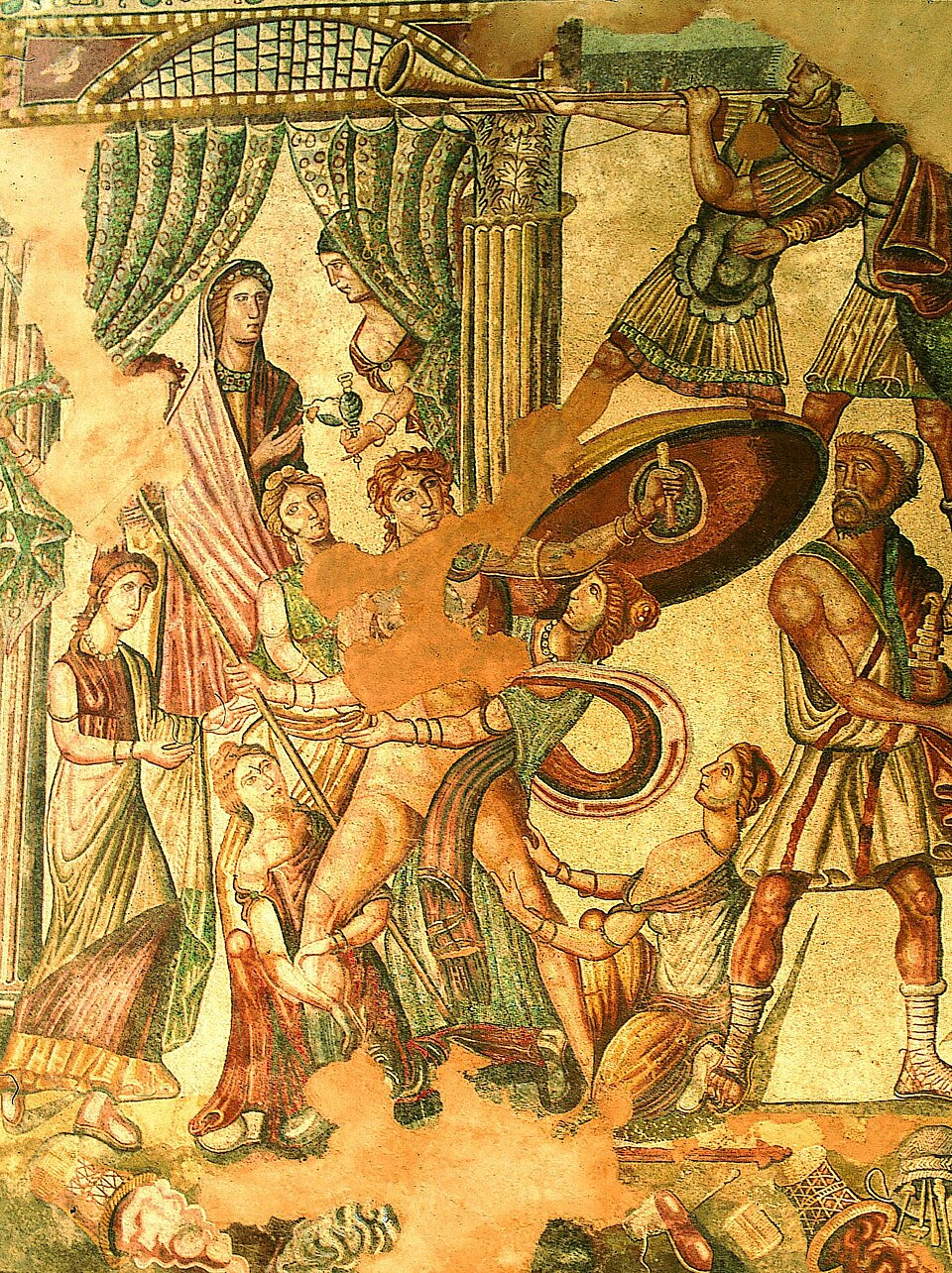
Long before he became the terror of the Trojan plain, Achilles was simply a boy in the kingdom of Phthia, son of Peleus, king of the Myrmidons, and Thetis, a Nereid — a sea-goddess. His birth had been shadowed by prophecy: Zeus and Poseidon had both sought Thetis's hand, until the Titan Prometheus warned Zeus of a prophecy — originally uttered by Themis, goddess of divine law — that Thetis would bear a son greater than his father. Rather than risk fathering their own doom, both gods withdrew, and Thetis married the mortal Peleus instead. Achilles was the result — a child born of divine blood but mortal flesh, raised alongside his companion Patroclus and tutored by the wise centaur Chiron.
Thetis, unwilling to accept her son's mortality, tried to change it. One tradition holds that she dipped the infant Achilles into the river Styx, whose waters were said to grant invulnerability. But she held him by his left heel to do it, and the heel never touched the water. Every part of him became impervious to harm — except that single point where his mother's fingers had gripped him.
A darker variant of the story exists too: that Thetis anointed her children in ambrosia and held them over fire to burn away their mortal parts, and that Peleus, discovering her doing this to Achilles, interrupted her in fury — leaving the boy's heel scorched but unfinished, the rest of him already transformed.
Whichever version is true, the name itself may carry a clue to his destiny. Scholars have traced 'Achilles' to a fusion of Greek words for grief and for people or army — suggesting something like 'he who brings the army grief' or 'whose people grieve for him.' It's a bitterly fitting name for a man whose glory and sorrow would become inseparable.
Achilles grew to become the commander of the Myrmidons and the greatest fighter among the Greeks who sailed to besiege Troy. Homer's Iliad, composed around the 720s BCE, does not open with Achilles killing anyone — it opens with his rage, when Agamemnon takes from him the woman Briseis. Achilles withdraws from battle entirely, sulking in his tent while the war rages without him, deaf to attempts to lure him back.
More from Mythology

The Doctor Who Sang a Nation Into Being
A country doctor rode into the forests of Karelia armed with nothing but a notebook — and rode out with the soul of a nation.

The Boat That Carried the Sun
Every sunset, the ancient Egyptians believed, the sun climbed into a boat and sailed straight into the realm of the dead — only to fight a monstrous serpent before dawn could return.

The Wild Man of the Snows
At 21,000 feet, a colonel found tracks in the snow that he blamed on a wolf — but his guides knew better, and gave the world a name that would echo for a century.

The Knight Who Went Mad for Love: Orlando Furioso
A hero so devoted to duty he was Charlemagne's greatest paladin loses his mind—not to a sword wound, but to heartbreak. To cure him, a friend must ride a flying horse to the Moon.

The Book That Turned the World Into Myth
A poet condemned to exile spent his final years in Rome finishing a poem that would outlive empires—a poem about nothing standing still, not gods, not lovers, not even the shape of a man.

Paradise Lost: Milton's Rebel Angel
A blind poet, dictating verses in the dark, dared to explain the ways of God to men — and in doing so, made Hell's ruler unforgettable.