Breadcrumbs Through the Dark Wood
Two starving children, a trail meant to lead them home, and a house built entirely of sugar and lies — the forest keeps its own kind of hunger.
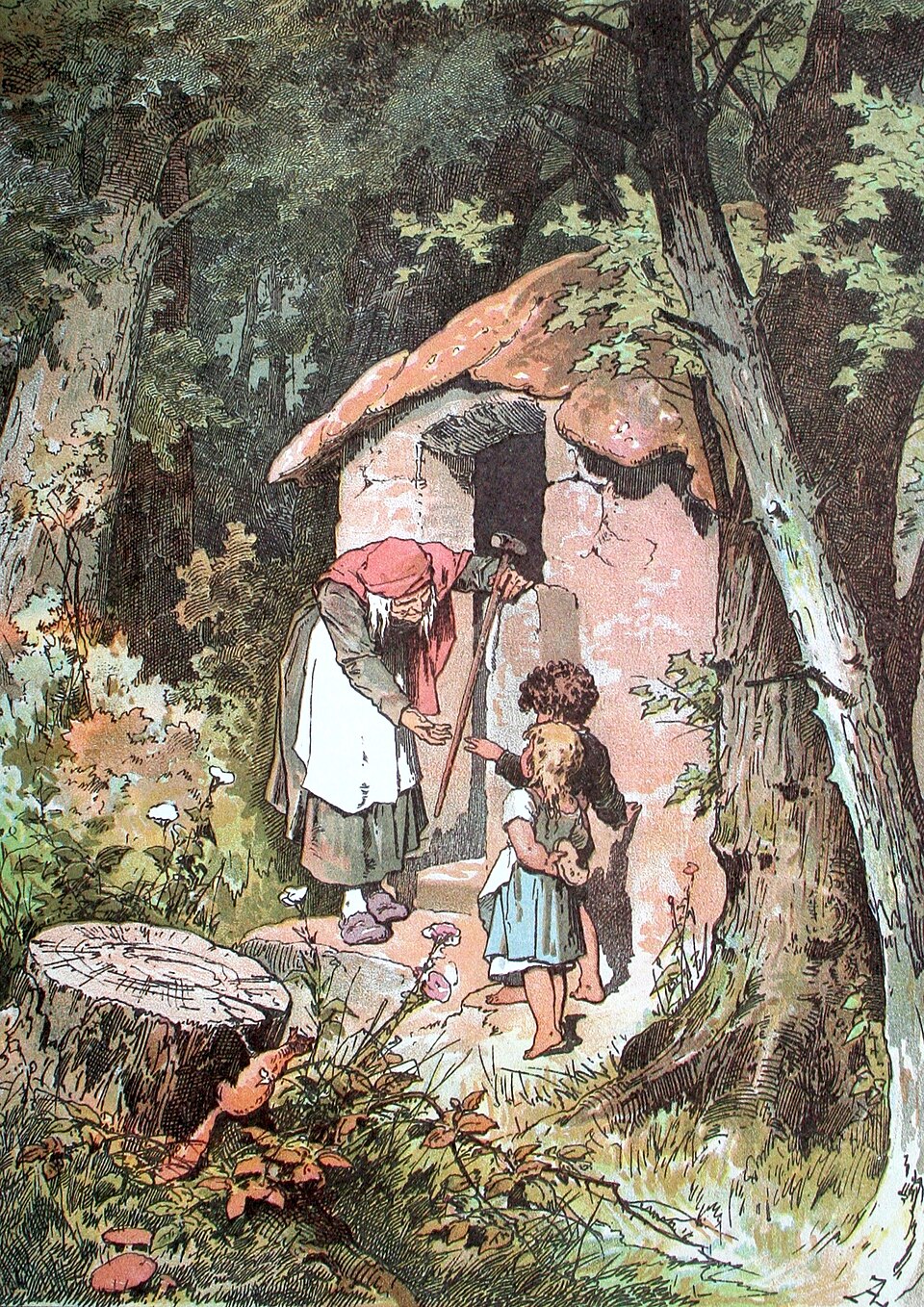
In a poor woodcutter's cottage, famine has settled like a permanent guest. His wife, weary of watching food vanish into small mouths, presses him night after night to take Hansel and Gretel deep into the forest and leave them there. He resists, but eventually gives in — unaware that the children, lying awake in their room, have heard every word through the wall.
That night Hansel slips outside and fills his pockets with white pebbles gleaming under the moon. The next morning, given only scraps of bread, the children are led into the woods, Hansel dropping pebbles behind him as they walk. Abandoned once the parents slip away, the children wait for darkness, then follow the moonlit stones home. Their stepmother's fury only deepens the household's desperation.
When provisions run out again, she demands the woodcutter take the children further into the forest still. This time the door is locked the night before, and Hansel has no pebbles — only bread, which he crumbles into a trail as they walk. It is not enough: birds descend and eat every crumb, and this time the children are truly lost.
After three days of wandering, hunger gnawing at them, they follow a white dove to a clearing and find a cottage unlike any other — walls of bread, a roof of cake, windows of clear sugar. Starved, they begin tearing pieces from the walls to eat. The door opens, and an old woman invites them in, feeding them richly and putting them to soft beds.
She is, in truth, a witch, and the confectionery house was built purely as a lure. She locks Hansel in a cage to fatten him and forces Gretel into servitude, making her cook meals meant to plump her brother for the oven. Hansel, cunning even in captivity, finds a thin bone left behind by an earlier captive. When the half-blind witch reaches in to check his fatness, he offers the bone instead of his finger, and she is fooled again and again.
More from Mythology

The Doctor Who Sang a Nation Into Being
A country doctor rode into the forests of Karelia armed with nothing but a notebook — and rode out with the soul of a nation.

The Boat That Carried the Sun
Every sunset, the ancient Egyptians believed, the sun climbed into a boat and sailed straight into the realm of the dead — only to fight a monstrous serpent before dawn could return.

The Wild Man of the Snows
At 21,000 feet, a colonel found tracks in the snow that he blamed on a wolf — but his guides knew better, and gave the world a name that would echo for a century.

The Knight Who Went Mad for Love: Orlando Furioso
A hero so devoted to duty he was Charlemagne's greatest paladin loses his mind—not to a sword wound, but to heartbreak. To cure him, a friend must ride a flying horse to the Moon.

The Book That Turned the World Into Myth
A poet condemned to exile spent his final years in Rome finishing a poem that would outlive empires—a poem about nothing standing still, not gods, not lovers, not even the shape of a man.

Paradise Lost: Milton's Rebel Angel
A blind poet, dictating verses in the dark, dared to explain the ways of God to men — and in doing so, made Hell's ruler unforgettable.