Cassandra: The Prophet No One Believed
She saw the wooden horse for what it was, watched Troy burn in her mind before it burned in truth — and could not make a single soul listen.
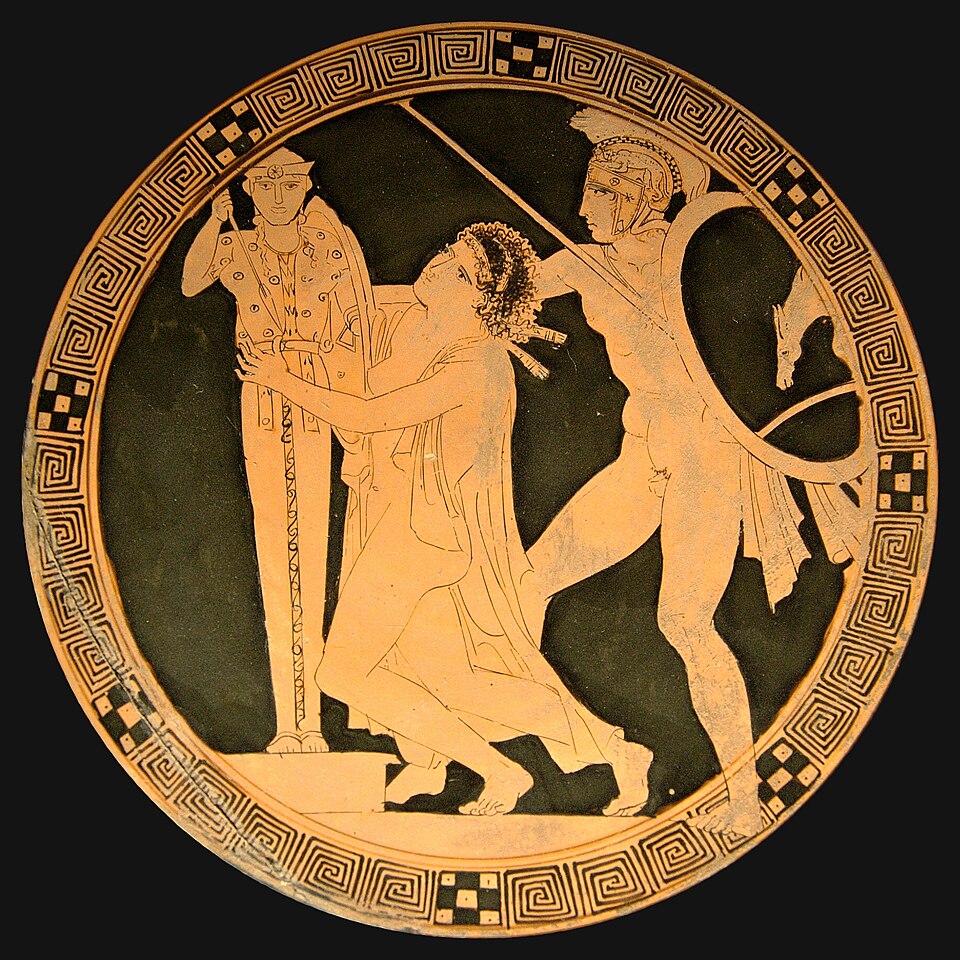
In the temple courts of Troy, a princess named Cassandra practiced her devotions to Apollo with an intensity that set her apart from her sisters. She was, by Homer's account, the fairest of King Priam's many daughters, a young woman who wanted nothing more than to remain a virgin priestess and to know the shape of things to come. Apollo noticed her, desired her, and offered a bargain: the gift of true prophecy in exchange for her body.
Cassandra accepted the god's offer, or so most versions agree, and Apollo granted her the power by spitting into her mouth. But when the moment came for her to honor her side of the arrangement, she refused him. Some accounts suggest she never intended to keep her promise at all, having deceived Apollo simply to obtain the gift. Furious at being spurned, Apollo could not revoke what he had already given, so he twisted it instead: Cassandra would still see the truth of what was to come, but no one would ever believe her.
The curse settled over her like a shadow that never lifted. She foresaw the fall of Troy, the danger hidden in the wooden horse the Greeks left at the city gates, and the doom awaiting her own family — yet every warning fell on deaf ears. Her father Priam, believing her mad rather than gifted, locked her away and had her guarded as though she were dangerous rather than clairvoyant. The one prophecy anyone did credit was more mundane: that the abandoned infant Paris was in fact her own brother.
When her brother Hector died in battle, it was Cassandra who first announced his death to the grieving city, ensuring the Trojans could mourn him and see his body brought home. She lived through the entire war, watching the events she had predicted unfold exactly as she said they would, powerless to stop any of it. Ancient chroniclers disagreed on the small details of her appearance — Malalas described her as round-faced and calm, while Dares the Phrygian pictured her as auburn-haired, with eyes that flashed — but all agreed she was marked by an accuracy no one trusted.
When Troy finally fell, Cassandra sought sanctuary in the temple of Minerva, but Greek soldiers dragged her from the altar in chains. Trojan soldiers who saw her kidnapped tried to free her; Coroebus, who loved her, was the first to charge into the fight, and he died alongside Rhipeus, Dymas, and Hypanis. She survived the sack of the city only to be taken as a war prize by Agamemnon, the Greek commander, who brought her back to Mycenae as his concubine.
More from Mythology

The Doctor Who Sang a Nation Into Being
A country doctor rode into the forests of Karelia armed with nothing but a notebook — and rode out with the soul of a nation.

The Boat That Carried the Sun
Every sunset, the ancient Egyptians believed, the sun climbed into a boat and sailed straight into the realm of the dead — only to fight a monstrous serpent before dawn could return.

The Wild Man of the Snows
At 21,000 feet, a colonel found tracks in the snow that he blamed on a wolf — but his guides knew better, and gave the world a name that would echo for a century.

The Knight Who Went Mad for Love: Orlando Furioso
A hero so devoted to duty he was Charlemagne's greatest paladin loses his mind—not to a sword wound, but to heartbreak. To cure him, a friend must ride a flying horse to the Moon.

The Book That Turned the World Into Myth
A poet condemned to exile spent his final years in Rome finishing a poem that would outlive empires—a poem about nothing standing still, not gods, not lovers, not even the shape of a man.

Paradise Lost: Milton's Rebel Angel
A blind poet, dictating verses in the dark, dared to explain the ways of God to men — and in doing so, made Hell's ruler unforgettable.