David of Sassoun: The Shepherd Who Became a Sword
A boy too stubborn to bow becomes the last hope of a conquered mountain kingdom — and the legend that would outlive empires.
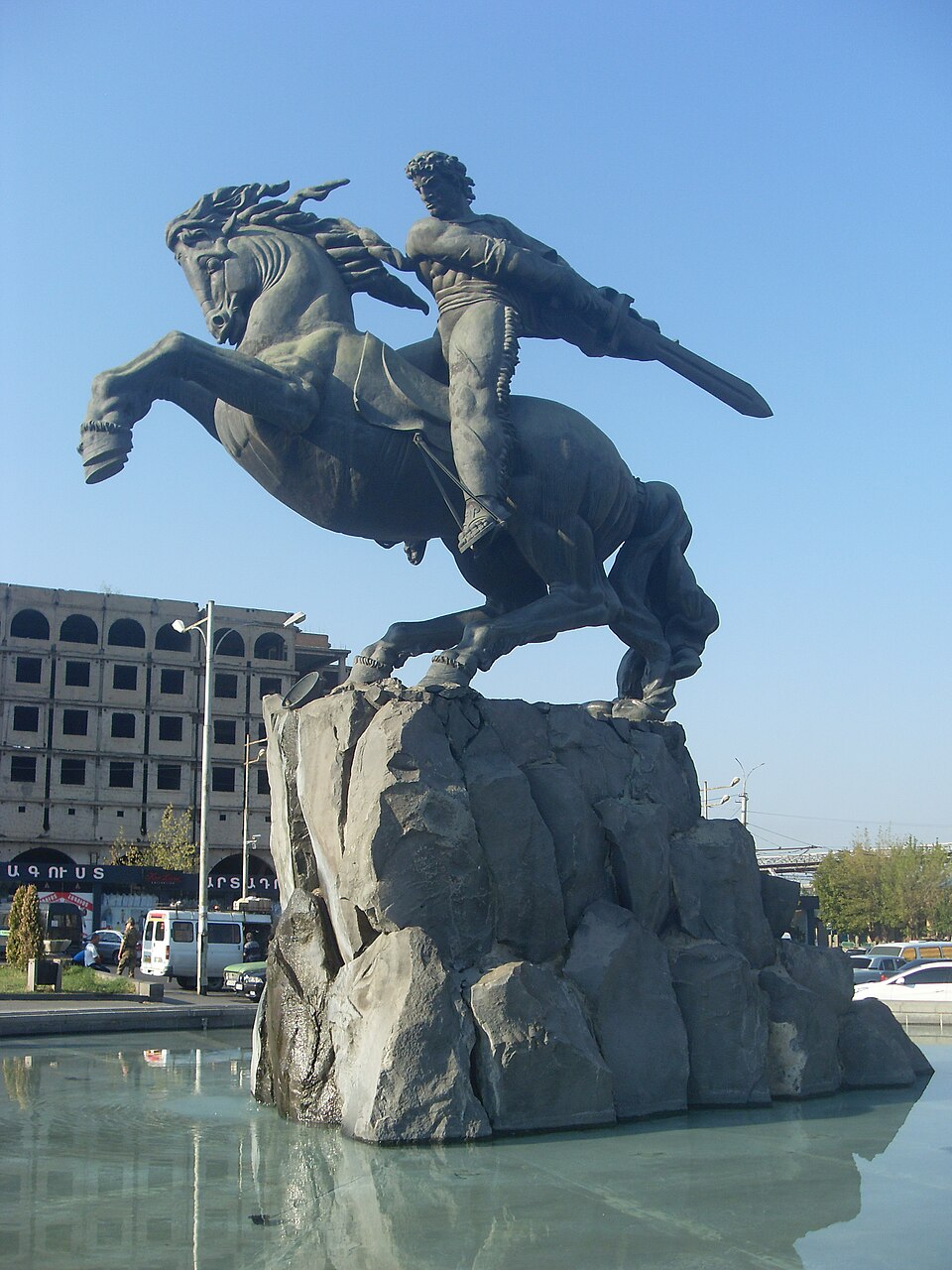
For eight centuries before it was ever written down, the story of David of Sassoun lived only in breath — passed from bard to bard, shepherd to shepherd, across the highlands surrounding Lake Van. It was not until 1873 that Garegin Srvandztiants, an Armenian ethnographer from the Van region, finally set the tale in ink, publishing it in Constantinople as David of Sassoun, or Mher's Door. Framed broadly, David is remembered as the hero who drove Arab invaders out of Armenia; but the epic itself, as it survived in oral memory, centers on a more specific conflict between the ethnic Armenians of Sassoun and Muslim Egyptians along the north-south axis linking Armenia and Mesopotamia — a real historical struggle transfigured, over generations of retelling, into something larger than history: a national epic.
The story begins with Lion Mher, ruler of Sassoun for forty years, aging without an heir. An angel appears to his wife the princess, promising a son. That son is David. But Mher and his wife die, and when Melik of Musr — the king of Egypt — learns of Mher's death, he marches on Sassoun. Ohan with the Great Voice, David's uncle, surrenders along with the rest of the people. Only David, a boy of seven or eight, refuses to bow.
His defiance unsettles the household. Ohan's wife, unable to control him, sends him off to be a shepherd. That fails. He is made a guard of the pastureland. That fails too. Finally Ohan hands him a bow and arrows and sends him into the hills to hunt — perhaps hoping the wilderness would tame him, or simply keep him busy.
In the hills, David finds an old woman and settles into her care. She is the one who awakens him to his heritage, scolding his ignorance and telling him of his father's old hunting grounds — land he must ask his uncle about. When David presses Ohan, he learns that the animals once hunted there have long since been seized by the Egyptians. Together they travel to the site, and in the night David glimpses a distant light. Following it, he discovers a ruined convent and church on Maruta's slope, called Charkhapan — the very place his father once prayed before battle, now destroyed by Melik.
David does not mourn the ruin; he rebuilds it. With five thousand workers gathered by his uncle, he restores the convent, and monks return to its walls. It is an act of quiet defiance disguised as reconstruction — and Melik notices. The Egyptian king sends his lord Gozbadin to round up Armenian prisoners in response. Ohan, true to form, surrenders again. But the old woman, watching events unfold, sends word to David: go and drive Melik's lords away. He does. The Egyptian warriors flee home in disarray, and when Melik hears of their failure, he declares outright war.
More from Mythology

The Doctor Who Sang a Nation Into Being
A country doctor rode into the forests of Karelia armed with nothing but a notebook — and rode out with the soul of a nation.

The Boat That Carried the Sun
Every sunset, the ancient Egyptians believed, the sun climbed into a boat and sailed straight into the realm of the dead — only to fight a monstrous serpent before dawn could return.

The Wild Man of the Snows
At 21,000 feet, a colonel found tracks in the snow that he blamed on a wolf — but his guides knew better, and gave the world a name that would echo for a century.

The Knight Who Went Mad for Love: Orlando Furioso
A hero so devoted to duty he was Charlemagne's greatest paladin loses his mind—not to a sword wound, but to heartbreak. To cure him, a friend must ride a flying horse to the Moon.

The Book That Turned the World Into Myth
A poet condemned to exile spent his final years in Rome finishing a poem that would outlive empires—a poem about nothing standing still, not gods, not lovers, not even the shape of a man.

Paradise Lost: Milton's Rebel Angel
A blind poet, dictating verses in the dark, dared to explain the ways of God to men — and in doing so, made Hell's ruler unforgettable.