Ergenekon: The Valley That Fed a Nation for Four Hundred Years
Trapped behind a wall of stone for four centuries, a defeated people waited — until a blacksmith found a way to melt a mountain.
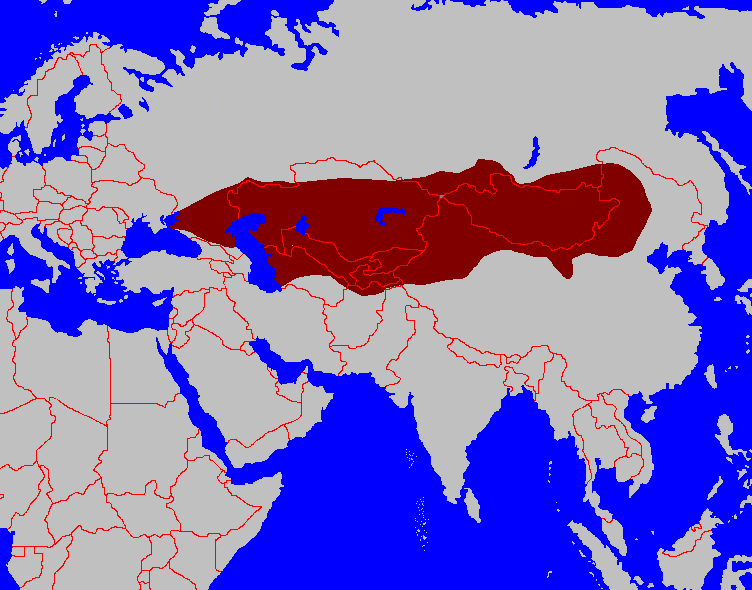
Long before the word 'Turk' meant a nation, it meant a memory of survival. The Ergenekon epic begins with catastrophe: a devastating military defeat left the ancient Turkic people nearly extinguished, their remnants fleeing into the unknown reaches of the Altay Mountains. There, in a hidden valley reachable only through a narrow mountain gorge, they found refuge. The place was called Ergenekon — a name scholars still argue over, some tracing it to Old Turkic words for a mountain passage and encampment, others to the Argun River and an old Mongolian term for a steep-sided plateau.
Whatever its origin, Ergenekon became a sanctuary and, eventually, a prison. Surrounded by impassable peaks, the survivors settled in and multiplied for four hundred years, sealed off from the world that had nearly destroyed them. It was, in the oldest tellings, a story shared across Turkic and Mongolic traditions alike — in the Mongolic version recorded by Rashid-al-Din Hamadani in his fourteenth-century Jāmiʿ al-tawārīkh, the refugees were Nekuz and Qiyan, ancestors of the Mongols, fleeing into the same kind of trapped valley after their own defeat.
In the Turkic telling, the valley's isolation eventually became unbearable. The population had grown too large for the land to sustain, and the people longed to return to the wider world. Deliverance came through fire and metal: a blacksmith discovered that the mountain rock could be melted, and through the passage he opened, the people escaped — led out by a gray she-wolf named Asena, the totem animal that would come to define Turkic mythology for centuries.
The escape from Ergenekon was remembered as nothing less than a rebirth. The people who walked out of that valley are said to have founded the First Turkic Khaganate, with Ergenekon itself functioning, in legend, as its founding capital. To this day, a New Year's ceremony commemorates that ancestral escape — a ritual echo of stone giving way to freedom.
Centuries later, in the closing decades of the Ottoman Empire, the legend found a second life. In 1864, Ahmed Vefik Pasha translated Abulghazi Bahadur's seventeenth-century Şecere-i Türk into Ottoman Turkish, reintroducing Ergenekon to a reading public hungry for a distinct national origin story. Turkish nationalist writers seized on it: Ziya Gökalp published a poem titled 'Türk An'anesi: Ergenekon' in 1913, and Ömer Seyfettin followed with his own verse the next year. Rıza Nur later produced a modern Turkish translation of the Şecere-i Türk in 1925.
More from Mythology

The Doctor Who Sang a Nation Into Being
A country doctor rode into the forests of Karelia armed with nothing but a notebook — and rode out with the soul of a nation.

The Boat That Carried the Sun
Every sunset, the ancient Egyptians believed, the sun climbed into a boat and sailed straight into the realm of the dead — only to fight a monstrous serpent before dawn could return.

The Wild Man of the Snows
At 21,000 feet, a colonel found tracks in the snow that he blamed on a wolf — but his guides knew better, and gave the world a name that would echo for a century.

The Knight Who Went Mad for Love: Orlando Furioso
A hero so devoted to duty he was Charlemagne's greatest paladin loses his mind—not to a sword wound, but to heartbreak. To cure him, a friend must ride a flying horse to the Moon.

The Book That Turned the World Into Myth
A poet condemned to exile spent his final years in Rome finishing a poem that would outlive empires—a poem about nothing standing still, not gods, not lovers, not even the shape of a man.

Paradise Lost: Milton's Rebel Angel
A blind poet, dictating verses in the dark, dared to explain the ways of God to men — and in doing so, made Hell's ruler unforgettable.