Erlik Han: Lord of the Nine-Layered Underworld
Somewhere beneath the ninth layer of the earth sits a copper palace, its throne carved of silver, lit by a dim red sun that gives almost no light. This is the domain of the being the Turkic peoples feared most.
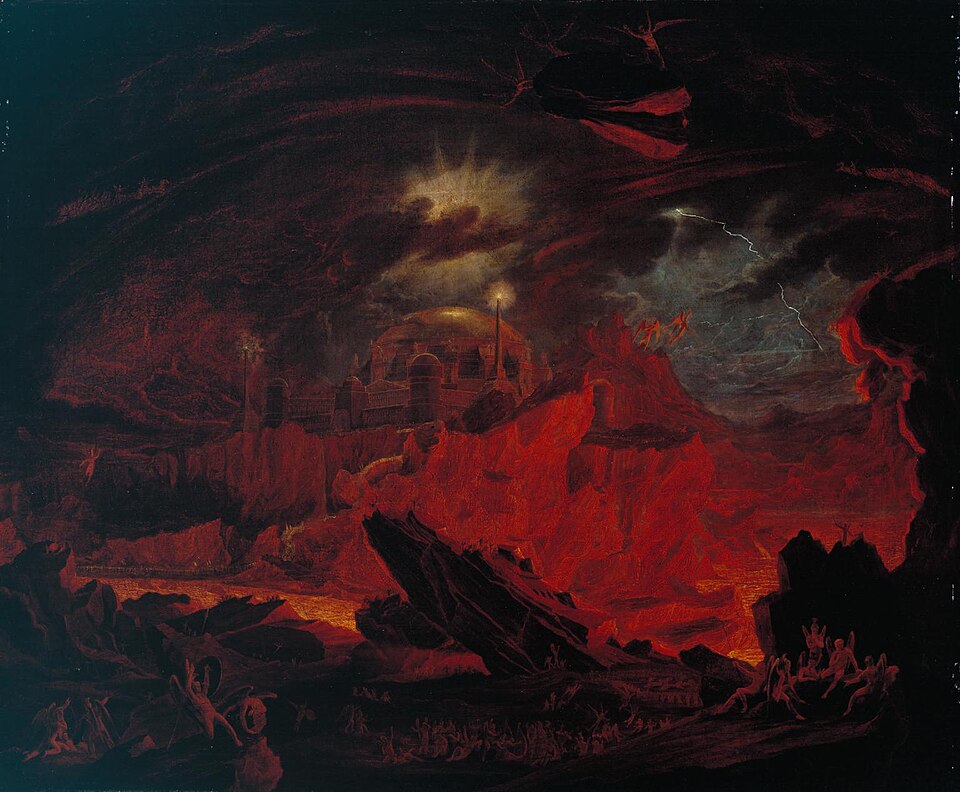
Long before written scripture, the nomadic peoples of the Altai and Siberian steppe spoke of a brother-god gone wrong. Erlik was created, alongside Ülgen, from Kayra Khan, the supreme sky god known as Tengere Kayra Khan. Where Ülgen represented the shining upper world, Erlik wanted equality with him — and when he claimed divinity for himself, he was cast down, sealed into the ninth layer beneath the earth. There, according to the Khakas people, he built his palace: walls of copper, furniture of gold, a court from which no light of the true sun could ever reach.
The Old Turkic Orkhon inscriptions already speak of him, meaning his cult stretches back over a thousand years across Turkic belief systems, later echoed among Mongols as Erleg or Yerleg, and even distantly related to the Hungarian devil-figure Ördög. His name itself carries meaning: 'er' or 'yer' signifies earth, the depths in which he lives and reigns.
Altai legends differ on exactly how Erlik fell. In one telling, he created spirits called İye while still in heaven and was expelled along with them when he overreached. In another, recorded by the scholar Vasily Radlov, the first human was sent by God to dive into the primordial sea and bring up a handful of soil to build the world. That human tried to hide some soil in his mouth to secretly build a private world — but the soil swelled and he was forced to spit it out. For this deceit, Kayra cast him from heaven and renamed him Erlik.
Once condemned, Erlik did not stay idle. He is remembered as a teacher of sin, the one who slew the messenger-god Maidere, and the bringer of an idea more devastating than any weapon: death itself. In a striking narrative, people were originally immortal, and both humans and animals so overcrowded the world that a crow suggested summoning Death. Erlik was called, and death entered the world. At first people knew exactly when they would die and lived in constant dread — until Tengri mercifully hid the date of each person's death from them.
Erlik's household expanded his reach into every corner of misfortune. He fathered nine sons, the Karaoğlanlar, or 'dark boys': Karash Khan of darkness, Matır Khan of courage turned to bravado in evil's service, Shingay Khan of chaos, Komur Khan of evil itself, Badish Khan of disaster, Yabash Khan of defeat, Temir Khan of iron and mining, Uchar Khan who watched and informed, and Kerey Khan who sowed discord. Nine daughters, the Karakızlar, served him too — their names lost to time, but their function well known: to seduce and distract shamans attempting the perilous ascent toward Ülgen's realm of light.
More from Mythology

The Doctor Who Sang a Nation Into Being
A country doctor rode into the forests of Karelia armed with nothing but a notebook — and rode out with the soul of a nation.

The Boat That Carried the Sun
Every sunset, the ancient Egyptians believed, the sun climbed into a boat and sailed straight into the realm of the dead — only to fight a monstrous serpent before dawn could return.

The Wild Man of the Snows
At 21,000 feet, a colonel found tracks in the snow that he blamed on a wolf — but his guides knew better, and gave the world a name that would echo for a century.

The Knight Who Went Mad for Love: Orlando Furioso
A hero so devoted to duty he was Charlemagne's greatest paladin loses his mind—not to a sword wound, but to heartbreak. To cure him, a friend must ride a flying horse to the Moon.

The Book That Turned the World Into Myth
A poet condemned to exile spent his final years in Rome finishing a poem that would outlive empires—a poem about nothing standing still, not gods, not lovers, not even the shape of a man.

Paradise Lost: Milton's Rebel Angel
A blind poet, dictating verses in the dark, dared to explain the ways of God to men — and in doing so, made Hell's ruler unforgettable.