Ganesha: The Elephant-Headed Lord Who Clears the Way
Before any prayer begins, before any journey starts, Hindus turn first to a god with an elephant's head and a broken tusk — because nothing, they believe, should be attempted without him.
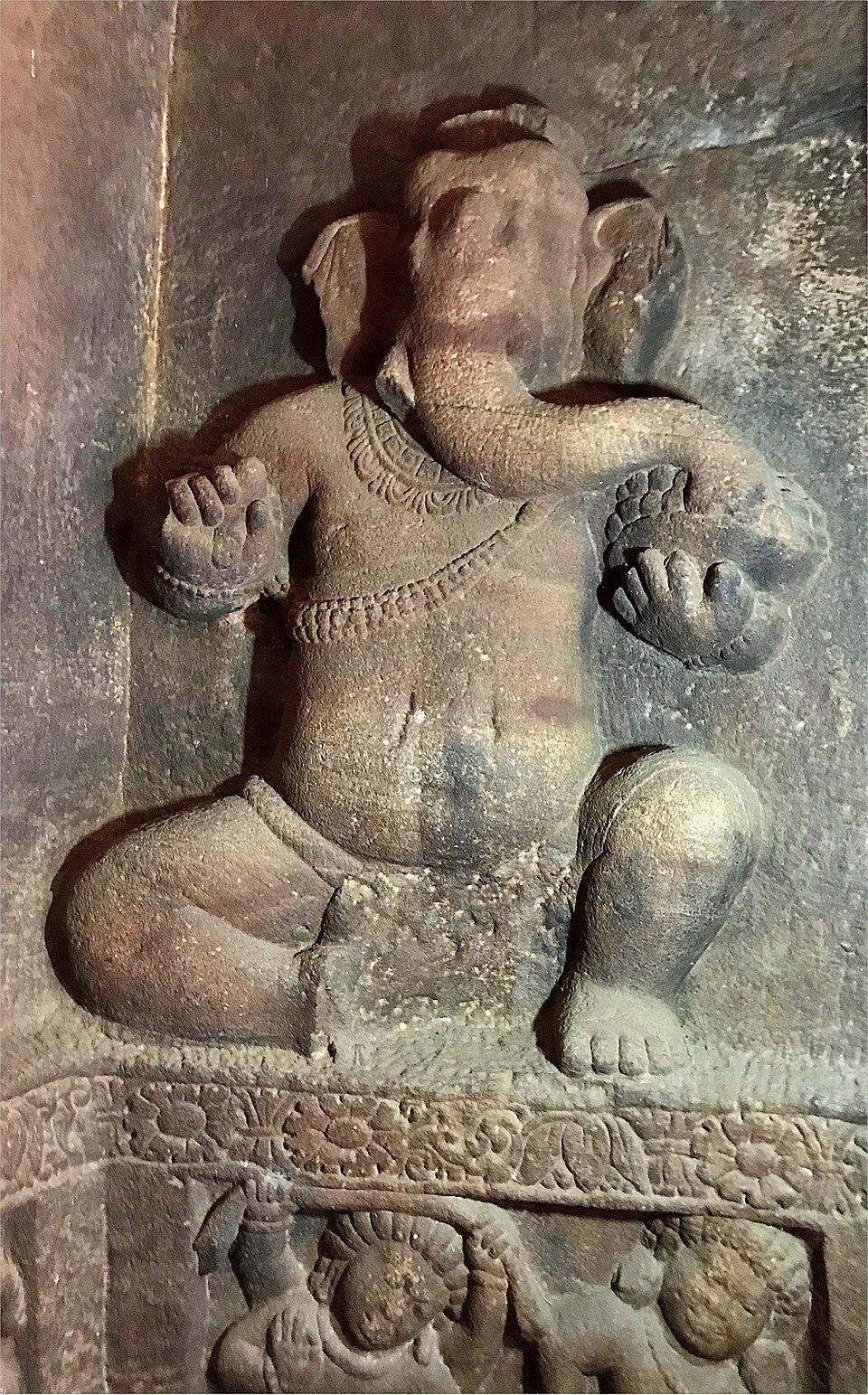
In the vast pantheon of Hinduism, few figures are as instantly recognizable or as universally beloved as Ganesha. Known also as Ganapati, Vinayaka, and Pillaiyar, he is worshipped across sectarian lines — by Shaivites, Vaishnavites, Jains, Buddhists, and beyond the borders of India itself. He holds the rare title of Pratham Pujya, the deity to be worshipped first, before any other god is invoked. To begin a ceremony, a letter, a journey, or a new venture without acknowledging Ganesha is, in Hindu tradition, to invite obstacles.
He is the son of Shiva and Parvati, born into the Shaivism tradition but embraced as a pan-Hindu god whose devotion transcends any single sect. In the Ganapatya tradition, he is regarded as nothing less than the Supreme Being, an incarnation of a superior form called Mahaganapati. The texts that shape his legend — the Ganesha Purana, the Mudgala Purana, and the Ganapati Atharvasirsha — describe a figure whose origins and exploits have been debated and elaborated for centuries.
His name itself carries meaning. 'Ganesha' joins the Sanskrit words gana, meaning a group or multitude, and isha, meaning lord or master — 'Lord of the Gaṇas,' the semi-divine troop attending his father Shiva. Ganapati, a near-synonym, combines gana with pati, 'ruler.' The ancient lexicon Amarakosha lists eight further names: Vinayaka, Vighnaraja, Dvaimatura ('one who has two mothers'), Ganadhipa, Ekadanta ('one who has one tusk'), Heramba, Lambodara ('the pot-bellied one'), and Gajanana, 'having the face of an elephant.'
The name Vighnesha, or Vighneshvara, points to his most famous role: Lord of Obstacles, both the one who places them and the one who removes them for the faithful. In Tamil tradition he is called Pillai or Pillaiyar — 'child' or 'noble child' — a name some scholars connect to Dravidian words for tusk, or to the Pali word for a young elephant. His worship has traveled far beyond India: in Burma he is Maha Peinne, in Thailand Phra Phi Khanet, and among Sinhalese Buddhists in Sri Lanka he is Gana deviyo, venerated alongside Vishnu, Skanda, and the Buddha.
Ganesha appears in Hindu texts as early as the 1st century BCE, with images of him documented from the 4th and 5th centuries CE. By the 6th century, his depictions were widespread across India, and by the 7th and 8th centuries his image had reached present-day Indonesia, Thailand, Cambodia, and Vietnam, echoing Indian models. A statue dated to the 13th century — closely matched by others placed between 973 and 1200 — shows the iconography that became standard: four arms, an elephant head, a large belly, a broken tusk held in one hand, and a sweet delicacy sampled with his trunk in another.
More from Mythology

The Doctor Who Sang a Nation Into Being
A country doctor rode into the forests of Karelia armed with nothing but a notebook — and rode out with the soul of a nation.

The Boat That Carried the Sun
Every sunset, the ancient Egyptians believed, the sun climbed into a boat and sailed straight into the realm of the dead — only to fight a monstrous serpent before dawn could return.

The Wild Man of the Snows
At 21,000 feet, a colonel found tracks in the snow that he blamed on a wolf — but his guides knew better, and gave the world a name that would echo for a century.

The Knight Who Went Mad for Love: Orlando Furioso
A hero so devoted to duty he was Charlemagne's greatest paladin loses his mind—not to a sword wound, but to heartbreak. To cure him, a friend must ride a flying horse to the Moon.

The Book That Turned the World Into Myth
A poet condemned to exile spent his final years in Rome finishing a poem that would outlive empires—a poem about nothing standing still, not gods, not lovers, not even the shape of a man.

Paradise Lost: Milton's Rebel Angel
A blind poet, dictating verses in the dark, dared to explain the ways of God to men — and in doing so, made Hell's ruler unforgettable.