Hades and Persephone: How the Seasons Were Born
He was the god no one dared name aloud — and the story that made him unforgettable began not with death, but with an abduction.
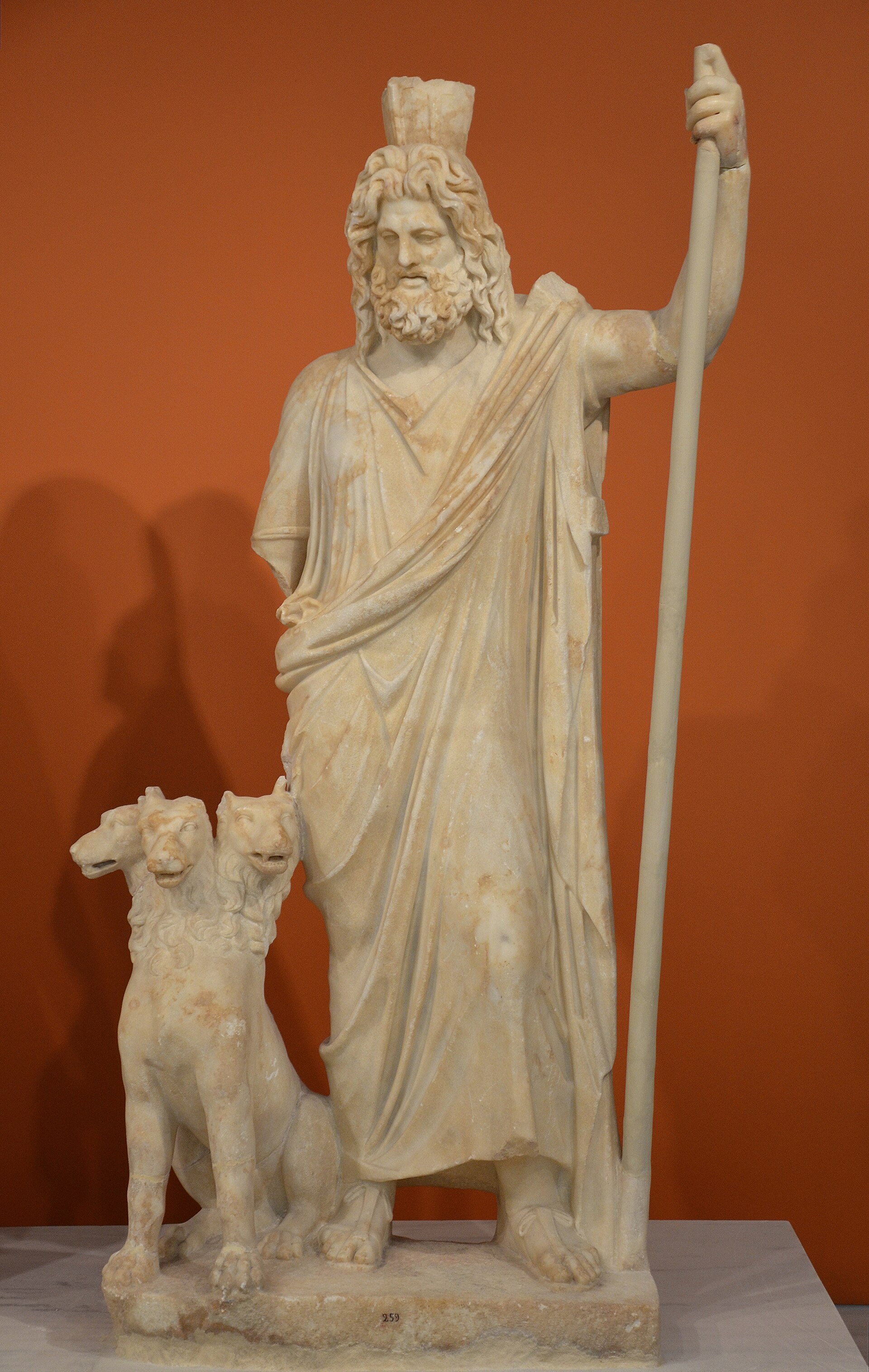
Long before he was called the lord of the dead, Hades was simply the eldest son of the Titans Cronus and Rhea. He was also, cruelly, the last to be freed: swallowed at birth by his father along with his siblings Hestia, Demeter, Hera, and Poseidon, he waited in darkness until Zeus, the youngest, forced Cronus to disgorge them all. Together the six siblings rose against their father's generation in the Titanomachy, a war that lasted ten years. Wearing a helm of invisibility forged by the Cyclopes, Hades fought at his brothers' side and helped topple the old order entirely.
When victory came, the world itself was divided. According to a single, famous passage in the Iliad, Zeus, Poseidon, and Hades drew lots for the cosmos: Zeus took the sky, Poseidon the seas, and Hades the unseen realm beneath the earth — the underworld, where every soul must eventually go. It was not a punishment so much as an allotment, the third share of a threefold kingdom, and Hades ruled it with a severity that never quite tipped into evil.
His name itself carried the weight of that role. Ancient Greeks understood 'Hades' to mean 'the unseen one,' and by the 5th century BC many had grown afraid even to speak it aloud. Instead they called him Plouton — 'the wealthy one' — because the riches of the earth, its crops, metals, and buried treasures, all belonged to the god below. Other titles followed: Agesander, Agesilaos, even 'Zeus of the underworld,' each one a way of naming him without quite naming him.
But the myth that made Hades unforgettable was not about war or wealth. It was about Persephone, daughter of Demeter and Zeus, whom Hades took as his wife through abduction — an act carried out, notably, at the behest of Zeus himself. This story became the oldest and most important tale involving Hades, dating in its earliest known form to the beginning of the 6th century BC, preserved in the Homeric Hymn to Demeter.
Demeter's grief at her daughter's disappearance was, by all accounts, immense. It fell to Helios, the sun god who sees all things, to console her. He told Demeter that Hades was no unworthy match for Persephone: a king in his own right, her own brother by blood, who had won his 'third share' fairly when the cosmos was divided among the three brothers. It was not, Helios argued, a dishonorable union — it was simply the marriage of a queen to the ruler of the dead.
More from Mythology

The Doctor Who Sang a Nation Into Being
A country doctor rode into the forests of Karelia armed with nothing but a notebook — and rode out with the soul of a nation.

The Boat That Carried the Sun
Every sunset, the ancient Egyptians believed, the sun climbed into a boat and sailed straight into the realm of the dead — only to fight a monstrous serpent before dawn could return.

The Wild Man of the Snows
At 21,000 feet, a colonel found tracks in the snow that he blamed on a wolf — but his guides knew better, and gave the world a name that would echo for a century.

The Knight Who Went Mad for Love: Orlando Furioso
A hero so devoted to duty he was Charlemagne's greatest paladin loses his mind—not to a sword wound, but to heartbreak. To cure him, a friend must ride a flying horse to the Moon.

The Book That Turned the World Into Myth
A poet condemned to exile spent his final years in Rome finishing a poem that would outlive empires—a poem about nothing standing still, not gods, not lovers, not even the shape of a man.

Paradise Lost: Milton's Rebel Angel
A blind poet, dictating verses in the dark, dared to explain the ways of God to men — and in doing so, made Hell's ruler unforgettable.