Jerusalem Delivered: The Epic That Turned a Siege into Legend
A city fought over for a thousand years became the stage for one of literature's great epics — but the war behind the poem was brutally real.
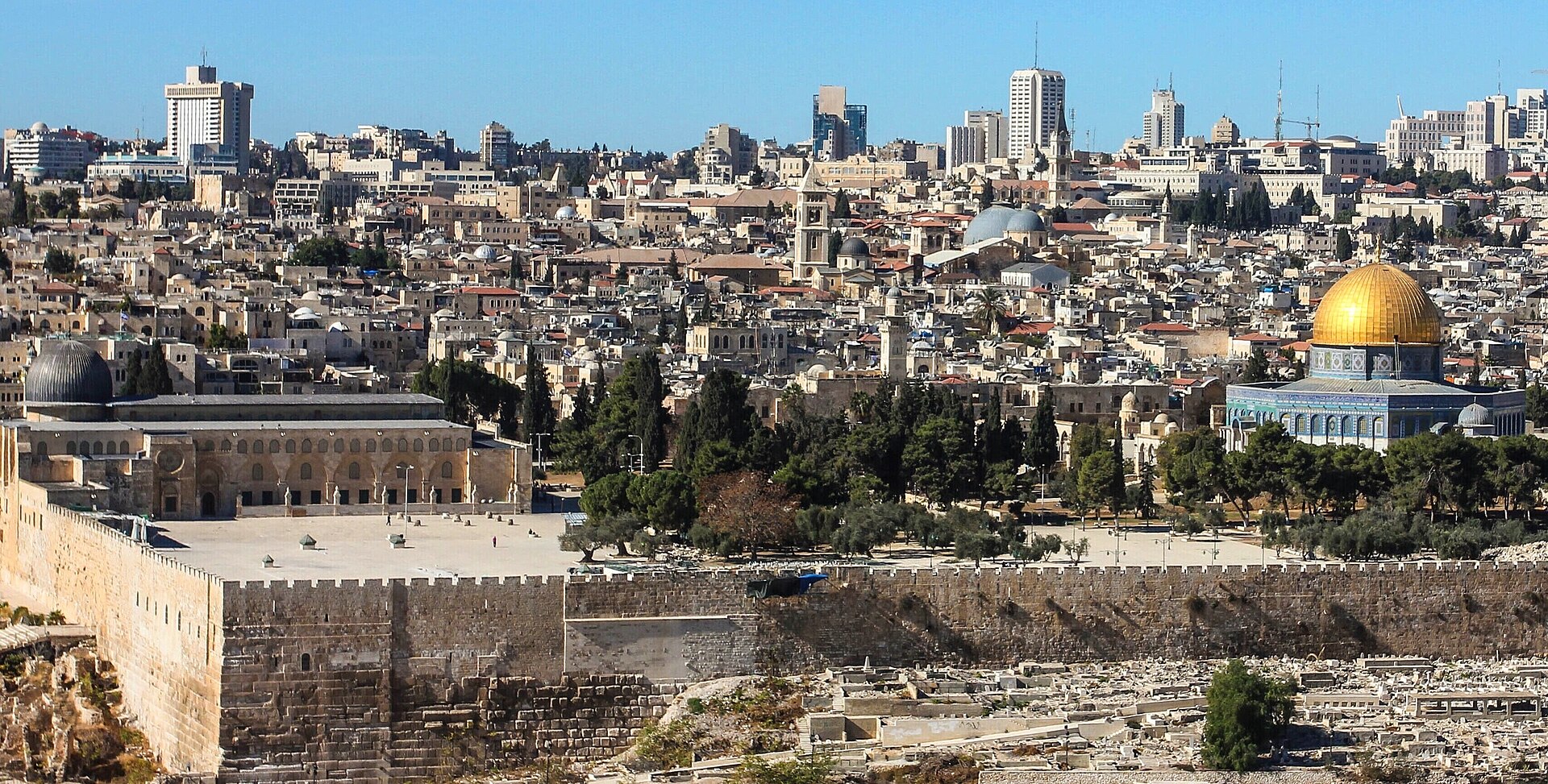
Long before any poet set pen to paper, Jerusalem had already earned its reputation as the most contested city on earth. Perched on a plateau in the Judaean Mountains between the Mediterranean and the Dead Sea, it had been destroyed at least twice, besieged twenty-three times, captured and recaptured forty-four times, and attacked fifty-two times over the course of its history. Sacred to Judaism, Christianity, and Islam alike, it was never simply a place on a map — it was a prize that armies crossed continents to seize.
In 637, the city fell to the armies of Caliph Umar after a war with the Byzantine Empire, bringing it under Muslim rule. That status held for more than four centuries until 1099, when the armies of the First Crusade stormed the walls and seized the city for Christendom. Out of that conquest rose the Kingdom of Jerusalem and a scattering of other Crusader states across the Levant — European rule planted deep in a land whose holiness had never depended on who governed it.
The Christian hold on Jerusalem did not last. In 1187, nearly ninety years after the Crusaders took the city, the forces of Saladin met the Crusader army at the Battle of Hattin and shattered it. Jerusalem returned to Muslim control after eighty-eight years in Christian hands, a reversal that echoed across Europe and became, for later generations, one of the defining dramas of the medieval world.
It was this drama — the First Crusade, its siege, and the fierce, doomed grandeur of holy war fought over Jerusalem — that supplied the raw material for one of the greatest epic poems of the Italian Renaissance: Torquato Tasso's Gerusalemme Liberata, 'Jerusalem Delivered.' Tasso took the historical siege of 1099 and transformed it into verse, giving literary immortality to a campaign that had already reshaped the fate of the city.
What made the subject so irresistible was the city itself. Jerusalem's walls, as they stand today, were rebuilt for the last time in 1538 under the Ottoman sultan Suleiman the Magnificent, but the Old City they enclose — divided since the nineteenth century into Armenian, Christian, Jewish, and Muslim quarters — still holds the physical memory of every army that ever marched on it. Within less than one square kilometer sit the Temple Mount and the Western Wall, the Church of the Holy Sepulchre, the Dome of the Rock, and the Al-Aqsa Mosque — a density of sacred sites unmatched anywhere else on the planet.
More from Mythology

The Doctor Who Sang a Nation Into Being
A country doctor rode into the forests of Karelia armed with nothing but a notebook — and rode out with the soul of a nation.

The Boat That Carried the Sun
Every sunset, the ancient Egyptians believed, the sun climbed into a boat and sailed straight into the realm of the dead — only to fight a monstrous serpent before dawn could return.

The Wild Man of the Snows
At 21,000 feet, a colonel found tracks in the snow that he blamed on a wolf — but his guides knew better, and gave the world a name that would echo for a century.

The Knight Who Went Mad for Love: Orlando Furioso
A hero so devoted to duty he was Charlemagne's greatest paladin loses his mind—not to a sword wound, but to heartbreak. To cure him, a friend must ride a flying horse to the Moon.

The Book That Turned the World Into Myth
A poet condemned to exile spent his final years in Rome finishing a poem that would outlive empires—a poem about nothing standing still, not gods, not lovers, not even the shape of a man.

Paradise Lost: Milton's Rebel Angel
A blind poet, dictating verses in the dark, dared to explain the ways of God to men — and in doing so, made Hell's ruler unforgettable.