Keloğlan: The Bald Boy Who Outwitted Giants
He was born bald, poor, and mocked by everyone around him — yet somehow, by the story's end, he always outsmarts kings, giants, and clever men alike.
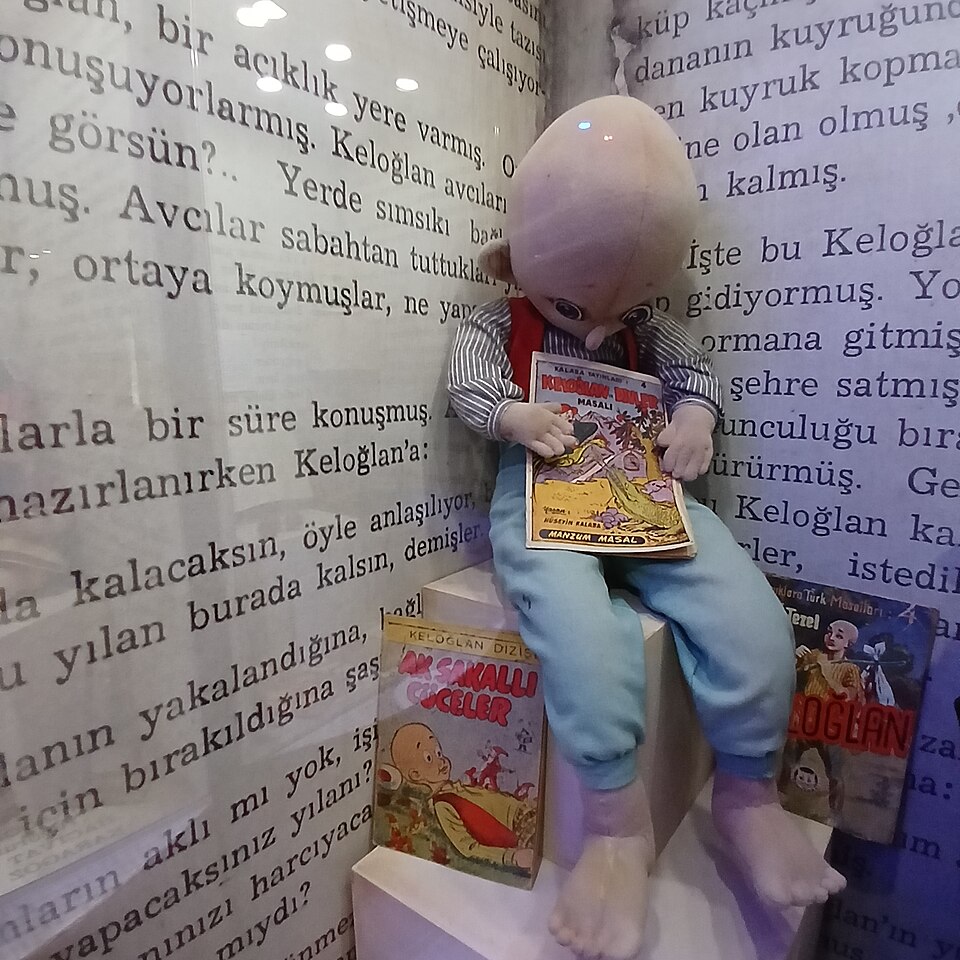
In the villages of Anatolia, storytellers have long conjured a peculiar hero: a boy without hair, without fortune, and often without a father, living with an old widowed mother or grandmother at the edge of poverty. He is Keloğlan — 'the bald boy' — and for centuries he has wandered through Turkish folklore as both fool and sage, clumsy simpleton and cunning survivor.
At the start of nearly every tale, Keloğlan seems hopeless: lazy, awkward, unremarkable except for his baldness, which marks him as an outsider from birth. But as the story unfolds, his true nature emerges. He proves himself honest, brave, resourceful, and sharp-witted, overcoming trials that no one expected a boy like him to survive, let alone win.
His adversaries are the powerful and the pompous — a rival trickster called Köse, giants, sultans, viziers, judges, misers. Keloğlan defeats them not with strength but with wit, sometimes with outright trickery, and occasionally with sheer luck or the aid of magical helpers: lions, birds, the legendary phoenix-like Zümrüdüanka, jinns, and fairies who reward his kindness with enchanted gifts. Those who wrong him are always punished in the end.
Most tales close the same way: Keloğlan marries the sultan's daughter, transformed from a despised nobody into a figure of triumph. Some versions give him a wife already, even multiple wives across different stories, but the arc remains constant — a reversal of fortune built on contrast, from the humblest beginning to the most improbable success.
According to folklorist Tahir Alangu, there are fifteen core types of Keloğlan tales, though countless more have been attributed to him over time by storytellers borrowing his name for new adventures — among them 'Keloglan and Köse,' 'Keloglan and His Sibling,' 'Open, O Table,' and 'Keloglan Revives the Dead.'
More from Mythology

The Doctor Who Sang a Nation Into Being
A country doctor rode into the forests of Karelia armed with nothing but a notebook — and rode out with the soul of a nation.

The Boat That Carried the Sun
Every sunset, the ancient Egyptians believed, the sun climbed into a boat and sailed straight into the realm of the dead — only to fight a monstrous serpent before dawn could return.

The Wild Man of the Snows
At 21,000 feet, a colonel found tracks in the snow that he blamed on a wolf — but his guides knew better, and gave the world a name that would echo for a century.

The Knight Who Went Mad for Love: Orlando Furioso
A hero so devoted to duty he was Charlemagne's greatest paladin loses his mind—not to a sword wound, but to heartbreak. To cure him, a friend must ride a flying horse to the Moon.

The Book That Turned the World Into Myth
A poet condemned to exile spent his final years in Rome finishing a poem that would outlive empires—a poem about nothing standing still, not gods, not lovers, not even the shape of a man.

Paradise Lost: Milton's Rebel Angel
A blind poet, dictating verses in the dark, dared to explain the ways of God to men — and in doing so, made Hell's ruler unforgettable.