King Arthur: The Sword, the Sorcerer, and the Kingdom That Never Was
A boy pulls a sword from a stone and becomes king — but no historian can prove he ever lived. So why has his story outlasted empires?
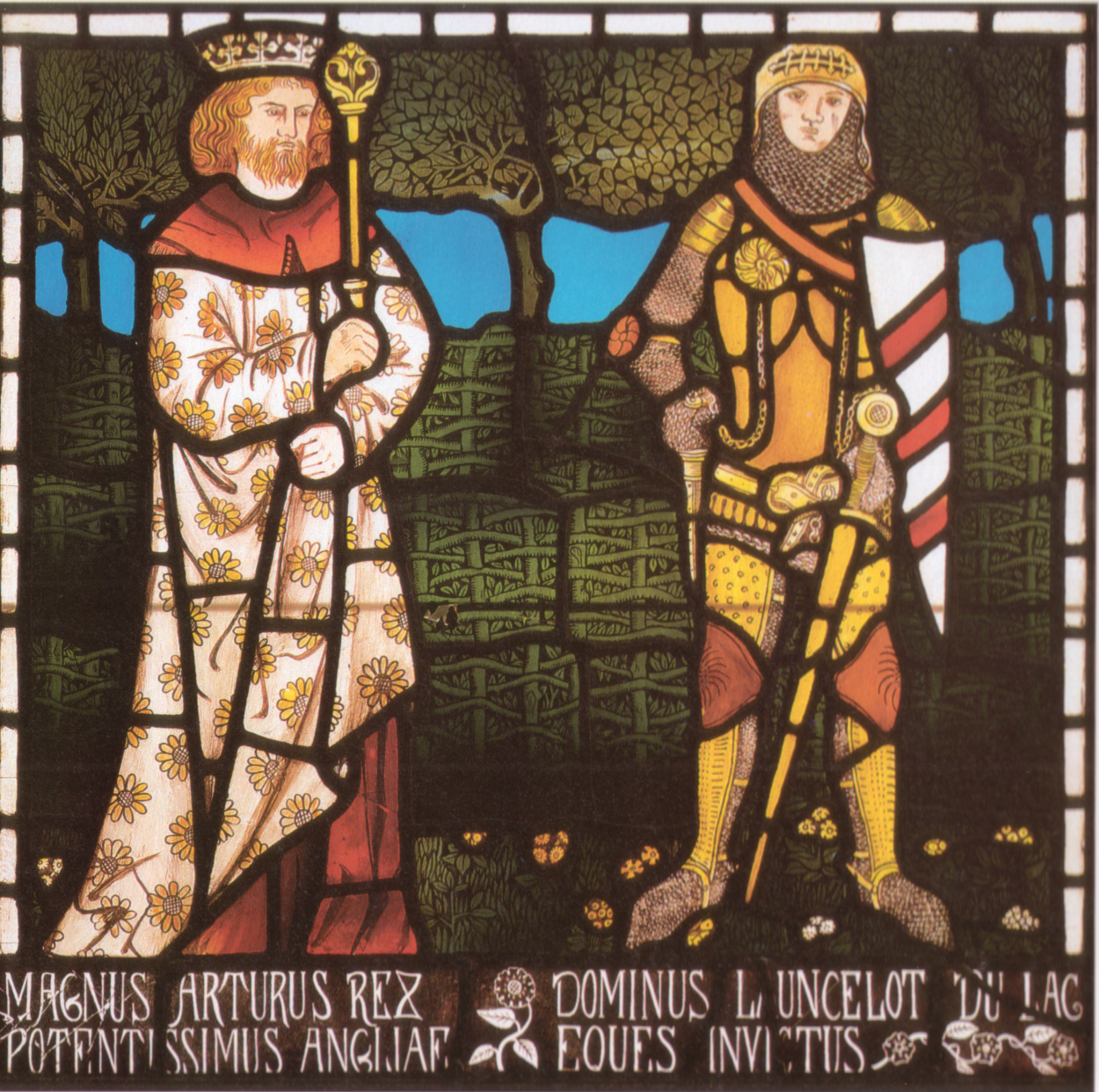
Long before knights and castles filled his legend, Arthur was a name whispered in the mouths of Welsh poets, appearing in early medieval verse such as Y Gododdin. He surfaces first in datable history in the Historia Brittonum, a 9th-century Latin compilation attributed to a Welsh cleric called Nennius, which lists twelve battles Arthur supposedly fought against the Anglo-Saxons, ending in the Battle of Badon — where he is said to have killed 960 men single-handedly. These sources, however, were written some three hundred years after Arthur is thought to have lived, and most historians who study the period do not consider him a historical figure at all.
The 10th-century Annales Cambriae adds further detail, dating the Battle of Badon to 516–518 and the Battle of Camlann — where Arthur and Medraut, later known as Mordred, both perished — to 537–539. For generations these dates were treated as confirmation of a real warlord. But modern scholarship has complicated that confidence: the Badon entry in the Annales Cambriae probably derived from the Historia Brittonum itself, and the complex textual history of the manuscript means the material may never have existed in any earlier chronicle. As historian Thomas Charles-Edwards put it, there may well have been a historical Arthur, but 'the historian can as yet say nothing of value about him.'
What is certain is that archaeological evidence in the Low Countries and Britain shows Anglo-Saxon migration reversing between 500 and 550 — a pattern some, like historian John Davies, connect to a British victory at Badon Hill, the very battle Nennius credited to Arthur. It is a tantalizing thread of possible truth wound through centuries of embellishment.
The Arthur most people know, though, was born not on a battlefield but on a page. Geoffrey of Monmouth's 12th-century Historia Regum Britanniae transformed Arthur into a king who conquered the Saxons and built a vast empire. Geoffrey gave us Arthur's father Uther Pendragon, his conception at Tintagel, the wizard Merlin, his wife Guinevere, the sword Excalibur, the final battle against Mordred at Camlann, and Arthur's last rest on the isle of Avalon — the scaffolding of nearly every Arthurian story since.
Then came the French poet Chrétien de Troyes, who added Lancelot and the Holy Grail, launching the genre of Arthurian romance. From this point the story often drifted away from Arthur himself toward the Knights of the Round Table — men whose loyalties, loves, and betrayals would come to define the legend as much as the king did.
More from Mythology

The Doctor Who Sang a Nation Into Being
A country doctor rode into the forests of Karelia armed with nothing but a notebook — and rode out with the soul of a nation.

The Boat That Carried the Sun
Every sunset, the ancient Egyptians believed, the sun climbed into a boat and sailed straight into the realm of the dead — only to fight a monstrous serpent before dawn could return.

The Wild Man of the Snows
At 21,000 feet, a colonel found tracks in the snow that he blamed on a wolf — but his guides knew better, and gave the world a name that would echo for a century.

The Knight Who Went Mad for Love: Orlando Furioso
A hero so devoted to duty he was Charlemagne's greatest paladin loses his mind—not to a sword wound, but to heartbreak. To cure him, a friend must ride a flying horse to the Moon.

The Book That Turned the World Into Myth
A poet condemned to exile spent his final years in Rome finishing a poem that would outlive empires—a poem about nothing standing still, not gods, not lovers, not even the shape of a man.

Paradise Lost: Milton's Rebel Angel
A blind poet, dictating verses in the dark, dared to explain the ways of God to men — and in doing so, made Hell's ruler unforgettable.