Layla and Majnun: The Madness of a Desert Love
He carved three lines of poetry into a rock beside her grave — and then he died there, in the sand, having already lost everything else.
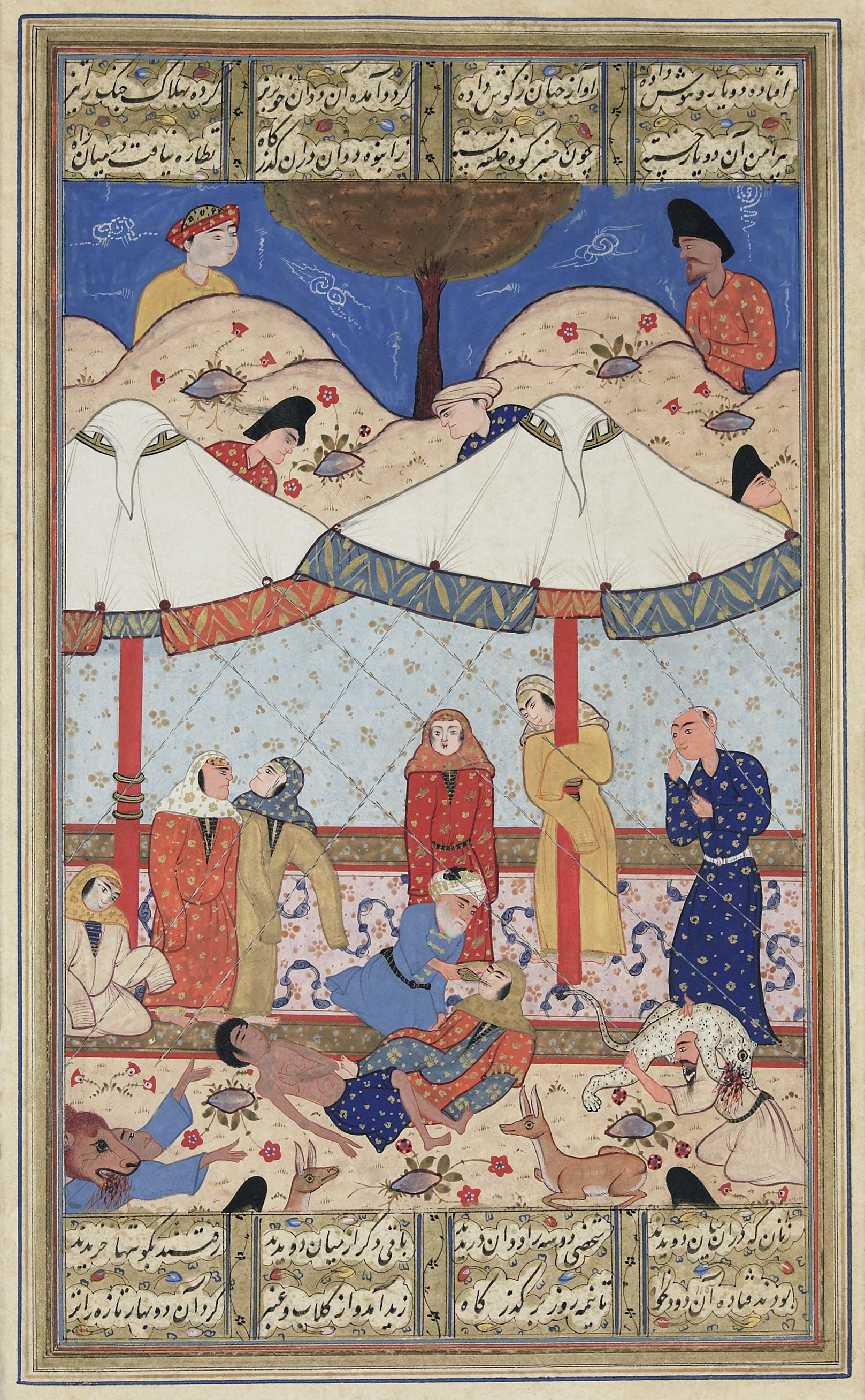
In the seventh century, in the deserts of Najd, a boy named Qays ibn al-Mulawwah fell in love with a girl named Layla, daughter of Mehdi ibn Sa'd al-Amiriyah. They belonged to the same tribe, Banu Amir of the Hawazin, related by blood as cousins, and their love bloomed early and openly. Qays began composing poems about her, saying her name so often and so publicly that the tribe began whispering a new word for him: Majnun — possessed, mad, unhinged by love.
When he finally worked up the courage to ask for her hand, Layla's father refused him. The scandal of Qays's obsessive verses had already stained her reputation; marrying a man the whole camp called 'crazy' was unthinkable. Instead, Layla was married off to a wealthy, handsome merchant of the Thaqif tribe from Ta'if, a red-complexioned man the Arabs called Ward — meaning 'rose'.
The news broke something in Qays. He fled the tribal camp and wandered into the open desert, abandoning the world of tents and kinship for sand and silence. His family searched, then waited, and finally gave up hope of bringing him home. They left food for him in the wilderness instead, the way one leaves offerings for someone already gone. Travelers sometimes spotted him reciting verses to himself or scratching poems into the sand with a stick, alone with his obsession.
Most of the poetry attributed to him was composed before this descent into madness — love poems, longing poems, poems that circulated among the Banu Amir until they became legend. One of the few verses said to survive him captures the strange purity of his devotion: 'I pass by this town, the town of Layla, and I kiss this wall and that wall — it's not love of the town that has enraptured my heart, but of the One who dwells within this town.'
Layla, meanwhile, moved north with her husband. She fell ill there, and — in the way the story is usually told — died of an illness inseparable from heartbreak, having never been permitted to see the man she'd loved as a girl. Word of her death eventually reached Qays in the wilderness.
More from Mythology

The Doctor Who Sang a Nation Into Being
A country doctor rode into the forests of Karelia armed with nothing but a notebook — and rode out with the soul of a nation.

The Boat That Carried the Sun
Every sunset, the ancient Egyptians believed, the sun climbed into a boat and sailed straight into the realm of the dead — only to fight a monstrous serpent before dawn could return.

The Wild Man of the Snows
At 21,000 feet, a colonel found tracks in the snow that he blamed on a wolf — but his guides knew better, and gave the world a name that would echo for a century.

The Knight Who Went Mad for Love: Orlando Furioso
A hero so devoted to duty he was Charlemagne's greatest paladin loses his mind—not to a sword wound, but to heartbreak. To cure him, a friend must ride a flying horse to the Moon.

The Book That Turned the World Into Myth
A poet condemned to exile spent his final years in Rome finishing a poem that would outlive empires—a poem about nothing standing still, not gods, not lovers, not even the shape of a man.

Paradise Lost: Milton's Rebel Angel
A blind poet, dictating verses in the dark, dared to explain the ways of God to men — and in doing so, made Hell's ruler unforgettable.