Māui: The Trickster Who Snared the Sun
Thrown into the sea as an unwanted infant, he grew into the demigod who lassoed the sun itself — and nearly cheated death for all of humanity.
He should not have survived his own birth. Born prematurely to his mother Taranga, the child was wrapped in a lock of her hair from her topknot, or tikitiki, and cast into the ocean — Taranga feared he would return as a malevolent spirit, an atua kahukahu. But the sea did not let him die. Ocean spirits wrapped the infant in seaweed and jellyfish, and gulls and flies swarmed over him on the beach until his grandfather, Tama-nui-ki-te-Rangi, found him and raised him to adolescence. From that abandonment came his full name: Māui-tikitiki-a-Taranga.
When he was grown, Māui sought out his family and found four brothers — Māui-taha, Māui-roto, Māui-pae, and Māui-waho — and a sister, Hina. The brothers were wary of this stranger, but Māui crept into the marae one night while they danced, and when Taranga discovered the strange child among her sons, she recognized him at last as her own. Some brothers resented the newcomer, but the eldest urged the others to treat him kindly, quoting an old proverb about settling disputes as friends rather than enemies. Māui soon proved his worth, transforming himself into different birds, and his brothers came to admire him.
Māui grew curious about his mother's comings and goings — she vanished before dawn and returned only at night. He blocked the doorways and light sources of the house and hid her clothing to keep her from leaving. When morning came, he watched her pull up a clump of tussock grass and descend through a hidden tunnel into the underworld. Māui shape-shifted into a kererū, a native pigeon, and followed her down, finding his parents among manapau trees. He dropped berries onto their heads to get their attention, and Taranga recognized her son.
His father, Makeatutara, guardian of the underworld, attempted to perform a baptismal ritual over him but rushed through it carelessly. For this mistake, the gods decreed that Māui — and all humanity after him — would be mortal, doomed to die.
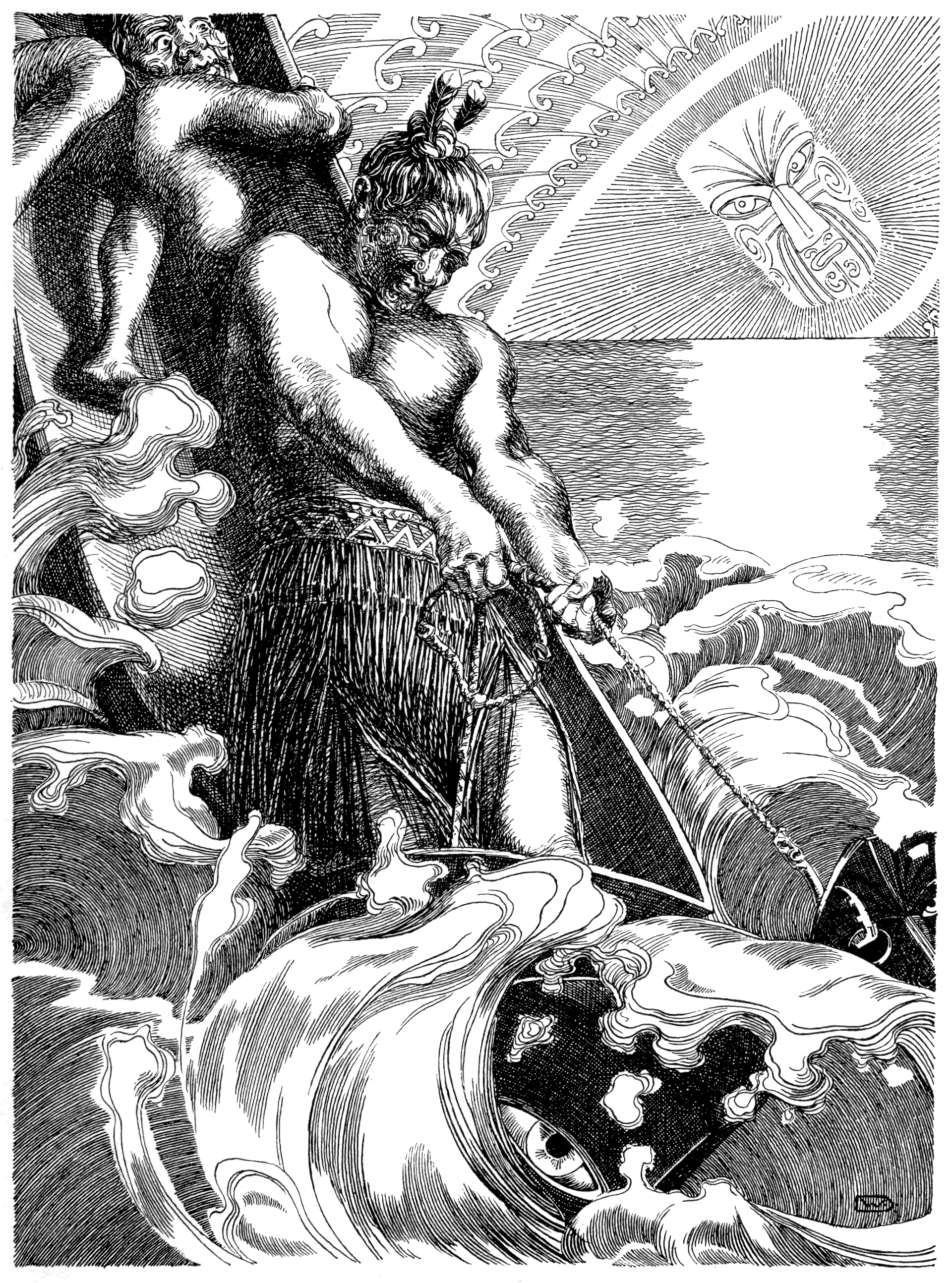
Māui's exploits were not confined to family drama. In the days before his intervention, the sun, Tama-nui-te-rā, raced across the sky so quickly that people had no time to work or eat. Armed with the enchanted jaw-bone of Murirangawhenua and ropes said in some accounts to be woven from his sister Hina's hair, Māui and his brothers traveled east to the pit where the sun slept each night. They lassoed him in a noose and beat him with the jaw-bone until he agreed to cross the sky more slowly, giving humanity the long days we know now.
More from Mythology

The Doctor Who Sang a Nation Into Being
A country doctor rode into the forests of Karelia armed with nothing but a notebook — and rode out with the soul of a nation.

The Boat That Carried the Sun
Every sunset, the ancient Egyptians believed, the sun climbed into a boat and sailed straight into the realm of the dead — only to fight a monstrous serpent before dawn could return.

The Wild Man of the Snows
At 21,000 feet, a colonel found tracks in the snow that he blamed on a wolf — but his guides knew better, and gave the world a name that would echo for a century.

The Knight Who Went Mad for Love: Orlando Furioso
A hero so devoted to duty he was Charlemagne's greatest paladin loses his mind—not to a sword wound, but to heartbreak. To cure him, a friend must ride a flying horse to the Moon.

The Book That Turned the World Into Myth
A poet condemned to exile spent his final years in Rome finishing a poem that would outlive empires—a poem about nothing standing still, not gods, not lovers, not even the shape of a man.

Paradise Lost: Milton's Rebel Angel
A blind poet, dictating verses in the dark, dared to explain the ways of God to men — and in doing so, made Hell's ruler unforgettable.