Nart Sagas: The Steel-Hearted Heroes of the Caucasus
A boy born from a stone, a mother who never ages, a hero killed only by a wheel's blade to the knee — these are not fairy tales but the living memory of a mountain world.
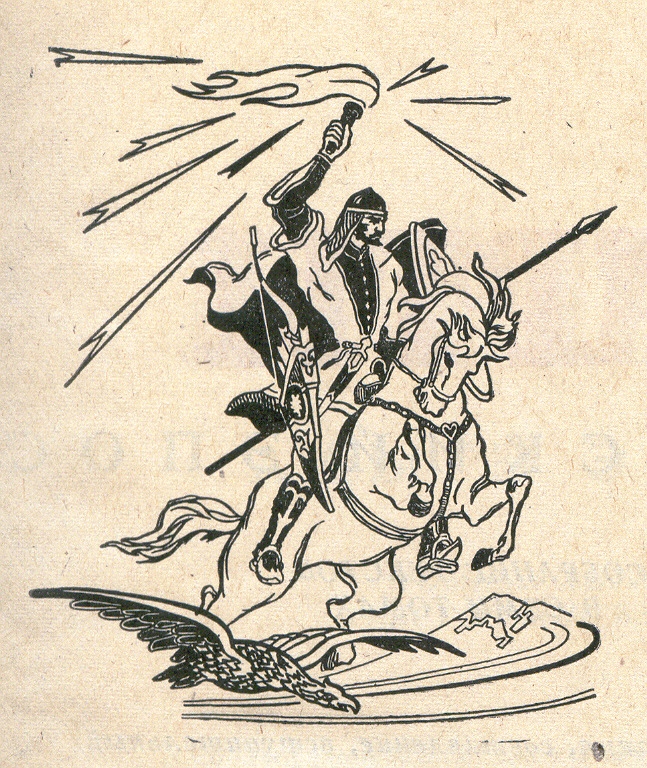
High in the valleys of the North Caucasus, long before any scribe wrote a word down, storytellers sang of a people called the Narts. Their tales traveled through Abkhaz, Circassian, Ossetian, Karachay-Balkar, and Chechen-Ingush tongues, each community shaping the same core of heroes into its own dialect and rhythm. What survived is not one epic but a constellation of them, gathered centuries later into thousands of recorded texts.
The very name Nart carries centuries of argument. Ossetian tradition traces it to an old word for 'hero, man,' rooted in a Proto-Iranian term that also, curiously, feeds into the name of the Roman emperor Nero. Turkic-speaking scholars have proposed Mongolic origins meaning 'famous' or 'noble,' pointing to cognates in Kalmyk, Karachay, and Kumyk. In Chechen and Ingush, nart simply means giant. No single answer satisfies everyone, and that argument itself mirrors the sagas' patchwork nature.
At the center of the Circassian and Abkhaz versions stands Sosruko — known also as Savsırıko or Soslan among the Ossetians — a hero born from a stone, his body invulnerable except at the knees. His death, when it comes, follows a pattern common to Nart heroes: a secret weakness, learned only through a wizard or seer, becomes the instrument of his undoing. In his case, a wheel with a blade strikes precisely where his knees are unprotected.
Presiding over the Narts as mother and matriarch is Satanaya, called Setenay-guashe in Circassian tradition, whose name has been read as 'she who gives the sword.' She is no passive figure; she is the one to whom the Narts turn for counsel, a fertility figure and wise woman whose authority reflects an older matriarchal order embedded in the tales. Alongside her stand warriors like Batraz, the greatest fighter of the Narts, and Uryzmaeg and Haemyts, twin-born sons of Akhsartag and Dzerassae, daughter of a sea god.
The world these characters inhabit teems with more than human drama. Circassian versions alone catalog forest men with sword-like chests, ghosts, dwarves called Yisp, sorcerers, dragons, treasure guardians, and the people of the Land of the Dead. Blacksmith gods like Tlepsh forge weapons for heroes, echoing the Vainakh figure Pkharmat, who steals fire from the gods for mortals — a theme that scholars have long linked to the Greek myth of Prometheus, sometimes said to be chained to Mount Kazbek or Elbrus itself.
More from Mythology

The Doctor Who Sang a Nation Into Being
A country doctor rode into the forests of Karelia armed with nothing but a notebook — and rode out with the soul of a nation.

The Boat That Carried the Sun
Every sunset, the ancient Egyptians believed, the sun climbed into a boat and sailed straight into the realm of the dead — only to fight a monstrous serpent before dawn could return.

The Wild Man of the Snows
At 21,000 feet, a colonel found tracks in the snow that he blamed on a wolf — but his guides knew better, and gave the world a name that would echo for a century.

The Knight Who Went Mad for Love: Orlando Furioso
A hero so devoted to duty he was Charlemagne's greatest paladin loses his mind—not to a sword wound, but to heartbreak. To cure him, a friend must ride a flying horse to the Moon.

The Book That Turned the World Into Myth
A poet condemned to exile spent his final years in Rome finishing a poem that would outlive empires—a poem about nothing standing still, not gods, not lovers, not even the shape of a man.

Paradise Lost: Milton's Rebel Angel
A blind poet, dictating verses in the dark, dared to explain the ways of God to men — and in doing so, made Hell's ruler unforgettable.