Oedipus: The King Who Could Not Outrun Prophecy
A newborn's ankles are pierced and bound so he cannot crawl away from a curse — but the curse follows him anyway, all the way to a throne, a marriage, and a mountain crossroads he never should have taken.
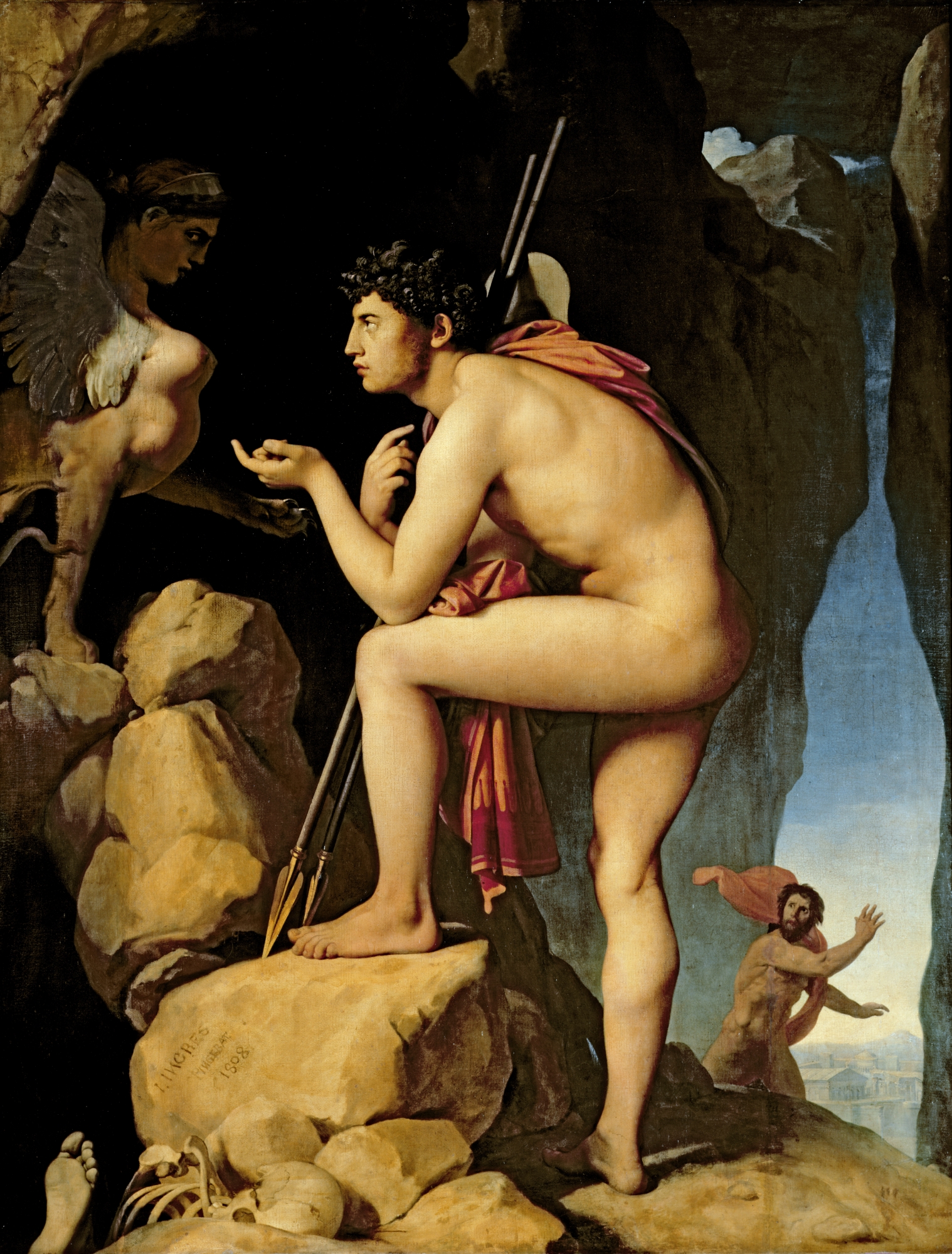
Before Oedipus could walk, he was marked by fate. Laius and Jocasta, the king and queen of Thebes, had consulted the Oracle of Apollo at Delphi and received a terrible answer: any son born to Laius would kill him. When Jocasta bore a boy, Laius had the infant's ankles pierced and bound together, then ordered him abandoned on a mountainside to die of exposure — a fate that gave the child his name, Oedipus, 'swollen foot.'
The servant entrusted with this grim task could not bring himself to finish it. He passed the baby to a shepherd from Corinth, who in turn gave him to another shepherd. Eventually Oedipus came into the hands of Polybus and Merope, the childless king and queen of Corinth, who raised him as their own son, never revealing his true origins.
Years later, a drunken man at a feast called Oedipus a bastard. Shaken, Oedipus confronted Polybus and Merope, who denied everything, but doubt lingered. He traveled to the Oracle at Delphi to learn the truth of his birth. Instead, he received a prophecy of horror: he was destined to kill his father and marry his mother. Determined to escape this fate, he resolved never to return to Corinth — the only home he knew — and set out instead toward Thebes.
On the road, at a crossroads near Daulia, Oedipus encountered a chariot carrying an older man he did not recognize. A dispute erupted over right of way, and in the ensuing fight, Oedipus killed the stranger — who was, unknown to him, his true father, King Laius. A single witness fled the scene, and Oedipus continued onward, unaware of what he had done.
Thebes was under siege by the Sphinx, a monster that posed a riddle to every traveler and devoured those who failed to answer. The riddle: what walks on four feet in the morning, two in the afternoon, and three at night? Oedipus answered correctly — man, who crawls as an infant, walks upright as an adult, and leans on a cane in old age. The Sphinx's defeat won Oedipus the vacant throne of Thebes and the hand of its widowed queen, Jocasta — his own mother, though neither knew it. Their marriage produced four children: sons Eteocles and Polynices, and daughters Antigone and Ismene.
More from Mythology

The Doctor Who Sang a Nation Into Being
A country doctor rode into the forests of Karelia armed with nothing but a notebook — and rode out with the soul of a nation.

The Boat That Carried the Sun
Every sunset, the ancient Egyptians believed, the sun climbed into a boat and sailed straight into the realm of the dead — only to fight a monstrous serpent before dawn could return.

The Wild Man of the Snows
At 21,000 feet, a colonel found tracks in the snow that he blamed on a wolf — but his guides knew better, and gave the world a name that would echo for a century.

The Knight Who Went Mad for Love: Orlando Furioso
A hero so devoted to duty he was Charlemagne's greatest paladin loses his mind—not to a sword wound, but to heartbreak. To cure him, a friend must ride a flying horse to the Moon.

The Book That Turned the World Into Myth
A poet condemned to exile spent his final years in Rome finishing a poem that would outlive empires—a poem about nothing standing still, not gods, not lovers, not even the shape of a man.

Paradise Lost: Milton's Rebel Angel
A blind poet, dictating verses in the dark, dared to explain the ways of God to men — and in doing so, made Hell's ruler unforgettable.