Perseus and Medusa: Death in a Mirror
A boy locked atop a bronze tower, a monster whose gaze turns flesh to stone — and the only weapon that could beat her was a mirror.
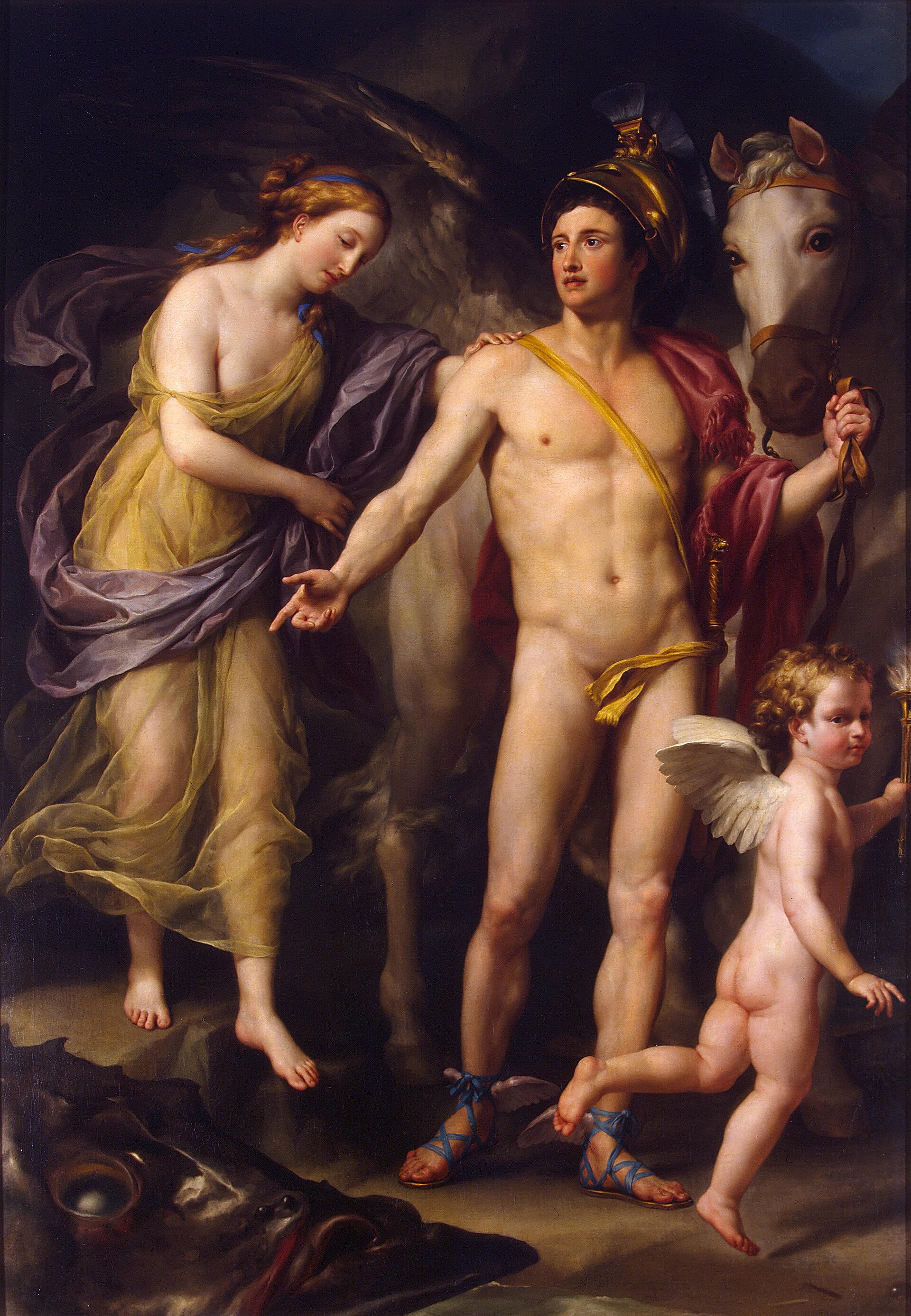
King Acrisius of Argos had one child, a daughter named Danaë, and no son to inherit his throne. When he asked the Oracle at Delphi whether he would ever have a male heir, the answer chilled him: he would be killed one day by his own grandson. To prevent this, Acrisius imprisoned Danaë in a room atop a bronze tower in the courtyard of his palace, sealing her from the world. But Zeus came to her as a shower of gold, slipping through a crack in the roof, and Danaë bore a son: Perseus.
Enraged and afraid, Acrisius could not bring himself to kill a child fathered by Zeus, so instead he sealed mother and son inside a wooden chest and cast them into the sea. Poseidon calmed the waters, and the chest drifted to the island of Seriphos, where a fisherman named Dictys found them and raised the boy. Dictys's brother, Polydectes, ruled the island — and as Perseus grew into manhood, Polydectes grew obsessed with Danaë.
Unable to get past her son's protection, Polydectes devised a trap. He announced a banquet where every guest was expected to bring a gift, claiming he needed contributions for a marriage proposal. When asked what he would bring, Perseus rashly named the one thing no one could produce: the head of Medusa, the Gorgon whose gaze turned living creatures to stone. Polydectes seized on the boast and demanded he deliver it or be disgraced.
Perseus prayed to the gods, and Zeus sent two of his other children to arm his mortal son. Hermes lent his winged sandals and his harpe sword; Hades contributed a helm of invisibility. Athena gave Perseus her polished shield, so he could look upon Medusa's reflection rather than her deadly eyes directly, and a special pouch to carry the severed head safely, since even in death it could turn a man to stone.
Before reaching the Gorgons, Perseus had to find them. Athena instructed him to seek out the Graeae, three ancient sisters who shared a single eye and a single tooth between them. Perseus snatched the eye as it passed from hand to hand and refused to return it until they told him where the Gorgons lived. They named the Island of Sarpedon, and he restored their eye before moving on.
More from Mythology

The Doctor Who Sang a Nation Into Being
A country doctor rode into the forests of Karelia armed with nothing but a notebook — and rode out with the soul of a nation.

The Boat That Carried the Sun
Every sunset, the ancient Egyptians believed, the sun climbed into a boat and sailed straight into the realm of the dead — only to fight a monstrous serpent before dawn could return.

The Wild Man of the Snows
At 21,000 feet, a colonel found tracks in the snow that he blamed on a wolf — but his guides knew better, and gave the world a name that would echo for a century.

The Knight Who Went Mad for Love: Orlando Furioso
A hero so devoted to duty he was Charlemagne's greatest paladin loses his mind—not to a sword wound, but to heartbreak. To cure him, a friend must ride a flying horse to the Moon.

The Book That Turned the World Into Myth
A poet condemned to exile spent his final years in Rome finishing a poem that would outlive empires—a poem about nothing standing still, not gods, not lovers, not even the shape of a man.

Paradise Lost: Milton's Rebel Angel
A blind poet, dictating verses in the dark, dared to explain the ways of God to men — and in doing so, made Hell's ruler unforgettable.