Priam's Gold: A Treasure's Long Journey from Troy to Moscow
On a lunch break at a Turkish dig in 1873, a wealthy German businessman claimed to have cut a fortune in gold from the earth with a knife — and then invented the story of how it was carried away.
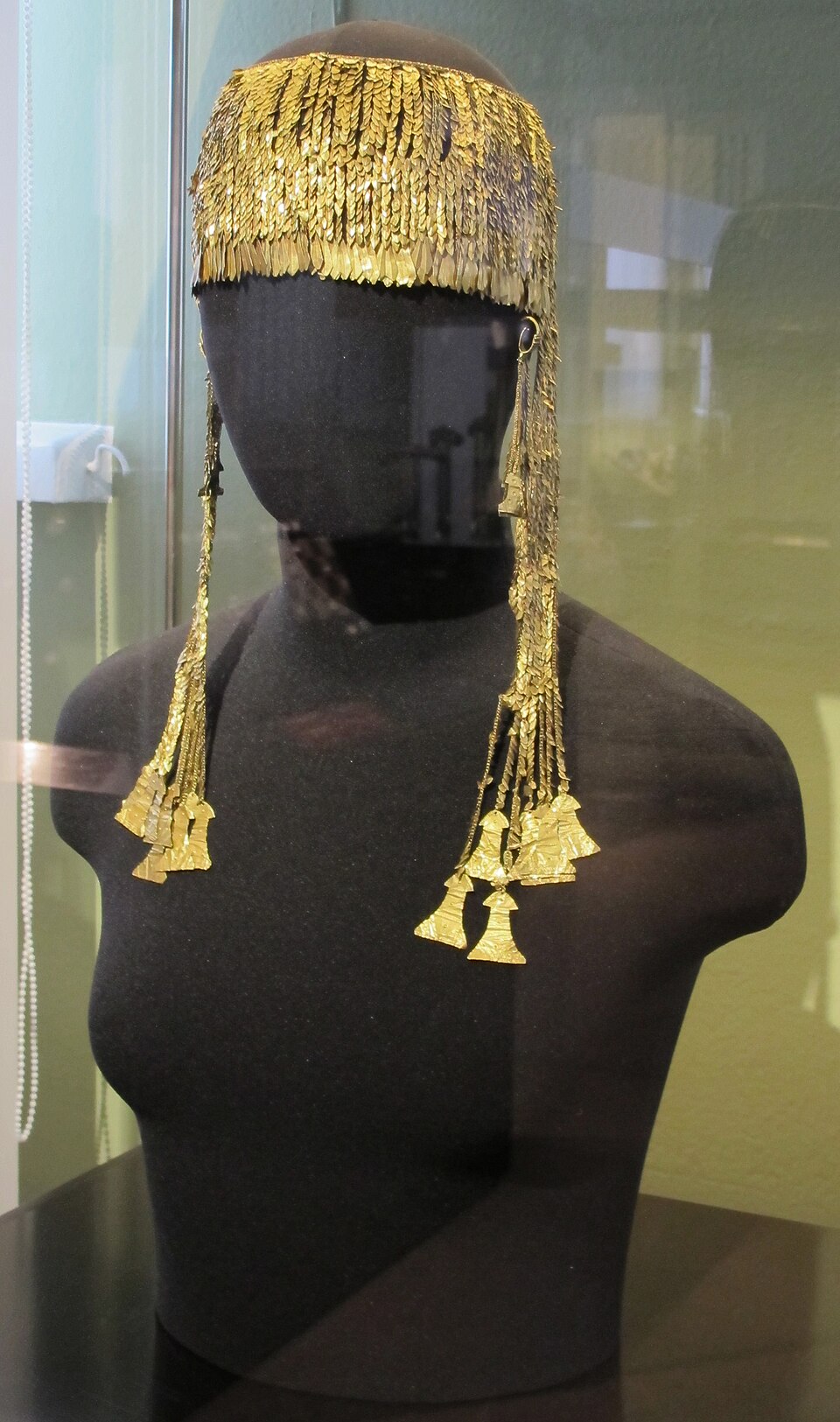
On or about May 27, 1873, at the mound of Hisarlık on Turkey's northwestern coast, Heinrich Schliemann said he spotted gold glinting behind a large copper object buried near what he called the palace of King Priam. To keep his workmen from noticing, he called an early lunch break, then dug the hoard out himself with a knife. He later claimed his wife Sophie stood beside him, catching the golden pieces in her shawl. It was a vivid story — and, as Schliemann himself eventually admitted, entirely false. Sophie was in Athens at the time, mourning her father's recent death.
Schliemann was not the first to dig at Hisarlık. Frank Calvert, an English consular official and amateur archaeologist whose family owned part of the mound, had been excavating there since the 1840s and had already amassed a substantial collection of artifacts. It was Calvert who, after Schliemann's disappointing search at nearby Pınarbaşı, suggested Hisarlık as the true site of Homeric Troy. Guided by Calvert, Schliemann excavated the mound in 1871–73 and 1878–79, uncovering the remains of a succession of ancient cities stacked atop one another, from the Bronze Age through the Roman period.
Schliemann declared one of these layers — first Troy I, later Troy II — to be Homer's Troy, and the world largely believed him. Among the thousands of objects he unearthed were woven gold diadems, rings, bracelets, intricate earrings, necklaces, buttons, belts, and brooches, which he dramatically dubbed 'Priam's Treasure.' The full catalogue was extraordinary: a copper shield, a copper cauldron, a silver vase holding two gold diadems nicknamed the 'Jewels of Helen,' 8,750 gold rings and small objects, six gold bracelets, two gold goblets, a wrought gold bottle, an electrum cup, silver knife blades Schliemann suggested were early currency, thirteen copper lance heads, fourteen copper axes, and seven copper daggers, among other pieces.
Decades later, archaeologist Carl Blegen established Hisarlık's stratigraphy more precisely, showing that the layer containing the treasure belonged to Troy II — a city that existed centuries before the Troy of King Priam, which corresponded to Troy VI or VII. The gold Schliemann had named after Homer's king had nothing to do with him at all.
The treasure's discovery caused an immediate scandal. Schliemann smuggled it out of Ottoman territory, and officials only learned of it when Sophia was seen publicly wearing Helen of Troy's golden diadem and necklaces. The Ottoman official who had been assigned to watch the dig, Amin Effendi, was imprisoned for his failure. The Ottoman government revoked Schliemann's excavation permit and sued him for a share of the gold; he moved on to Mycenae, where the Greek Archaeological Society sent its own agent to keep watch over him.
More from Art

The Painting With No Foreground
A single robed figure stares out at an empty grey sea — and the emptiness itself became a scandal. When it was unveiled in Berlin in 1810, no one knew quite what to do with it.

The Painter Who Chased the Light
For a few purple minutes each evening, an American exile knelt in an English garden and raced the dying sun to paint two little girls lighting lanterns. It took him two years to finish.

When a President Became a God
Look straight up inside the U.S. Capitol dome and you will find George Washington enthroned among the clouds, surrounded by goddesses — the founding father transformed into myth.

Marble Brought Back to Life
A corpse asleep, a wing barely brushing her skin — and marble somehow learns to breathe. This is the moment Antonio Canova dared to carve.

The World Turned Upside Down
Look closely at a sixteenth-century Flemish village and you'll find a man biting a pillar, another carrying daylight in a basket, and a wife slipping a blue cloak over her husband's shoulders. Every gesture is a joke — if you know the language.

The Girl in the Glass Case
She stood two-thirds life size, dressed in a real tutu and human hair — and the critics who saw her in 1881 recoiled as if she were something obscene.