The Girl in the Glass Case
She stood two-thirds life size, dressed in a real tutu and human hair — and the critics who saw her in 1881 recoiled as if she were something obscene.

When Edgar Degas unveiled La Petite Danseuse de Quatorze Ans at the Sixth Impressionist Exhibition in 1881, he broke almost every rule of sculpture as Paris understood it. The figure was not carved in marble or cast in bronze but modeled in pigmented beeswax over a metal armature, rope, and clay-covered paintbrushes. She wore a real bodice, a real tutu, real ballet slippers, and a wig of actual human hair. Only her hair, ribbon, and tutu were left uncoated by wax; everything else bore the sculptor's hand.
The model was Marie van Goethem, a Belgian teenager enrolled at the Paris Opera Ballet school. Degas had originally planned to exhibit the piece in 1880 but withdrew it, showing an empty glass case instead — the sculpture wasn't ready. A year later, the case held her: arms taut, legs set in a ballet fourth position, her body caught mid-effort rather than posed sweetly. One writer later described her expression as that of 'a sickly, gawky adolescent who is being made to do something she doesn't totally want to do.'
The public reaction split violently. Joris-Karl Huysmans called it 'the first truly modern attempt at sculpture I know.' Others were vicious: critic Paul Mantz branded her the 'flower of precocious depravity,' with a face 'marked by the hateful promise of every vice.' She was compared to a monkey, to an Aztec. Displayed under glass like a classical relic, dressed in real clothes and hair, she unsettled viewers precisely because she blurred the line between sculpture and person.
The exact nature of the relationship between Degas and his young model remains debated and was never conclusively established as anything beyond artist and subject. What is certain is that Marie's life outside the studio was precarious. She was the middle of three sisters, daughters of a Belgian tailor in Paris; after their father died, their mother took in laundry to survive. All three girls trained as dancers, and Degas — a fixture at the Paris Opera, famous for painting dancers backstage rather than onstage — used them as models. Marie was expelled from the ballet school in 1882 for repeated lateness, and newspapers of the era described her dismissively as a girl of poor morals.
More from Art

The Painting With No Foreground
A single robed figure stares out at an empty grey sea — and the emptiness itself became a scandal. When it was unveiled in Berlin in 1810, no one knew quite what to do with it.

The Painter Who Chased the Light
For a few purple minutes each evening, an American exile knelt in an English garden and raced the dying sun to paint two little girls lighting lanterns. It took him two years to finish.

When a President Became a God
Look straight up inside the U.S. Capitol dome and you will find George Washington enthroned among the clouds, surrounded by goddesses — the founding father transformed into myth.

Marble Brought Back to Life
A corpse asleep, a wing barely brushing her skin — and marble somehow learns to breathe. This is the moment Antonio Canova dared to carve.

The World Turned Upside Down
Look closely at a sixteenth-century Flemish village and you'll find a man biting a pillar, another carrying daylight in a basket, and a wife slipping a blue cloak over her husband's shoulders. Every gesture is a joke — if you know the language.
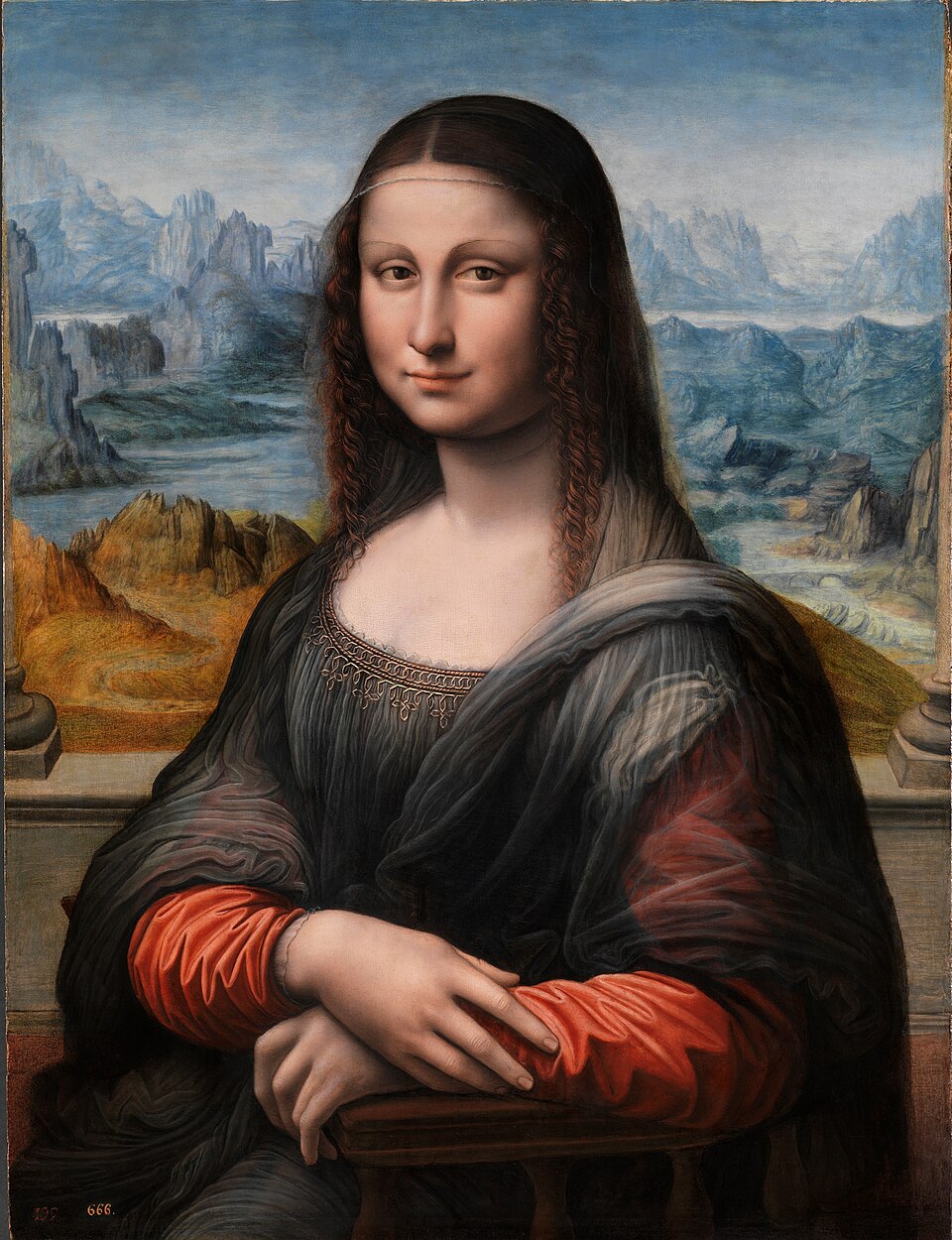
The Mona Lisa Hiding in Plain Sight
For nearly two centuries it hung in Madrid as a forgettable copy — until conservators peeled back the black paint and found something Leonardo himself may have watched being made.