Marble Brought Back to Life
A corpse asleep, a wing barely brushing her skin — and marble somehow learns to breathe. This is the moment Antonio Canova dared to carve.

In 1787, Colonel John Campbell commissioned a young sculptor from Possagno to capture an impossible instant: the second between death and love. Antonio Canova, raised by his stonemason paternal grandfather Pasino Canova and championed early on by the Venetian senator Giovanni Falier, chose to freeze the exact moment Cupid revives Psyche with a kiss, after she has fallen into a corpse-like sleep.
The story comes from Lucius Apuleius's Latin novel The Golden Ass. Psyche had been sent by Venus to fetch a scrap of beauty from Proserpina, sealed inside a jar, with a stern warning never to open it. Overcome by curiosity on her way back from the Underworld, she peeked inside — only to release not beauty but the Sleep of the Innermost Darkness, the night of Styx, which swallowed her whole body in unconsciousness. Cupid found her there, delicately purged the sleep back into its jar, and woke her with a gentle prick of his arrow.
Canova carved that revival. Psyche reaches upward toward Cupid, who cradles her head and breast with tenderness. The jar lies discarded near her feet, the arrow rests close by, and Cupid wears his quiver at his waist — every detail a quiet footnote to Apuleius's tale. The marble itself performs a kind of alchemy: smooth, lifelike skin plays against the rough-hewn rock beneath them and the loosely draped sheet across Psyche's body, each texture sharpening the illusion of flesh.
The sculpture was built to move. A handle near one of Psyche's feet allowed it to revolve on its base, a device Canova favored for many of his works. Critic Carl Ludwig Fernow found this maddening rather than marvelous, complaining that there was no single fixed viewpoint from which to take in both faces at once — that a viewer must circle the piece endlessly, 'run around it, look at it from high and low,' always chasing a vantage that never quite resolves.
Canova prized his independence fiercely. He had turned down an invitation to the court of Czarina Catherine II, believing art should stand above politics. But politics found him anyway: after Napoleon Bonaparte took notice of his talent during the 1796-97 campaigns and later sought to harness it for his own glory, papal pressure eventually forced Canova to accept honors he never wanted — Cavaliere of the Golden Spur, Cavaliere di Cristo, and the marquisate of Ischia.
More from Art

The Painting With No Foreground
A single robed figure stares out at an empty grey sea — and the emptiness itself became a scandal. When it was unveiled in Berlin in 1810, no one knew quite what to do with it.

The Painter Who Chased the Light
For a few purple minutes each evening, an American exile knelt in an English garden and raced the dying sun to paint two little girls lighting lanterns. It took him two years to finish.

When a President Became a God
Look straight up inside the U.S. Capitol dome and you will find George Washington enthroned among the clouds, surrounded by goddesses — the founding father transformed into myth.

The World Turned Upside Down
Look closely at a sixteenth-century Flemish village and you'll find a man biting a pillar, another carrying daylight in a basket, and a wife slipping a blue cloak over her husband's shoulders. Every gesture is a joke — if you know the language.

The Girl in the Glass Case
She stood two-thirds life size, dressed in a real tutu and human hair — and the critics who saw her in 1881 recoiled as if she were something obscene.
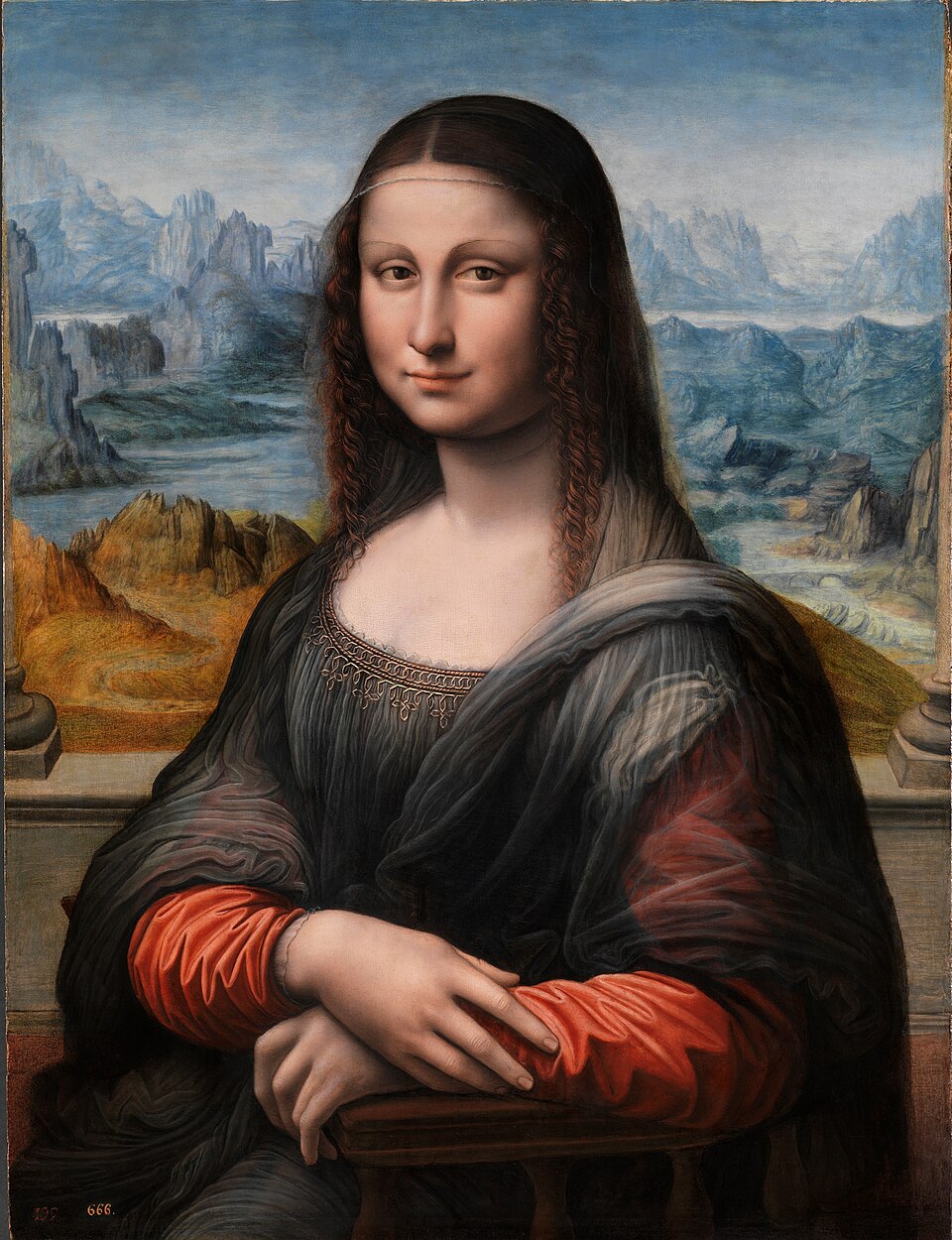
The Mona Lisa Hiding in Plain Sight
For nearly two centuries it hung in Madrid as a forgettable copy — until conservators peeled back the black paint and found something Leonardo himself may have watched being made.