The Painter Who Chased the Light
For a few purple minutes each evening, an American exile knelt in an English garden and raced the dying sun to paint two little girls lighting lanterns. It took him two years to finish.

John Singer Sargent moved to England from Paris shortly after his 1884 painting Portrait of Madame X had scandalized the city, and by the summer of 1885 he was settled at Farnham House in Broadway, in the English Cotswolds, staying with his friend Francis Davis Millet. What he found in that garden village, among friends and fellow artists, would become one of the most beloved paintings of his career.
The idea began on the River Thames at Pangbourne that September, where Sargent went boating with the American artist Edwin Austin Abbey. Drifting among lilies at dusk, he noticed Chinese paper lanterns glowing softly in the trees along the bank. The image lodged in him: lanterns, twilight, flowers, the fleeting purple hush of evening light.
Back at Broadway, he set to work in the garden, using Katherine, the five-year-old daughter of Millet, as his first model. But her dark hair did not suit the vision in his mind, and he replaced her with Dolly and Polly, the daughters of illustrator Frederick Barnard — Dolly eleven, Polly seven — chosen specifically because they were blonde. Dressed in white, the girls stood among pink roses, yellow carnations, and tall white lilies, lighting paper lanterns as day slipped into evening.
Sargent was obsessed with capturing one precise moment of light, so he painted en plein air, outdoors, in the Impressionist manner. Every day from September through November 1885, he worked only in the few minutes when the dusk looked exactly right, racing the sunset with his brush. The result was a canvas steeped in an overall purple tint, the color of evening itself.
But autumn does not wait for artists. As the real flowers in the garden withered, Sargent had them replaced with artificial ones so the scene could hold its shape. Even so, the picture remained unfinished when the light of that year ran out. He returned the following summer to Millet's new home nearby, picking up the work again until he finally completed it by the end of October 1886 — a project that had consumed portions of two full years.
More from Art

The Painting With No Foreground
A single robed figure stares out at an empty grey sea — and the emptiness itself became a scandal. When it was unveiled in Berlin in 1810, no one knew quite what to do with it.

When a President Became a God
Look straight up inside the U.S. Capitol dome and you will find George Washington enthroned among the clouds, surrounded by goddesses — the founding father transformed into myth.

Marble Brought Back to Life
A corpse asleep, a wing barely brushing her skin — and marble somehow learns to breathe. This is the moment Antonio Canova dared to carve.

The World Turned Upside Down
Look closely at a sixteenth-century Flemish village and you'll find a man biting a pillar, another carrying daylight in a basket, and a wife slipping a blue cloak over her husband's shoulders. Every gesture is a joke — if you know the language.

The Girl in the Glass Case
She stood two-thirds life size, dressed in a real tutu and human hair — and the critics who saw her in 1881 recoiled as if she were something obscene.
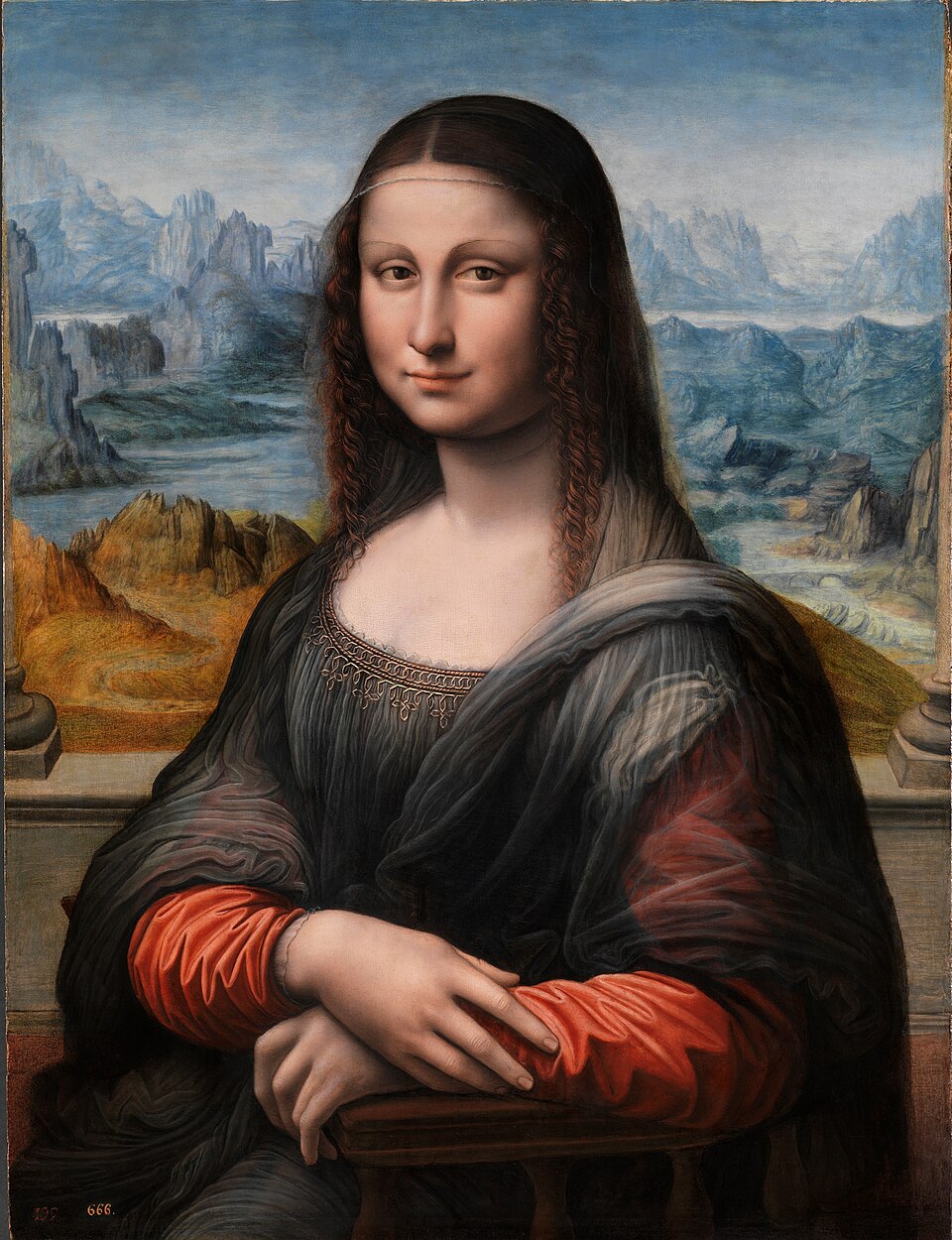
The Mona Lisa Hiding in Plain Sight
For nearly two centuries it hung in Madrid as a forgettable copy — until conservators peeled back the black paint and found something Leonardo himself may have watched being made.