The Painting With No Foreground
A single robed figure stares out at an empty grey sea — and the emptiness itself became a scandal. When it was unveiled in Berlin in 1810, no one knew quite what to do with it.

In Dresden, sometime around 1808, Caspar David Friedrich began work on a picture unlike anything German painting had produced before. A lone figure in a long garment stands on a low, grassy dune, turned almost entirely away from the viewer, gazing at a rough dark sea beneath a vast grey sky. The sky and sea together swallow nearly three-quarters of the canvas. There is no tree, no rock, no path to lead the eye inward — only the man, the sand, the water, and the air.
Friedrich worked the way he always did: not outdoors before the motif, but in his studio, assembling a composition from fragments of plein air sketches, keeping only what served the feeling he wanted. Scientific study of the canvas later revealed that he had originally painted two small sailing ships on the horizon and then painted over them, stripping the scene of any human trace beyond the solitary monk. He kept revising details up to the moment of exhibition — adding blue and stars and a moon to the grey sky — but the stark, empty composition itself never changed.
His process left traces in letters and studio visits. In February 1809 he described the picture for the first time in writing. In June of that year, the wife of the painter Gerhard von Kügelgen, an acquaintance, visited his studio; she later wrote critically of the work, unsettled by its loneliness and the absence of any movement or story that might soften the picture's 'unending space of air.'
The painting arrived just as Friedrich was tasting his first real public success, following the controversy of his Tetschen Altar, a work that had already fused landscape painting with religious subject matter in ways that unsettled contemporaries. The Monk by the Sea extended that success and drew still more attention when it appeared in the Berlin Academy exhibition of October 1810, hung, at Friedrich's own request, directly above a companion piece, The Abbey in the Oakwood. After the exhibition, King Frederick William III bought both paintings for his collection. They hang side by side today in Berlin's Alte Nationalgalerie.
What unsettled the first viewers was precisely the picture's refusal to offer them a way in. Traditional landscapes used a repoussoir — some framing element in the foreground — to draw the eye into the scene. Friedrich gave none. The foreground is simply empty, and the gap between the tiny monk and the viewer feels unbridgeable, both spatially and, it seemed to many, existentially. There is no greenery, no vessel on the flat band of sea, nothing to comfort the eye. Some later critics would call it perhaps the first 'abstract' painting in a distinctly modern sense.
More from Art

The Painter Who Chased the Light
For a few purple minutes each evening, an American exile knelt in an English garden and raced the dying sun to paint two little girls lighting lanterns. It took him two years to finish.

When a President Became a God
Look straight up inside the U.S. Capitol dome and you will find George Washington enthroned among the clouds, surrounded by goddesses — the founding father transformed into myth.

Marble Brought Back to Life
A corpse asleep, a wing barely brushing her skin — and marble somehow learns to breathe. This is the moment Antonio Canova dared to carve.

The World Turned Upside Down
Look closely at a sixteenth-century Flemish village and you'll find a man biting a pillar, another carrying daylight in a basket, and a wife slipping a blue cloak over her husband's shoulders. Every gesture is a joke — if you know the language.

The Girl in the Glass Case
She stood two-thirds life size, dressed in a real tutu and human hair — and the critics who saw her in 1881 recoiled as if she were something obscene.
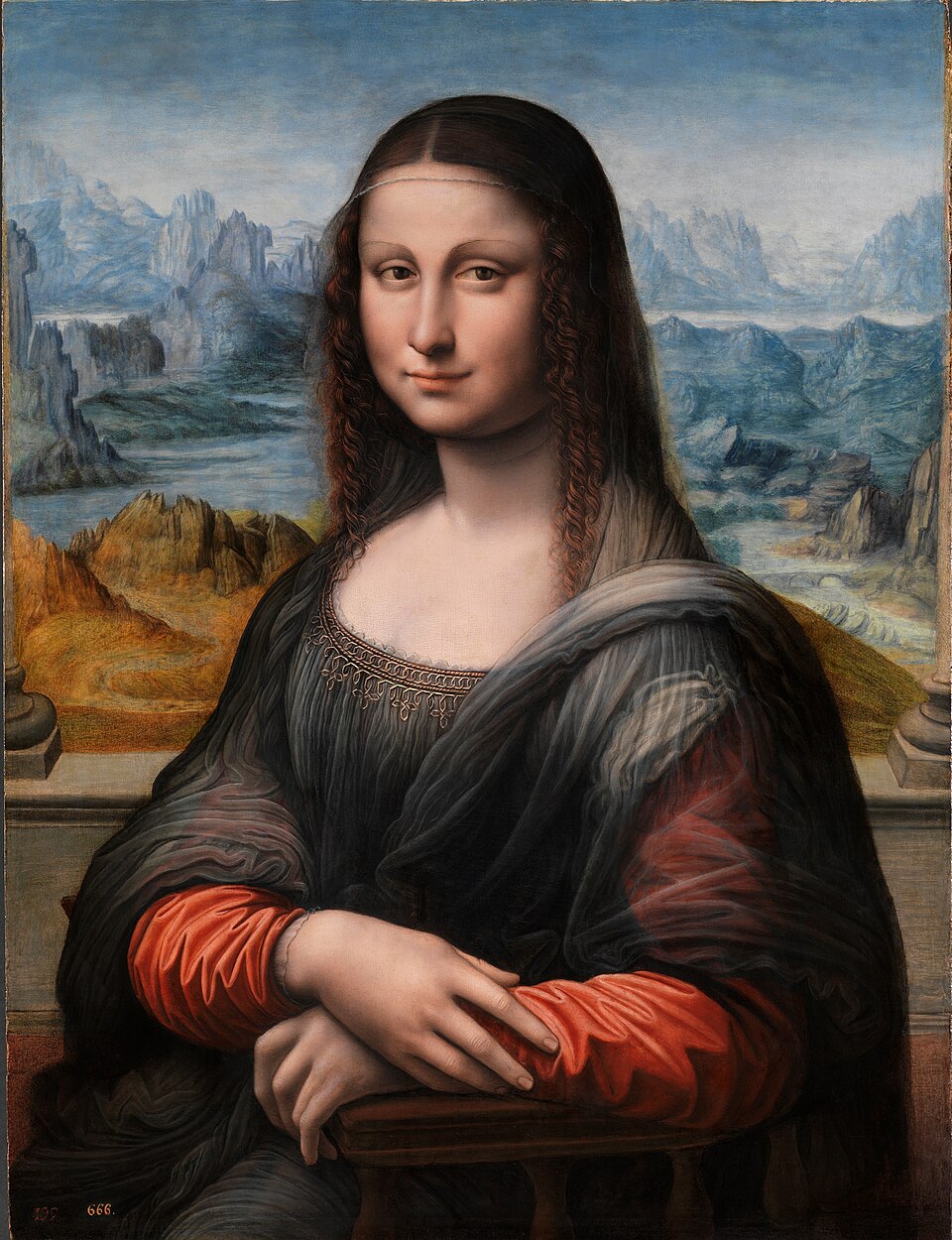
The Mona Lisa Hiding in Plain Sight
For nearly two centuries it hung in Madrid as a forgettable copy — until conservators peeled back the black paint and found something Leonardo himself may have watched being made.