The Mona Lisa Hiding in Plain Sight
For nearly two centuries it hung in Madrid as a forgettable copy — until conservators peeled back the black paint and found something Leonardo himself may have watched being made.
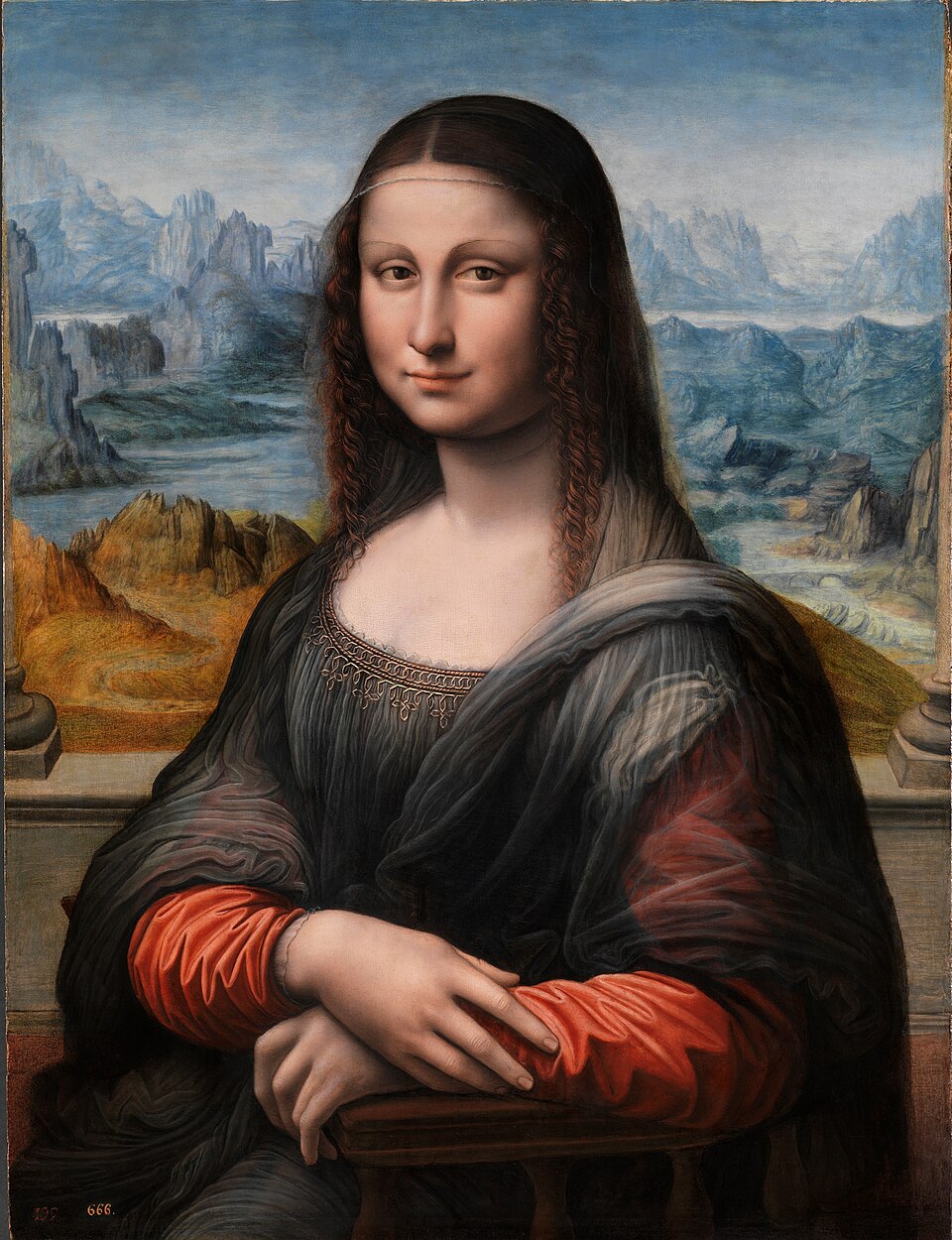
In the Museo del Prado, tucked among masterpieces by Raphael and Andrea del Sarto, hung a portrait of a woman with a familiar, knowing half-smile. For decades curators walked past it without much thought, cataloguing it as an anonymous copy from the first quarter of the 16th century — a competent imitation of the far more famous Mona Lisa in Paris. Nobody suspected that behind its darkened varnish lay a secret nearly as old as the Louvre's masterpiece itself.
The painting's documented history stretches back to 1666, when it appeared in an inventory of the Alcazar in Madrid, listed simply as 'Mujer de mano de Leonardo Abince' — 'Woman by Leonardo da Vinci's hand.' No one knows exactly when it entered the Spanish Royal Collection, though it may have arrived as early as the start of the 17th century. When the Prado opened its doors in 1819, the painting became part of its permanent holdings, where it would remain, largely overlooked, for nearly two hundred years.
What set it apart, even before anyone understood why, was that it lacked something every other known copy possessed: a landscape background. Where the Louvre's Mona Lisa gazes out over hazy blue mountains, the Prado's version showed only flat, featureless black. A lithograph of the painting existed too — unusual for a work considered merely anonymous.
The truth emerged only when the Louvre requested the Prado's painting for a 2012 exhibition on Leonardo's Saint Anne. To prepare it for travel, restorers at the Prado undertook a full conservation between 2011 and 2012 — and the black paint began to give way. Beneath it, they uncovered a genuine landscape, hidden for roughly 200 years, since oxidized varnishes showed the black repaint had been applied not before 1750 — long after the portrait itself was made.
Infrared reflectography and radiography revealed something even more startling: the underlying drawing beneath the paint was essentially the same as the one beneath Leonardo's original in the Louvre, complete with matching corrections, though rendered in a different hand. The implication was extraordinary — this was not a copy made years or decades later by someone studying the finished Mona Lisa, but a painting created in Leonardo's own workshop, at the very same time as the original.
More from Art

The Painting With No Foreground
A single robed figure stares out at an empty grey sea — and the emptiness itself became a scandal. When it was unveiled in Berlin in 1810, no one knew quite what to do with it.

The Painter Who Chased the Light
For a few purple minutes each evening, an American exile knelt in an English garden and raced the dying sun to paint two little girls lighting lanterns. It took him two years to finish.

When a President Became a God
Look straight up inside the U.S. Capitol dome and you will find George Washington enthroned among the clouds, surrounded by goddesses — the founding father transformed into myth.

Marble Brought Back to Life
A corpse asleep, a wing barely brushing her skin — and marble somehow learns to breathe. This is the moment Antonio Canova dared to carve.

The World Turned Upside Down
Look closely at a sixteenth-century Flemish village and you'll find a man biting a pillar, another carrying daylight in a basket, and a wife slipping a blue cloak over her husband's shoulders. Every gesture is a joke — if you know the language.

The Girl in the Glass Case
She stood two-thirds life size, dressed in a real tutu and human hair — and the critics who saw her in 1881 recoiled as if she were something obscene.