Rama's Journey: The Epic That Shaped a Civilization
A bow no man could bend, a bride won by a single pull of the string, and a fourteen-year exile that would become one of the most influential poems ever composed — this is the story the Ramayana tells.
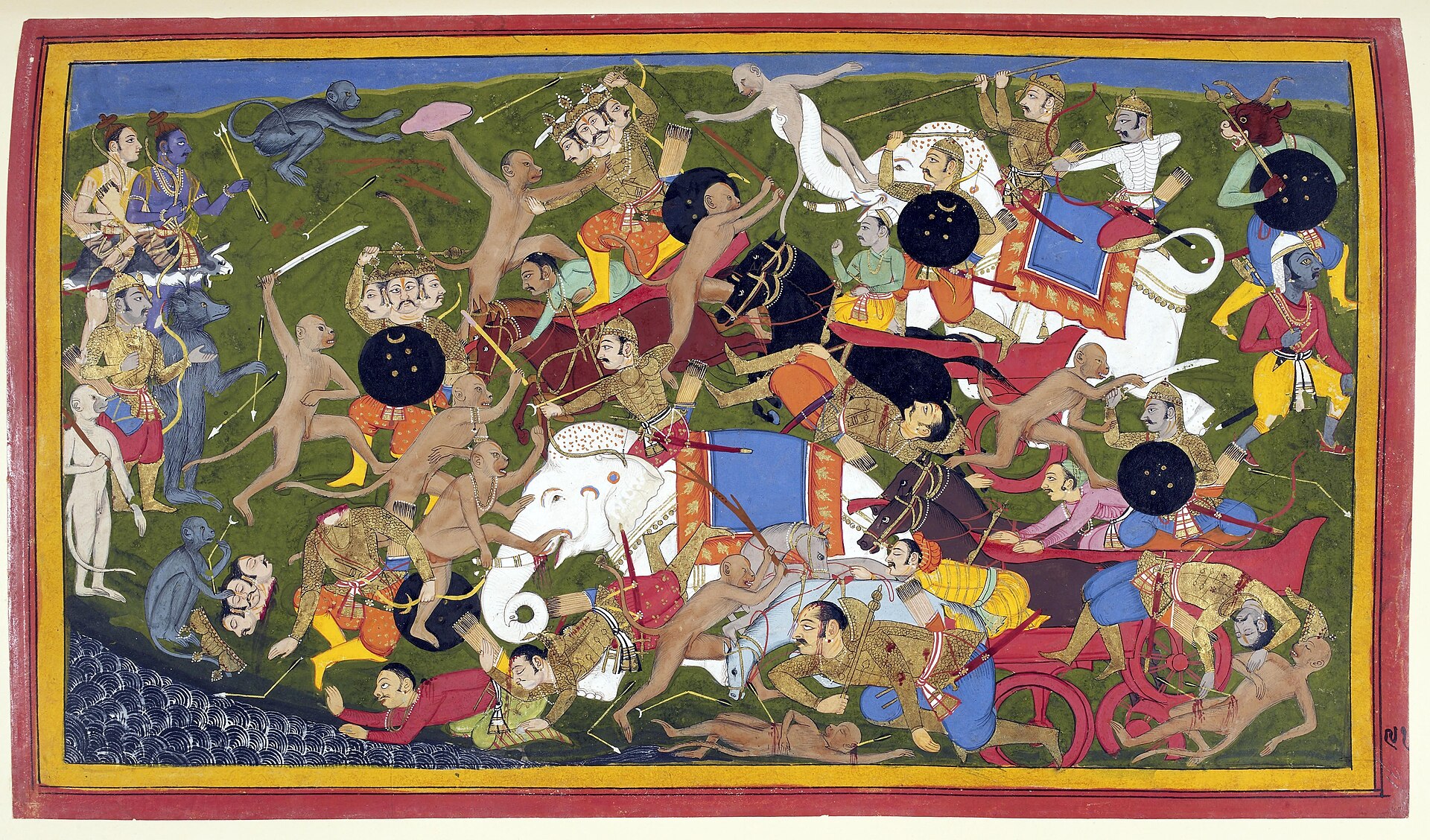
In the kingdom of Kosala, the aging King Dasharatha of Ayodhya had long been without an heir. Turning to the gods, he performed a horse sacrifice, and soon his three wives bore him four sons: Rama, Bharata, and the twins Lakshmana and Shatrughna. Rama grew into a prince marked for greatness, and at the request of the sage Vishvamitra, he and his brother Lakshmana set out to destroy demons plaguing the land.
In the kingdom of Videha, King Janaka had made an extraordinary promise: whoever could string the mighty bow of the god Shiva would win the hand of his daughter Sita. Many had tried and failed. Rama lifted the bow and, with apparent ease, bent it until it broke — and Sita became his wife.
Back in Ayodhya, Dasharatha prepared to name Rama his successor. But his second wife, swayed by the words of a servant girl, demanded that her own son Bharata take the throne instead. The king, bound by an earlier promise to her, had no choice. Rama was exiled to the forest for fourteen years. Loyal to the end, Sita and Lakshmana chose to go with him rather than remain in comfort at court.
The years in exile were not idle ones. Rama fought and destroyed rakshasas — demons and monsters — that terrorized the forests, fulfilling what the epic frames as his duty with unwavering resolve. It was during this long sojourn that the story's darkest turn arrived: Ravana, the demon-king of Lanka, lured Sita away through trickery and abducted her, carrying her off to his island kingdom.
Desperate to recover his wife, Rama sought an unlikely ally: Sugriva, king of the monkeys. Sugriva dispatched his devoted follower Hanuman to search for Sita, and Hanuman located her in Lanka, where Ravana offered her wealth and power in exchange for accepting him — an offer she refused. To reach the island, the monkey army built a great bridge stretching across the sea to Lanka.
More from Mythology

The Doctor Who Sang a Nation Into Being
A country doctor rode into the forests of Karelia armed with nothing but a notebook — and rode out with the soul of a nation.

The Boat That Carried the Sun
Every sunset, the ancient Egyptians believed, the sun climbed into a boat and sailed straight into the realm of the dead — only to fight a monstrous serpent before dawn could return.

The Wild Man of the Snows
At 21,000 feet, a colonel found tracks in the snow that he blamed on a wolf — but his guides knew better, and gave the world a name that would echo for a century.

The Knight Who Went Mad for Love: Orlando Furioso
A hero so devoted to duty he was Charlemagne's greatest paladin loses his mind—not to a sword wound, but to heartbreak. To cure him, a friend must ride a flying horse to the Moon.

The Book That Turned the World Into Myth
A poet condemned to exile spent his final years in Rome finishing a poem that would outlive empires—a poem about nothing standing still, not gods, not lovers, not even the shape of a man.

Paradise Lost: Milton's Rebel Angel
A blind poet, dictating verses in the dark, dared to explain the ways of God to men — and in doing so, made Hell's ruler unforgettable.