Sundiata: The Lion King Who Walked Out of Prophecy
A hunchbacked boy who could not walk, mocked by his own father's court, was destined by a hunter's prophecy to become one of West Africa's greatest kings. His name was Sundiata, and his rise would become the founding legend of an empire.
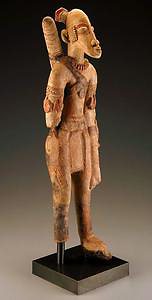
Long before written records, in the Mandinka kingdoms of West Africa, a soothsaying hunter arrived at the court of King Naré Maghann Konaté, also called Maghan the Handsome. The hunter delivered a strange prophecy: if the king married an ugly woman, she would bear him a son destined to become a mighty ruler. Konaté already had a wife, Sassouma Bereté, and a son by her named Dankaran Toumani Keïta. But when two hunters from the kingdom of Dô brought before him a hunchbacked woman named Sogolon, the king remembered the hunter's words and married her.
Sogolon soon gave birth to a son, Sundiata Keita. Yet the promised greatness did not arrive quickly — the boy could not walk through much of his childhood, and he inherited some of his mother's plainness. Sassouma, jealous of the attention given to Sogolon and her son, mocked Sundiata openly for his disability and appearance. Despite this, King Konaté honored the old custom of assigning the young Sundiata his own jeli, a griot who would grow alongside him and serve as lifelong counselor.
When Naré Maghann Konaté died around 1224, his wishes that the prophecy be honored were ignored. Dankaran Tuman, son of the first wife, took the throne instead. Fearful that Sassouma might harm Sogolon and her children, Sundiata and his mother were driven into exile — a rupture that the Malinke oral tradition frames through the concept of fadenya, the rivalry born between children of different mothers sharing one father.
But exile was not the end of Sundiata's story; it was the forge in which his destiny was shaped. Within his own family, the opposing force of badenya — the bond between children of the same mother — sustained him. His sister Kolonkan is remembered for watching over him against Sassouma's attempted witchcraft, and it was his mother's pleading, according to the epic, that helped him find the strength to finally stand and walk. The narrator's own words capture this centrality of the mother: 'the child is worth no more than the mother is worth.'
Sundiata's exile eventually gave way to return. He came back to face Soumaoro Kanté, the powerful ruler of the Sosso, in a war that would determine the fate of the region. Through what the tradition describes as strategic alliances and extraordinary skill, Sundiata prevailed, and in 1235 he founded the Mali Empire, ruling until his death in 1255.
More from Mythology

The Doctor Who Sang a Nation Into Being
A country doctor rode into the forests of Karelia armed with nothing but a notebook — and rode out with the soul of a nation.

The Boat That Carried the Sun
Every sunset, the ancient Egyptians believed, the sun climbed into a boat and sailed straight into the realm of the dead — only to fight a monstrous serpent before dawn could return.

The Wild Man of the Snows
At 21,000 feet, a colonel found tracks in the snow that he blamed on a wolf — but his guides knew better, and gave the world a name that would echo for a century.

The Knight Who Went Mad for Love: Orlando Furioso
A hero so devoted to duty he was Charlemagne's greatest paladin loses his mind—not to a sword wound, but to heartbreak. To cure him, a friend must ride a flying horse to the Moon.

The Book That Turned the World Into Myth
A poet condemned to exile spent his final years in Rome finishing a poem that would outlive empires—a poem about nothing standing still, not gods, not lovers, not even the shape of a man.

Paradise Lost: Milton's Rebel Angel
A blind poet, dictating verses in the dark, dared to explain the ways of God to men — and in doing so, made Hell's ruler unforgettable.