Tengri: The Eternal Blue Sky That Ruled the Steppe
Long before empires bowed to written law, nomads on the Eurasian steppe answered to a force with no face, no temple, and no rival — only sky.
On the Orkhon inscriptions of the early 8th century, carved in the script that would become the first Turkic writing ever deciphered, a single word recurs with startling authority: Tengri. It names the god of the boundless heaven above the Göktürk khans, the force they claimed had set them upon the earth to rule. These stone monuments, dedicated to figures like Kul Tigin, describe a moment of cosmic origin: 'When the blue sky above and the brown earth below were created, between them a human being was created.' From that act, according to the inscriptions, came the mandate of kings.
The word itself is ancient beyond the Orkhon stones. Chinese annals from the 4th century BC already record a term, transcribed as Cheng-li, describing the beliefs of the Xiongnu — a form linguists hypothesize is a rendering of Tängri. Its Proto-Turkic root has been reconstructed as *Teŋri, and some linguists trace it further still to Proto-Yeniseian, meaning simply 'high.' Whatever its deepest origin, the sense of the word converges again and again on one image: the sky itself, vast and unownable.
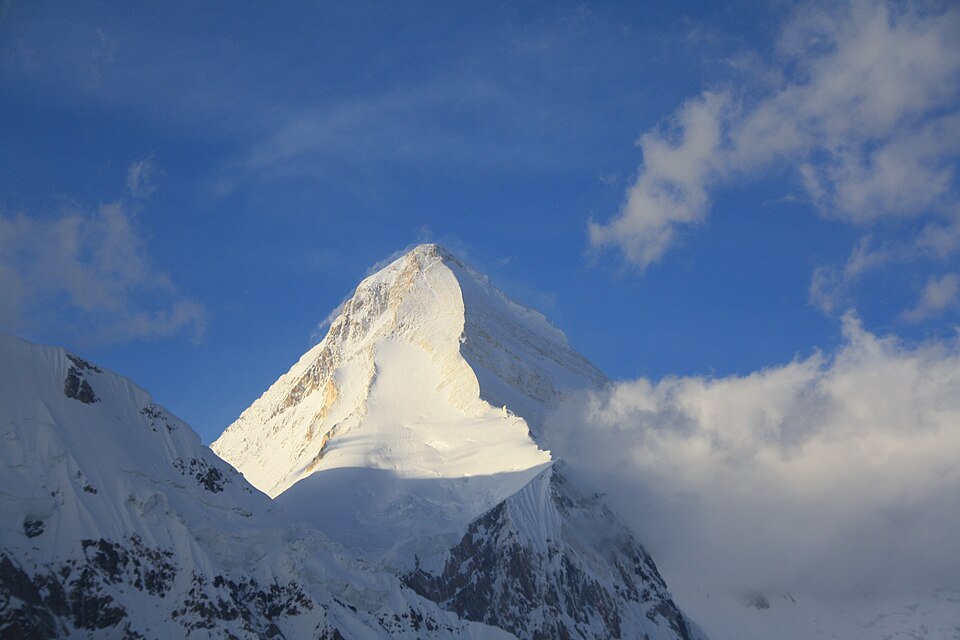
Tengri was never a god you could picture. Turkic tradition insisted he had no wife, no partner, no equal — 'tektir,' as later Turkish accounts put it: singular, alone. He was not sculpted or drawn as a person the way lesser spirits were in shamanic prayer. He simply was the timeless, endless blue sky — Kök Tengri, where 'kök' carried not just the meaning of blue but of the exalted, the sacred. To call him Gök Tanrı, then, was to call him the Great God, the Sublime God.
His authority reached directly into politics. The khans of the Göktürks ruled by a mandate they attributed to Tengri, styling themselves his sons on earth and adopting titles like tengrikut or kutluġ — rulers who possessed kut, a heavenly charisma granted and revocable at Tengri's will. Centuries later, Genghis Khan would frame his own conquests the same way, opening his decrees with the words 'By the will of the Eternal Sky.' Byzantine historian Simokattes noted that the Göktürks, while respecting the spirits of rivers, mountains and forests known as yer-sub, worshipped only one true creator of heaven and earth. A Christian visitor to Tiflis around 790 AD, St. Abo, likewise reported that the Khazar Turks recognized a single creator god — and the Khazar khagan himself is recorded contrasting his people's monotheism with the Christian Trinity.
Around Tengri clustered a wider family of divine and semi-divine figures, but always beneath him. He was father to the sun, Koyash, and to the moon, Ay Tanrı, and connected to figures like Umay, Erlik, and Ülgen. Later Mongolic tradition placed Yer Tengri as his grandson, Kayra Han as his son, Ülgen as his grandson, and Erlik his great-grandson — a whole cosmology branching downward from the single sky-father at its root. Yet no matter how the family tree extended, Tengri himself was never personalized the way these descendants were; he remained, as Mircea Eliade observed of Turkic shamanism, essentially untouched by the anthropomorphizing hand of the shaman.
More from Mythology

The Doctor Who Sang a Nation Into Being
A country doctor rode into the forests of Karelia armed with nothing but a notebook — and rode out with the soul of a nation.

The Boat That Carried the Sun
Every sunset, the ancient Egyptians believed, the sun climbed into a boat and sailed straight into the realm of the dead — only to fight a monstrous serpent before dawn could return.

The Wild Man of the Snows
At 21,000 feet, a colonel found tracks in the snow that he blamed on a wolf — but his guides knew better, and gave the world a name that would echo for a century.

The Knight Who Went Mad for Love: Orlando Furioso
A hero so devoted to duty he was Charlemagne's greatest paladin loses his mind—not to a sword wound, but to heartbreak. To cure him, a friend must ride a flying horse to the Moon.

The Book That Turned the World Into Myth
A poet condemned to exile spent his final years in Rome finishing a poem that would outlive empires—a poem about nothing standing still, not gods, not lovers, not even the shape of a man.

Paradise Lost: Milton's Rebel Angel
A blind poet, dictating verses in the dark, dared to explain the ways of God to men — and in doing so, made Hell's ruler unforgettable.