The Anklet That Burned a City
An ordinary wife, a stolen ornament, and a curse that levels a kingdom — the earliest Tamil epic tells no tale of kings and armies, but of a single broken heart.
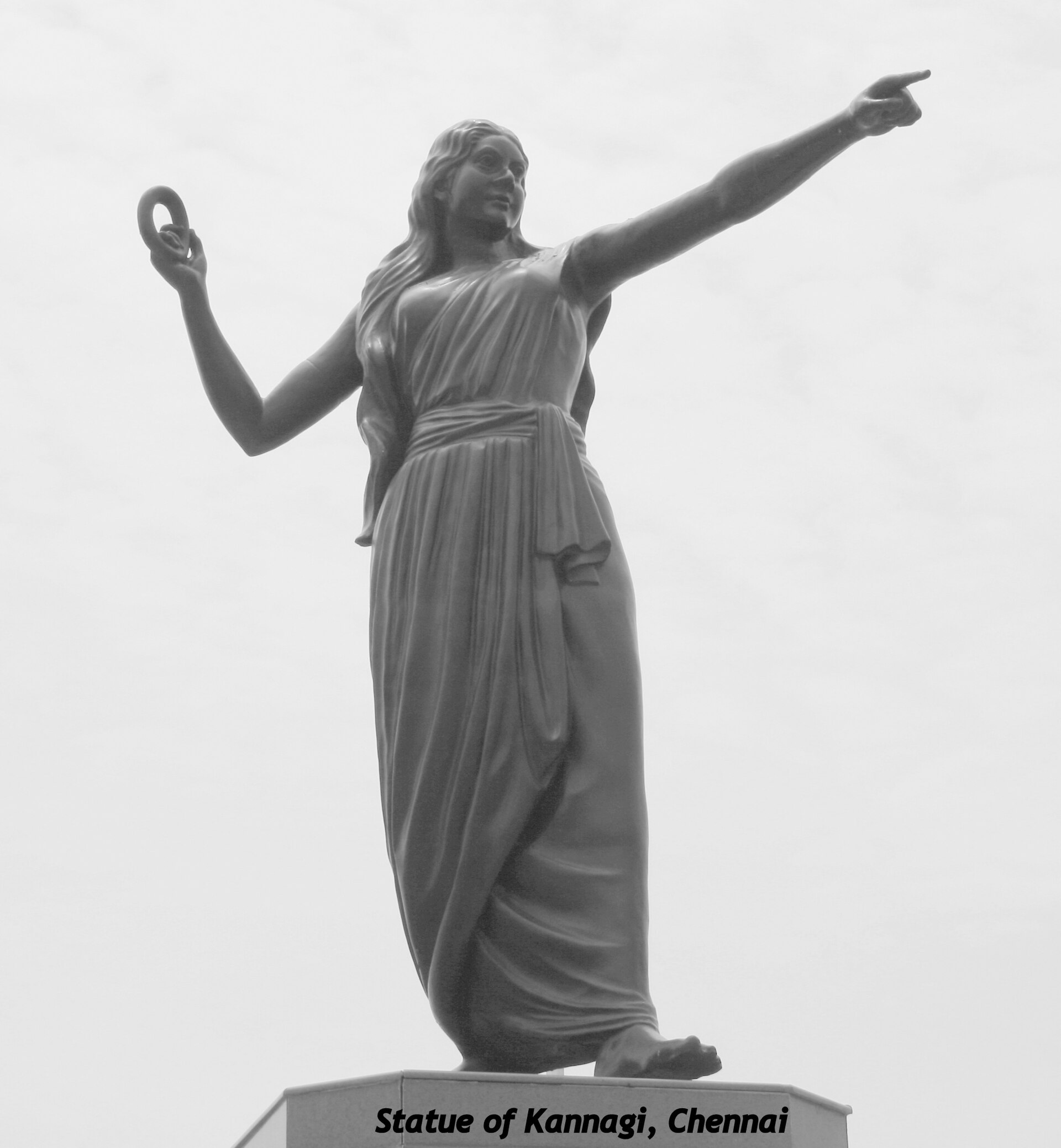
In the flourishing seaport cities of the early Chola kingdom, a young couple named Kannaki and Kovalan begin their married life in happiness. Theirs is not the story of gods or generals but of two ordinary people, and that ordinariness is precisely what makes the Cilappatikaram, the earliest Tamil epic, so unlike the great epics of other cultures. Composed of 5,730 lines in the akaval meter, it is attributed to Ilango Adigal, a prince said to have become a Jain monk, and was likely written in the 5th century CE, though scholars place it anywhere between the 2nd and 6th centuries.
The bliss does not last. Kovalan meets Matavi, a courtesan, and falls for her, abandoning Kannaki to live with his new love, spending lavishly on her. Kannaki, cast as the chaste and patient wife, waits through his unfaithfulness. During a festival honoring Indra, the rain god, a singing contest unfolds: Kovalan sings of a woman who wounded her lover, and Matavi answers with a song of a man who betrayed his own. Each hears an accusation aimed at them. Kovalan, convinced Matavi has been unfaithful, leaves her — and Kannaki, still faithful despite everything, takes him back.
The couple leaves the city together and travels to Madurai, capital of the Pandya kingdom. Kovalan arrives penniless, and there he confesses his betrayal to Kannaki. She forgives him, telling him plainly of the pain his adultery caused her, but she does not dwell in bitterness — she urges him to rebuild their life. To give him a start, she hands him one of her jeweled anklets to sell.
Kovalan takes the anklet to a merchant, who falsely accuses him of having stolen it from the queen. Without proper investigation, the king of Madurai has Kovalan arrested and executed. It is an act of injustice carried out in haste, without the due process a ruler owes his people.
When Kovalan fails to return home, Kannaki goes looking for him and learns the truth. She marches into the royal court to protest the injustice, and there she proves her husband's innocence by producing the second anklet of the matching pair — proof that the queen's anklet, set with pearls, could never have been the one Kovalan sold, for Kannaki's anklets were set with rubies. The king, realizing his fatal error, dies on the spot from the shock of his own injustice.
More from Mythology

The Doctor Who Sang a Nation Into Being
A country doctor rode into the forests of Karelia armed with nothing but a notebook — and rode out with the soul of a nation.

The Boat That Carried the Sun
Every sunset, the ancient Egyptians believed, the sun climbed into a boat and sailed straight into the realm of the dead — only to fight a monstrous serpent before dawn could return.

The Wild Man of the Snows
At 21,000 feet, a colonel found tracks in the snow that he blamed on a wolf — but his guides knew better, and gave the world a name that would echo for a century.

The Knight Who Went Mad for Love: Orlando Furioso
A hero so devoted to duty he was Charlemagne's greatest paladin loses his mind—not to a sword wound, but to heartbreak. To cure him, a friend must ride a flying horse to the Moon.

The Book That Turned the World Into Myth
A poet condemned to exile spent his final years in Rome finishing a poem that would outlive empires—a poem about nothing standing still, not gods, not lovers, not even the shape of a man.

Paradise Lost: Milton's Rebel Angel
A blind poet, dictating verses in the dark, dared to explain the ways of God to men — and in doing so, made Hell's ruler unforgettable.