The Art of Cutting Light Into Stone
Long before diamonds sparkled on rings, people believed a stone could cure your fever or shield you from harm — if you knew how to read it.
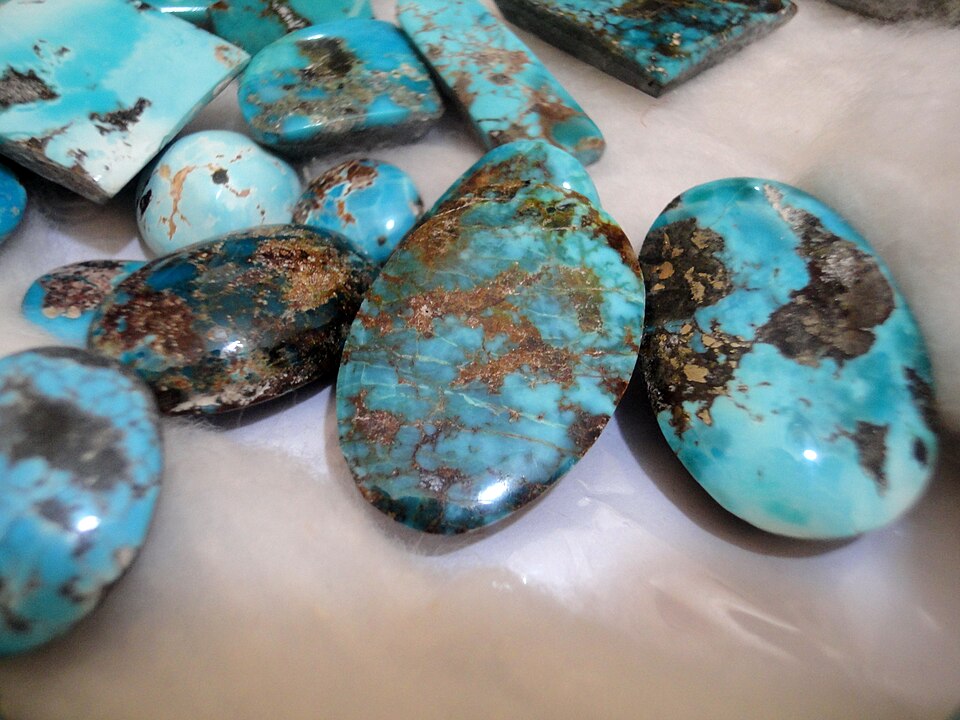
The word lapidary comes from the Latin lapis, simply meaning stone. By the 14th century, the term had traveled through Old French as lapidaire, coming to describe someone skilled in working precious stones — a stonecutter turned artisan. Today the word covers two overlapping worlds: the physical craft of shaping stone into cabochons, engraved gems, cameos, and faceted jewels, and the literary tradition of lapidary texts, medieval treatises cataloging the supposed powers of stones.
The craft itself is older than writing. The earliest lapidary work likely began in the Stone Age, when early humans discovered that some stones were harder than others and could be used to shape tools. Drilling stone and rock, one of the earliest lapidary techniques, dates back roughly one million years. Millennia later, the early Egyptians had developed methods for cutting and fashioning lapis lazuli, turquoise, and amethyst into jewelry and ornament.
By the early 1st millennium CE, the Indian subcontinent had a well-developed lapidary tradition. Sanskrit manuscripts such as the 3rd-century Buddhist text Rathanpariksha, attributed to Buddha Bhatta, along with Hindu texts like the Agni Purana and Agastimata, discussed the sources of gems and diamonds, their qualities, and how to test, cut, and polish them. Later Sanskrit texts, dated after the 10th century, show this practice continued unbroken for centuries.
Trade carried lapidary skill across oceans. Archaeological evidence points to lapidary trade between Africa and India during the 1st millennium CE, with the Deccan region of India and the East African coast each developing their own techniques before the 10th century. Far across the Atlantic, Mesoamerica built its own independent lapidary tradition, working shell, jade, turquoise, and greenstones into objects used as status symbols, offerings, and burial goods. Aztec lapidarists used string saws and drills fashioned from reed and bone.
In medieval Europe, the craft took a different turn — toward the page rather than the workshop. Classical writers like Theophrastus and Pliny the Elder laid groundwork that medieval scholars later built upon, blending real mineralogical observation with magical belief. Theophrastus even described lyngurium, a mythical gemstone whose supposed properties were passed down and reinterpreted by medieval lapidary writers, according to scholar Steven A. Walton.
More from Art

The Painting With No Foreground
A single robed figure stares out at an empty grey sea — and the emptiness itself became a scandal. When it was unveiled in Berlin in 1810, no one knew quite what to do with it.

The Painter Who Chased the Light
For a few purple minutes each evening, an American exile knelt in an English garden and raced the dying sun to paint two little girls lighting lanterns. It took him two years to finish.

When a President Became a God
Look straight up inside the U.S. Capitol dome and you will find George Washington enthroned among the clouds, surrounded by goddesses — the founding father transformed into myth.

Marble Brought Back to Life
A corpse asleep, a wing barely brushing her skin — and marble somehow learns to breathe. This is the moment Antonio Canova dared to carve.

The World Turned Upside Down
Look closely at a sixteenth-century Flemish village and you'll find a man biting a pillar, another carrying daylight in a basket, and a wife slipping a blue cloak over her husband's shoulders. Every gesture is a joke — if you know the language.

The Girl in the Glass Case
She stood two-thirds life size, dressed in a real tutu and human hair — and the critics who saw her in 1881 recoiled as if she were something obscene.