The Boy Who Could Not Come to Know Himself
A prophet warned that the beautiful boy would live long only if he never came to know himself. He did — and it destroyed him.
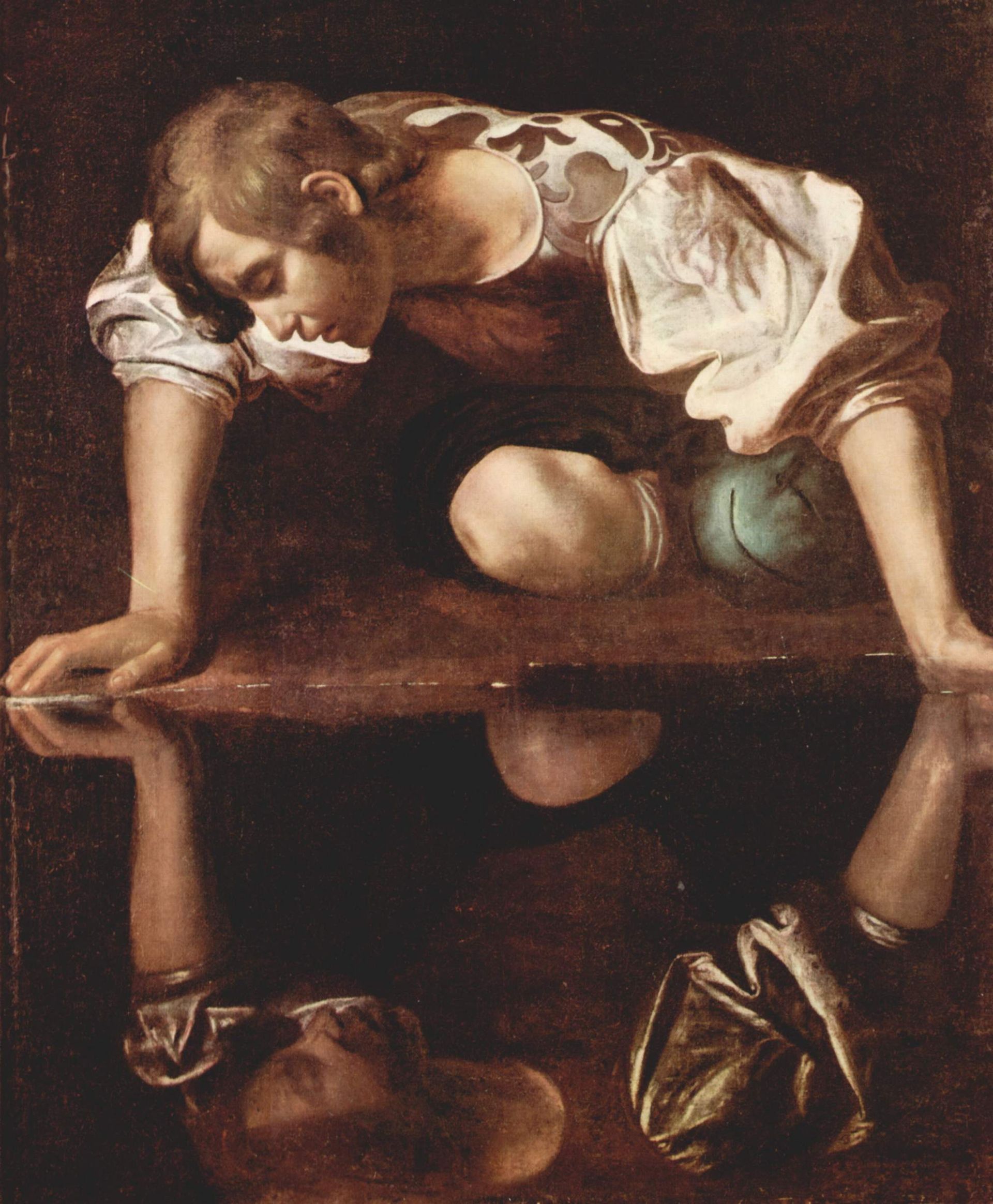
Long before he became a name for self-love gone monstrous, Narcissus was simply a hunter from Thespiae in Boeotia, a young man whose beauty was noticed by everyone who crossed his path. Born, in the most common telling, to the river god Cephissus and the nymph Liriope, he carried a strange prophecy from birth. When his mother consulted the seer Tiresias about her son's future, the blind prophet answered with an unsettling riddle: the boy would live a long life only if he never came to know himself.
For sixteen years the prophecy lay dormant. Narcissus grew into his beauty, and with it grew a coldness — he rejected every admirer, man or woman, who dared approach him. Among those who fell for him was Echo, a mountain nymph already carrying her own curse. Echo had once kept the goddess Hera occupied with gossip while Zeus had an affair behind her back; discovering the deception, Hera stripped Echo of her own voice, leaving her able only to repeat the final words spoken to her.
It was in this condition that Echo saw Narcissus wandering, separated from his hunting companions, and fell instantly and hopelessly in love. She followed him in silence, aching for a chance to speak first. When Narcissus called out 'Who's there?', she could only echo his words back. Eventually she revealed herself and tried to embrace him, but he recoiled in horror, telling her to keep her chains — his rejection so total that Echo withered away in the lonely glens until nothing remained of her but her voice, the phenomenon we still call an echo.
Narcissus's cruelty did not end with Echo. In another telling, a young man named Ameinias, likewise spurned, prayed to the gods for justice before taking his own life at Narcissus's door. The goddess Nemesis heard the plea and cursed Narcissus in turn: he would never be loved by the one he himself loved.
The curse found its target soon after. Thirsty from hunting, Narcissus came upon a still pool of water that, according to Ovid, no animal had ever disturbed. Leaning down to drink, he saw his own reflection and, not recognizing it as himself, fell hopelessly in love with the image — as beautiful to him as a marble statue. In that instant, both Tiresias's prophecy and Nemesis's curse were fulfilled together.
More from Mythology

The Doctor Who Sang a Nation Into Being
A country doctor rode into the forests of Karelia armed with nothing but a notebook — and rode out with the soul of a nation.

The Boat That Carried the Sun
Every sunset, the ancient Egyptians believed, the sun climbed into a boat and sailed straight into the realm of the dead — only to fight a monstrous serpent before dawn could return.

The Wild Man of the Snows
At 21,000 feet, a colonel found tracks in the snow that he blamed on a wolf — but his guides knew better, and gave the world a name that would echo for a century.

The Knight Who Went Mad for Love: Orlando Furioso
A hero so devoted to duty he was Charlemagne's greatest paladin loses his mind—not to a sword wound, but to heartbreak. To cure him, a friend must ride a flying horse to the Moon.

The Book That Turned the World Into Myth
A poet condemned to exile spent his final years in Rome finishing a poem that would outlive empires—a poem about nothing standing still, not gods, not lovers, not even the shape of a man.

Paradise Lost: Milton's Rebel Angel
A blind poet, dictating verses in the dark, dared to explain the ways of God to men — and in doing so, made Hell's ruler unforgettable.