The Eighth Wonder That Vanished
A room built from six tons of fossilized tree resin once dazzled emperors — then it disappeared into the chaos of war, and no one has ever found it since.
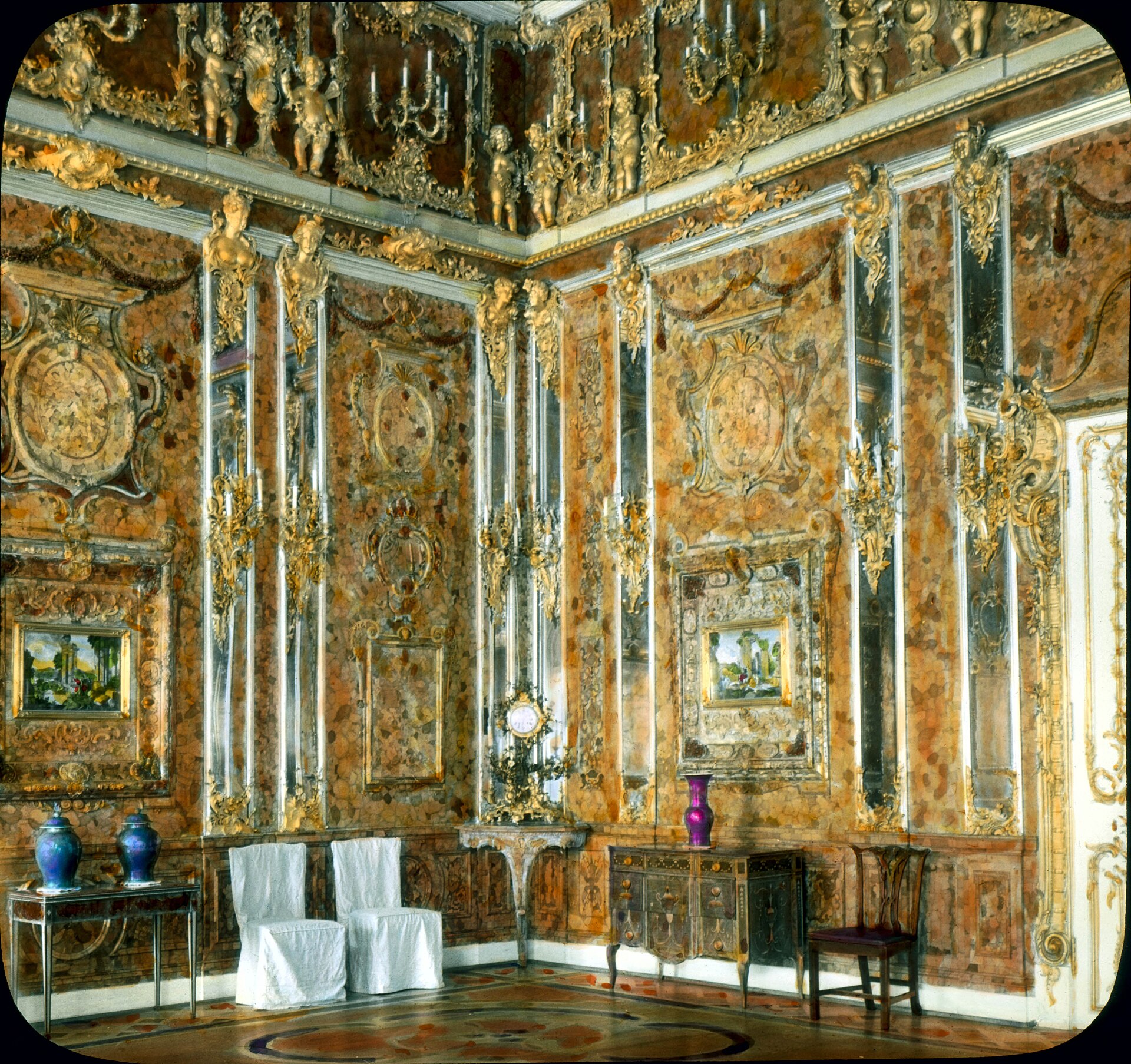
In 1701, in Prussia, a Danish craftsman named Gottfried Wolfram and a German baroque sculptor named Andreas Schlüter began work on something no one had attempted before: an entire chamber sheathed in amber, backed with gold leaf and mirrors, meant for Charlottenburg Palace in Berlin at the urging of Sophia Charlotte, wife of the first King in Prussia. The panels, instead, ended up installed in the Berlin City Palace. Schlüter and Wolfram worked on it until 1707, when two amber masters from Danzig, Gottfried Turau and Ernst Schacht, took over the painstaking labor of shaping resin into art.
The room did not stay in Berlin long. Tsar Peter the Great of Russia saw it and admired it, and in 1716, Frederick William I of Prussia gave it to him as a diplomatic gift, sealing a Russo-Prussian alliance against Sweden. In Russia, Peter's daughter, Empress Elizabeth, decided the amber treasure belonged in the Catherine Palace at Tsarskoye Selo, the imperial family's summer residence near Saint Petersburg.
Fitting a Berlin-sized room into a hall roughly six times larger required real ingenuity. The Italian architect Bartolomeo Francesco Rastrelli, working for the Russian court, enlarged it using gold and mirror elements during the 18th-century renovations. In that same period, King Frederick II of Prussia presented the empress with additional amber pieces that had never been used in the original Berlin installation. In gratitude, a silver miniature of the equestrian statue of Frederick the Great was placed inside the room in the 19th century — a quiet nod between empires.
By the time it was finished, after more than ten years of construction, the Amber Room covered over 55 square meters and contained more than 6 tonnes of amber: 450 kilograms of amber panels alone, along with carvings, gemstones, gilding, and statues of angels and children, all glowing under candlelight. It became known as the 'Eighth Wonder of the World.'
Then came the war. Shortly after the Nazi invasion of the Soviet Union began, curators in Leningrad tried to dismantle and evacuate the room, but years of drying had made the amber brittle — it would crumble if moved. Desperate, they hid it behind ordinary wallpaper. The disguise failed. German soldiers of Army Group North took the room apart within just 36 hours under expert supervision, and on 14 October 1941 it arrived in Königsberg, East Prussia, where it went on public exhibition by mid-November.
More from Art

The Painting With No Foreground
A single robed figure stares out at an empty grey sea — and the emptiness itself became a scandal. When it was unveiled in Berlin in 1810, no one knew quite what to do with it.

The Painter Who Chased the Light
For a few purple minutes each evening, an American exile knelt in an English garden and raced the dying sun to paint two little girls lighting lanterns. It took him two years to finish.

When a President Became a God
Look straight up inside the U.S. Capitol dome and you will find George Washington enthroned among the clouds, surrounded by goddesses — the founding father transformed into myth.

Marble Brought Back to Life
A corpse asleep, a wing barely brushing her skin — and marble somehow learns to breathe. This is the moment Antonio Canova dared to carve.

The World Turned Upside Down
Look closely at a sixteenth-century Flemish village and you'll find a man biting a pillar, another carrying daylight in a basket, and a wife slipping a blue cloak over her husband's shoulders. Every gesture is a joke — if you know the language.

The Girl in the Glass Case
She stood two-thirds life size, dressed in a real tutu and human hair — and the critics who saw her in 1881 recoiled as if she were something obscene.