The Emperors Who Painted Themselves into Legend
When a Mughal ruler wanted to remember every face at his sprawling court, he didn't rely on memory alone — he kept an album. What began as a bureaucratic tool became one of the great artistic traditions of the world.
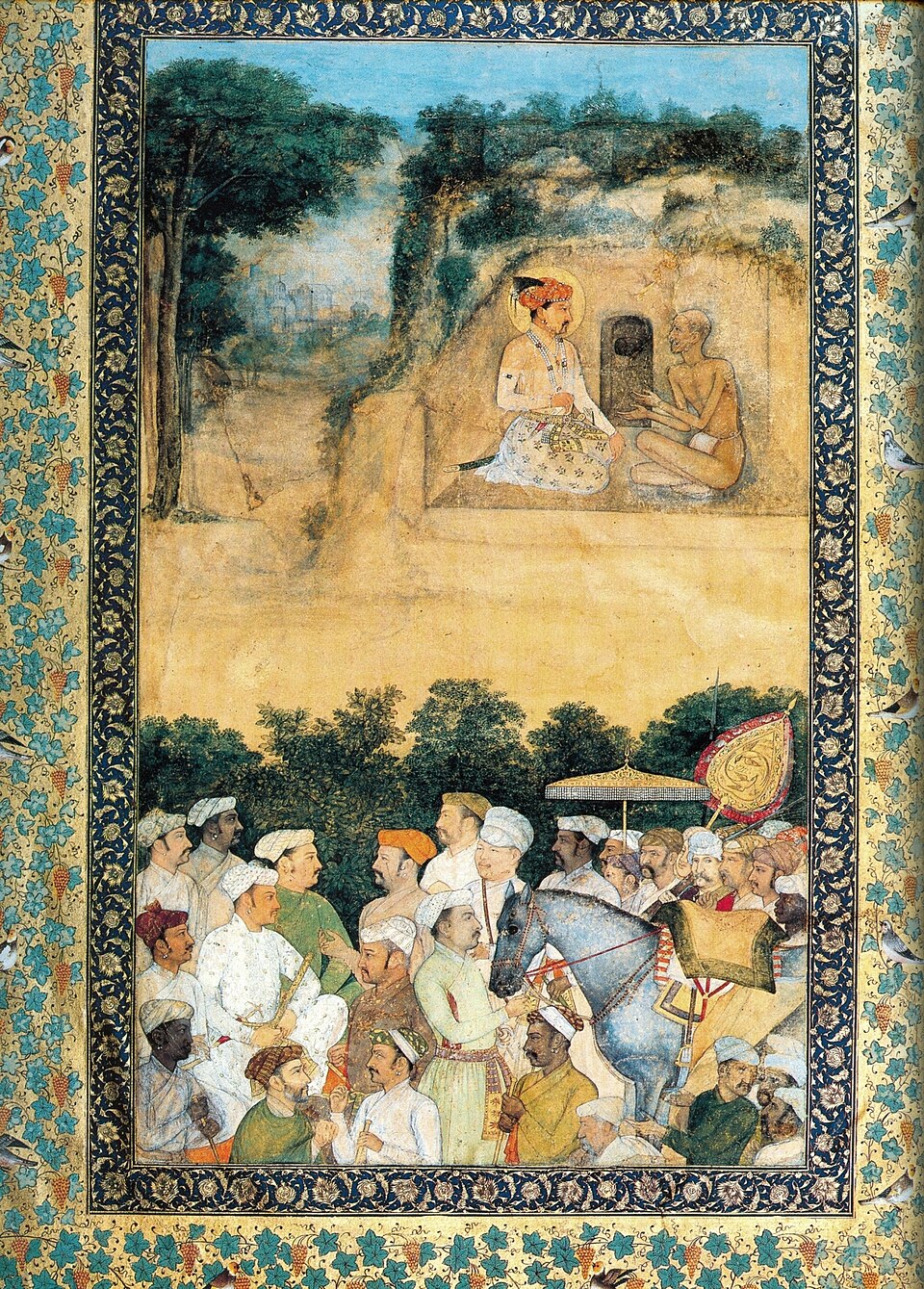
In the mid-16th century, in the workshops of the Mughal court, a strange and lavish habit took root: emperors began commissioning painted albums not just of stories, but of themselves and the people around them. Akbar, so the chroniclers say, kept an album filled entirely with portraits of courtiers, which he reportedly consulted when discussing appointments with his advisors — a visual memory aid for a ruler governing an empire too vast to hold in his head alone. Many of these figures, like medieval European images of saints, held objects that helped identify who they were, standing against plain backgrounds, waiting to be recognized.
Mughal painting itself had arrived from Persian miniature tradition, which had already absorbed influences from Chinese and European art. But once it took root in India under the Mughal emperors — who ruled from the 16th to the 19th century and were credited with consolidating Islam and spreading Persian art and culture across the subcontinent — it transformed into something distinct. Unlike Persian miniatures, Mughal painting developed an intense interest in realistic portraiture, almost always shown in profile with the body turned slightly toward the viewer, a pose repeated so often it became a kind of visual signature.
For a long time, these portraits depicted only men, sometimes accompanied by generalized female servants or concubines. Scholars still debate whether any surviving images depict specific noblewomen like Jahanara Begum or Mumtaz Mahal — some argue no authentic likenesses exist, while others point to miniatures such as those in the Dara Shikoh album or a mirror portrait held at the Freer Gallery of Art as possible depictions of these famous women.
It was under Akbar's successors, Jahangir and Shah Jahan, that the ruler's portrait became firmly established as a central subject of Indian miniature art. From the 17th century onward, equestrian portraits of rulers — clearly borrowed from Western artistic traditions circulating at court — grew popular. So did a striking new composition called Jharokha Darshan, showing the emperor appearing on a balcony or at a window above a crowd of courtiers below. This public display became a daily ceremony under Akbar, Jahangir, and Shah Jahan, until Aurangzeb ended the practice, deeming it un-Islamic.
These images did more than record faces — they projected power. The halos given to later emperors in single portraits grew increasingly large, echoing an aspiration to present the ruler as Allah's representative on earth, even as a figure touched by the divine. Other paintings showed emperors enthroned, receiving visitors, or presiding over formal councils known as durbar. These compositions, along with royal portraits set within hunting scenes, became deeply influential, later shaping Rajput painting and other regional styles that emerged after Mughal rule declined.
More from Art

The Painting With No Foreground
A single robed figure stares out at an empty grey sea — and the emptiness itself became a scandal. When it was unveiled in Berlin in 1810, no one knew quite what to do with it.

The Painter Who Chased the Light
For a few purple minutes each evening, an American exile knelt in an English garden and raced the dying sun to paint two little girls lighting lanterns. It took him two years to finish.

When a President Became a God
Look straight up inside the U.S. Capitol dome and you will find George Washington enthroned among the clouds, surrounded by goddesses — the founding father transformed into myth.

Marble Brought Back to Life
A corpse asleep, a wing barely brushing her skin — and marble somehow learns to breathe. This is the moment Antonio Canova dared to carve.

The World Turned Upside Down
Look closely at a sixteenth-century Flemish village and you'll find a man biting a pillar, another carrying daylight in a basket, and a wife slipping a blue cloak over her husband's shoulders. Every gesture is a joke — if you know the language.

The Girl in the Glass Case
She stood two-thirds life size, dressed in a real tutu and human hair — and the critics who saw her in 1881 recoiled as if she were something obscene.