The Ferryman Who Never Softens
For a single coin placed on a dead tongue, he would row you across — refuse, and you might wander the shore for a hundred years.
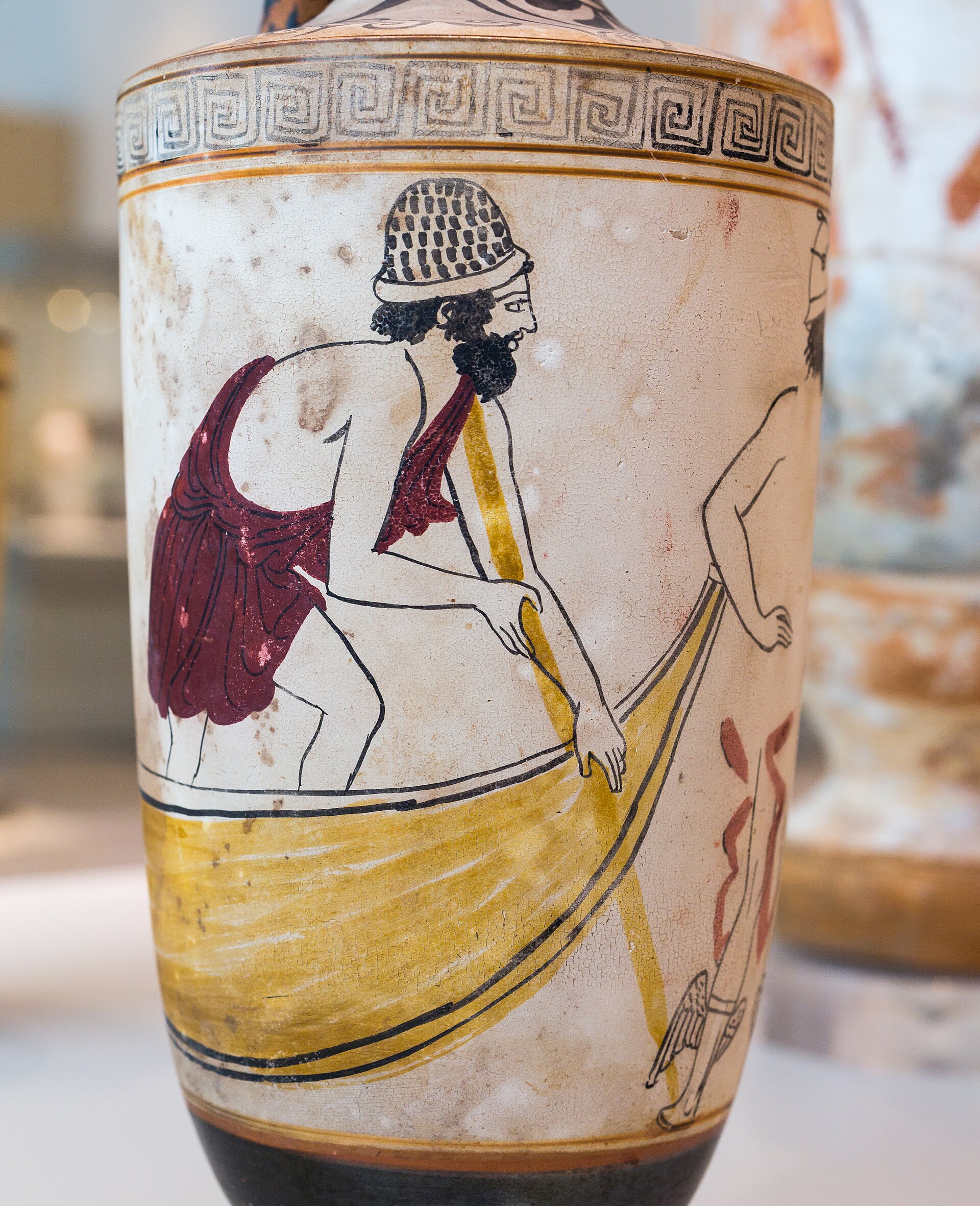
Somewhere along the marshy banks of the Acheron, or in some accounts the black waters of the Styx, an old man waited with a pole in his hand and a boat at his feet. He was Charon, ferryman of the Greek underworld, and his job was singular: to carry the souls of the properly buried dead across the river that divided the living world from the realm of Hades.
His fee was modest but non-negotiable — a low-value coin, an obolos, which mourners placed in or near the mouth of the deceased, or set beside the urn holding their ashes. Archaeology has confirmed this practice again and again: these small 'Charon's obols' turn up in graves across the Greek world, silent evidence of a belief taken seriously enough to shape burial customs.
Those who lacked the coin, or who had never received proper funeral rites, faced a grim fate. According to Virgil's Aeneid, such souls were forced to wander the near shores of the Styx for a hundred years before Charon would finally let them cross. He was not a figure who bent easily; ancient writers describe him as sordid and irascible, an old ferryman with a filthy beard, eyes like hollow furnaces on fire, and a girdle stained with grease.
The name Charon itself has never been fully explained. Some scholars connect it to charopós, a poetic word meaning 'flashing' or 'amber-eyed', suggesting his fiery gaze. The historian Diodorus Siculus even claimed the ferryman and his name had been imported from Egypt. He first appears in the fragmentary epic Minyas, possibly as early as the 6th century BC, already established as a figure of the underworld's threshold.
Charon was not reserved only for the dead. Myth allowed a few living mortals to cross his river and return — Heracles and Aeneas both made the journey there and back, extraordinary exceptions to a rule that otherwise held firm. In one striking scene from Seneca's tragedy Hercules Furens, Charon orders Heracles to halt, but the hero simply overpowers the ferryman with his own pole and forces his way aboard.
More from Mythology

The Doctor Who Sang a Nation Into Being
A country doctor rode into the forests of Karelia armed with nothing but a notebook — and rode out with the soul of a nation.

The Boat That Carried the Sun
Every sunset, the ancient Egyptians believed, the sun climbed into a boat and sailed straight into the realm of the dead — only to fight a monstrous serpent before dawn could return.

The Wild Man of the Snows
At 21,000 feet, a colonel found tracks in the snow that he blamed on a wolf — but his guides knew better, and gave the world a name that would echo for a century.

The Knight Who Went Mad for Love: Orlando Furioso
A hero so devoted to duty he was Charlemagne's greatest paladin loses his mind—not to a sword wound, but to heartbreak. To cure him, a friend must ride a flying horse to the Moon.

The Book That Turned the World Into Myth
A poet condemned to exile spent his final years in Rome finishing a poem that would outlive empires—a poem about nothing standing still, not gods, not lovers, not even the shape of a man.

Paradise Lost: Milton's Rebel Angel
A blind poet, dictating verses in the dark, dared to explain the ways of God to men — and in doing so, made Hell's ruler unforgettable.