The Ghost Ship That Never Made Port
A storm off the Cape of Good Hope, a captain's furious oath, and a ship that sailors swear still sails these seas today. What began as a sailor's superstition became one of the sea's most enduring nightmares.
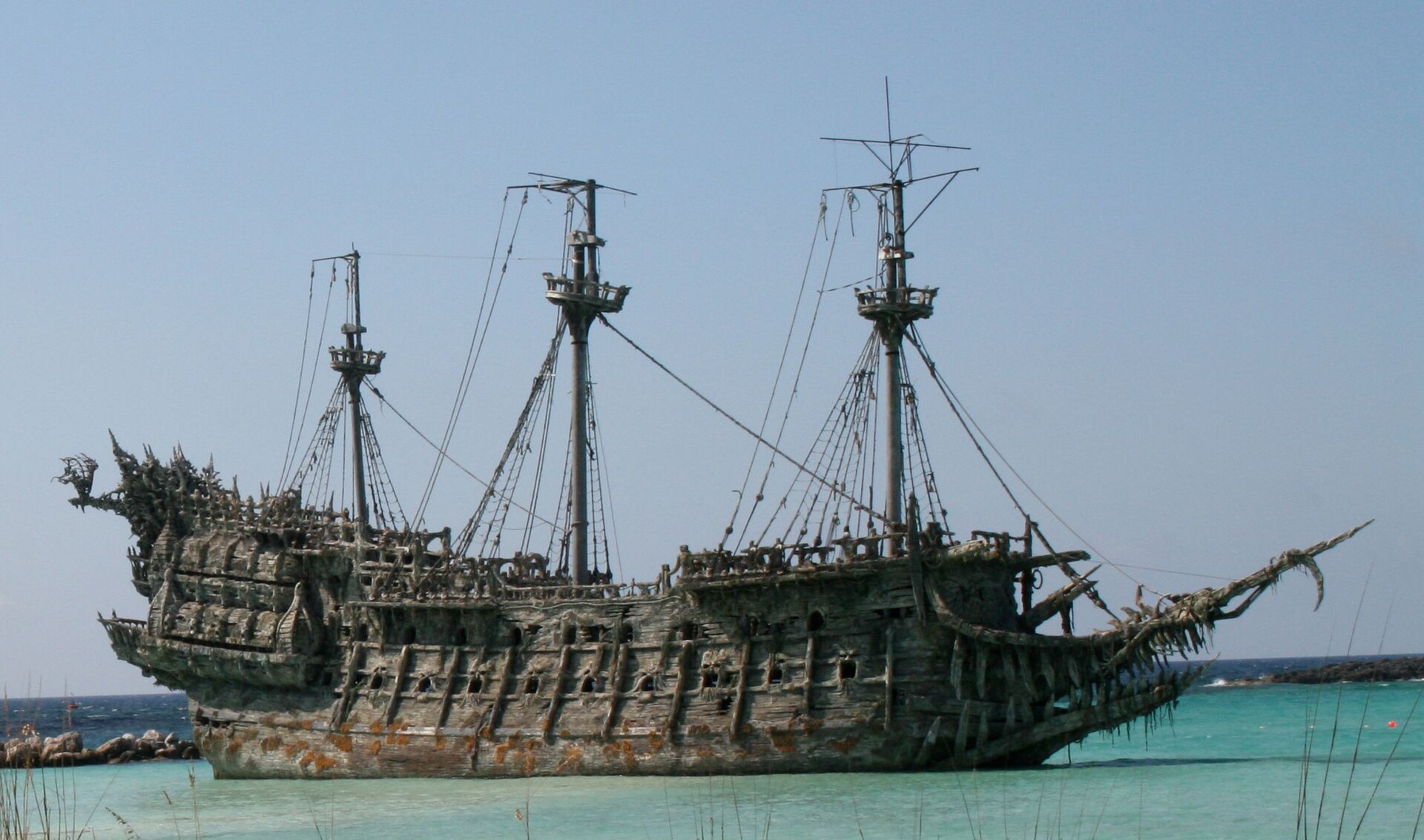
The legend likely began in the 17th-century Golden Age of the Dutch East India Company, when Dutch ships ruled the trade routes and Dutch maritime power was at its height. Somewhere in that world of fortune and peril, sailors began whispering about a ship that could never reach harbor — a vessel doomed to sail the ocean forever.
The oldest surviving version of the tale dates only to the late 18th century, though the superstition it drew on was clearly older. In his 1790 account of thirty years and more spent at sea, Travels in various part of Europe, Asia and Africa during a series of thirty years and upward, John MacDonald recorded sailors claiming to have seen the Flying Dutchman during a storm, saying the ship had once tried to reach the Cape in bad weather, failed to find a pilot, and was lost — and that ever since, her vision appears in foul weather.
Five years later, an account attributed to George Barrington gave the story more shape: a Dutch man-of-war lost off the Cape of Good Hope, every soul aboard perished, and her sister ship later spotting what looked like the same vessel bearing down on them in a storm before it dissolved into cloud. From this telling, Barrington wrote, the phantom earned its name — and English sailors picked up the fear from the Dutch.
John Leyden's 1803 poem Scenes of Infancy added a darker layer: the crew, he wrote, had committed some dreadful crime in navigation's early days, been struck by pestilence, and condemned to haunt the ocean until their penance ended. Thomas Moore, writing in 1804, placed a similar ghost-ship in the north Atlantic, describing a gloomy bark sailing full-sailed though no wind blew.
Sir Walter Scott, writing in 1812, was the first to cast the ship as a pirate vessel loaded with stolen wealth, aboard which murder and piracy had been committed — an omen mariners considered the worst possible. Some accounts point to a real 17th-century Dutch captain, Bernard Fokke, famed for the astonishing speed of his voyages between the Netherlands and Java, as a model for the doomed captain — sailors suspected he'd struck a bargain with the Devil.
More from Mythology

The Doctor Who Sang a Nation Into Being
A country doctor rode into the forests of Karelia armed with nothing but a notebook — and rode out with the soul of a nation.

The Boat That Carried the Sun
Every sunset, the ancient Egyptians believed, the sun climbed into a boat and sailed straight into the realm of the dead — only to fight a monstrous serpent before dawn could return.

The Wild Man of the Snows
At 21,000 feet, a colonel found tracks in the snow that he blamed on a wolf — but his guides knew better, and gave the world a name that would echo for a century.

The Knight Who Went Mad for Love: Orlando Furioso
A hero so devoted to duty he was Charlemagne's greatest paladin loses his mind—not to a sword wound, but to heartbreak. To cure him, a friend must ride a flying horse to the Moon.

The Book That Turned the World Into Myth
A poet condemned to exile spent his final years in Rome finishing a poem that would outlive empires—a poem about nothing standing still, not gods, not lovers, not even the shape of a man.

Paradise Lost: Milton's Rebel Angel
A blind poet, dictating verses in the dark, dared to explain the ways of God to men — and in doing so, made Hell's ruler unforgettable.