The Giant Nobody Could Finish — Until Michelangelo
For nearly forty years a colossal block of marble lay abandoned in a cathedral yard, ruined by two failed sculptors and the weather. Then a 26-year-old took it on.
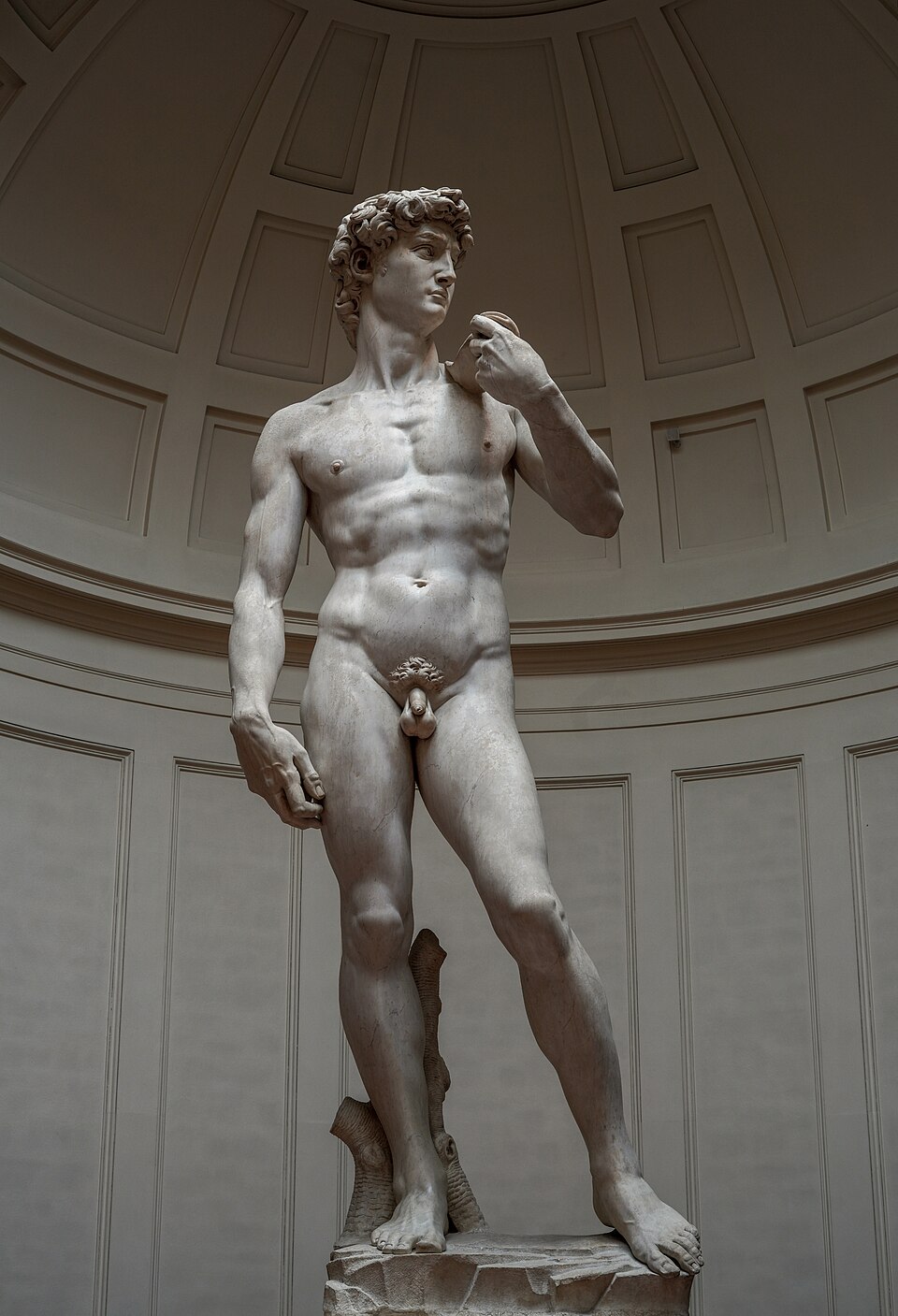
In 1500, an inventory of the Florence Cathedral workshops recorded a strange, sad entry: 'a certain figure of marble called David, badly blocked out and supine.' The stone in question, a huge slab known as il gigante, had been sitting exposed to rain and sun in the cathedral yard for a quarter of a century, a costly failure nobody dared touch.
Its story began decades earlier. The Operai del Duomo, the twelve-member body overseeing construction of Florence's cathedral, had long planned a series of twelve colossal Old Testament prophet statues for the cathedral's roofline buttresses. Donatello made the first, a terracotta Joshua, in 1410. In 1464, the Operai commissioned a young David from Agostino di Duccio, intended as a symbol of Florence itself. Agostino traveled to Carrara in 1465, selected an enormous block of bianco ordinario marble from the Fantiscritti quarry, and began shaping the torso, legs, and feet — but his work stopped abruptly when his master Donatello died in 1466.
In 1476, Antonio Rossellino was hired to resume the sculpture, but that contract was rescinded almost immediately, and the block was left neglected once more. For the Operai, this was no small matter: transporting and quarrying such an enormous piece of marble represented enormous cost and labor, and letting it rot in a courtyard was a waste they could ill afford, yet no one seemed capable of finishing it.
By 1501, with the block still lying idle, the Operai decided to act. They ordered il gigante raised upright so that an experienced master could examine it and judge whether anything could still be made of it. Leonardo da Vinci was consulted, and Andrea Sansovino also hoped for the commission. But it was Michelangelo, only 26 years old, who persuaded the Operai that he could finish what two sculptors before him had abandoned.
On 16 August 1501, Michelangelo received the official contract, written in Latin, naming him sculptor to the cathedral and charging him to 'make, finish and bring to perfection the male figure known as the Giant, nine braccia in height, already blocked out in marble by Maestro Agostino... and now stored in the workshops of the Cathedral.' He was given two years to complete it, a monthly salary of six florins, and a workspace behind the Duomo. He began carving on 13 September 1501, a month after signing.
More from Art

The Painting With No Foreground
A single robed figure stares out at an empty grey sea — and the emptiness itself became a scandal. When it was unveiled in Berlin in 1810, no one knew quite what to do with it.

The Painter Who Chased the Light
For a few purple minutes each evening, an American exile knelt in an English garden and raced the dying sun to paint two little girls lighting lanterns. It took him two years to finish.

When a President Became a God
Look straight up inside the U.S. Capitol dome and you will find George Washington enthroned among the clouds, surrounded by goddesses — the founding father transformed into myth.

Marble Brought Back to Life
A corpse asleep, a wing barely brushing her skin — and marble somehow learns to breathe. This is the moment Antonio Canova dared to carve.

The World Turned Upside Down
Look closely at a sixteenth-century Flemish village and you'll find a man biting a pillar, another carrying daylight in a basket, and a wife slipping a blue cloak over her husband's shoulders. Every gesture is a joke — if you know the language.

The Girl in the Glass Case
She stood two-thirds life size, dressed in a real tutu and human hair — and the critics who saw her in 1881 recoiled as if she were something obscene.