The Giant That Named the Colosseum
A bronze giant roughly 98 feet tall once stood watch over Rome — and its shadow may have given the world's most famous amphitheater its name.
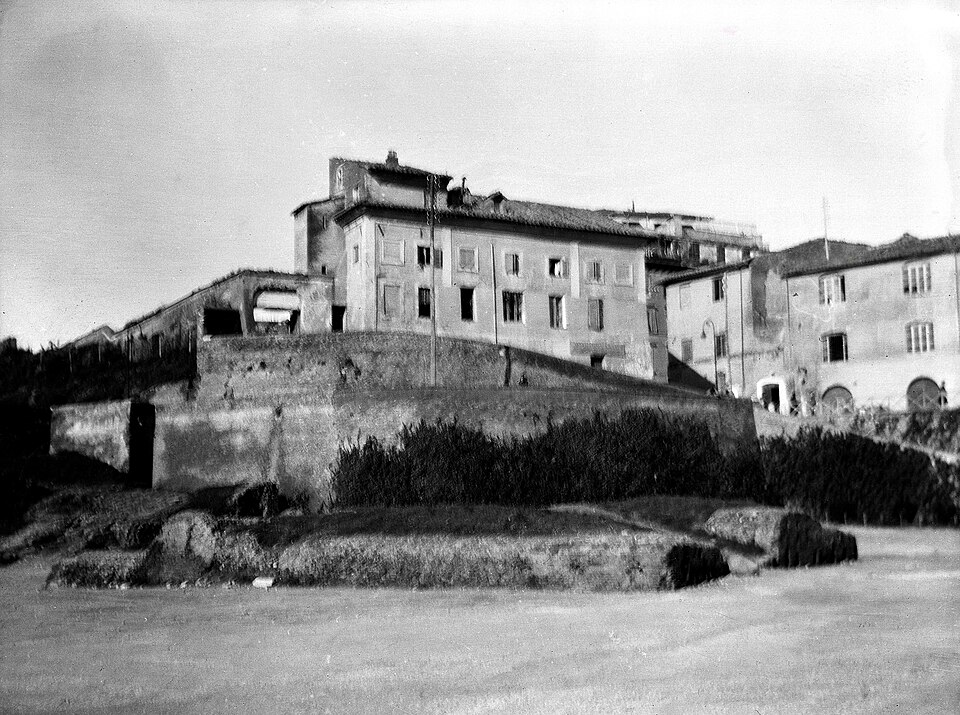
Sometime between AD 64 and 68, in the vestibule of Emperor Nero's sprawling Domus Aurea, a Greek architect named Zenodorus began raising a statue unlike anything Rome had seen. When finished, it stood roughly 30 metres tall — Pliny the Elder recorded its height as 106.5 Roman feet, or about 30.3 metres (99 feet), though some ancient sources pushed the figure as high as 37 metres. This was the Colossus of Nero, cast in bronze and placed just outside the main entrance of the palace, at the terminus of the Via Appia, within a large atrium of porticoes that divided the private villa from the city beyond.
The Domus Aurea itself was staggering in scale, stretching from the Palatine Hill across the Velian ridge to the Esquiline. The Colossus stood as its sentinel, a monument to Nero's own image and ambition. But Nero did not live to enjoy his giant for long — he died in AD 68, and with his death came a swift reimagining of the statue's meaning.
Emperor Vespasian, eager to erase associations with the disgraced Nero, added a radiate crown to the statue's head and rededicated it as the Colossus Solis, a tribute to the sun god Sol rather than to the fallen emperor. The transformation allowed the giant to survive politically, shedding its Neronian identity while keeping its physical form intact.
Around 128 AD, Emperor Hadrian decided the Colossus needed to move. He wanted to build the Temple of Venus and Roma on the site where it stood, so he ordered the statue relocated to a spot just northwest of the Flavian Amphitheatre. The task fell to the architect Decriannus, who accomplished the astonishing feat of moving the giant bronze figure using 24 elephants.
The statue's identity kept shifting with the whims of emperors. Commodus, notorious for his obsession with Hercules, had the head replaced so that the Colossus bore his own face in the guise of the demigod. After his death, the statue was restored, and so it remained for centuries afterward.
More from Art

The Painting With No Foreground
A single robed figure stares out at an empty grey sea — and the emptiness itself became a scandal. When it was unveiled in Berlin in 1810, no one knew quite what to do with it.

The Painter Who Chased the Light
For a few purple minutes each evening, an American exile knelt in an English garden and raced the dying sun to paint two little girls lighting lanterns. It took him two years to finish.

When a President Became a God
Look straight up inside the U.S. Capitol dome and you will find George Washington enthroned among the clouds, surrounded by goddesses — the founding father transformed into myth.

Marble Brought Back to Life
A corpse asleep, a wing barely brushing her skin — and marble somehow learns to breathe. This is the moment Antonio Canova dared to carve.

The World Turned Upside Down
Look closely at a sixteenth-century Flemish village and you'll find a man biting a pillar, another carrying daylight in a basket, and a wife slipping a blue cloak over her husband's shoulders. Every gesture is a joke — if you know the language.

The Girl in the Glass Case
She stood two-thirds life size, dressed in a real tutu and human hair — and the critics who saw her in 1881 recoiled as if she were something obscene.