The God Who Could Not Be Wounded
Every arrow in Asgard bent harmlessly around him — until a sprig of mistletoe found the one gap in his armor of oaths.
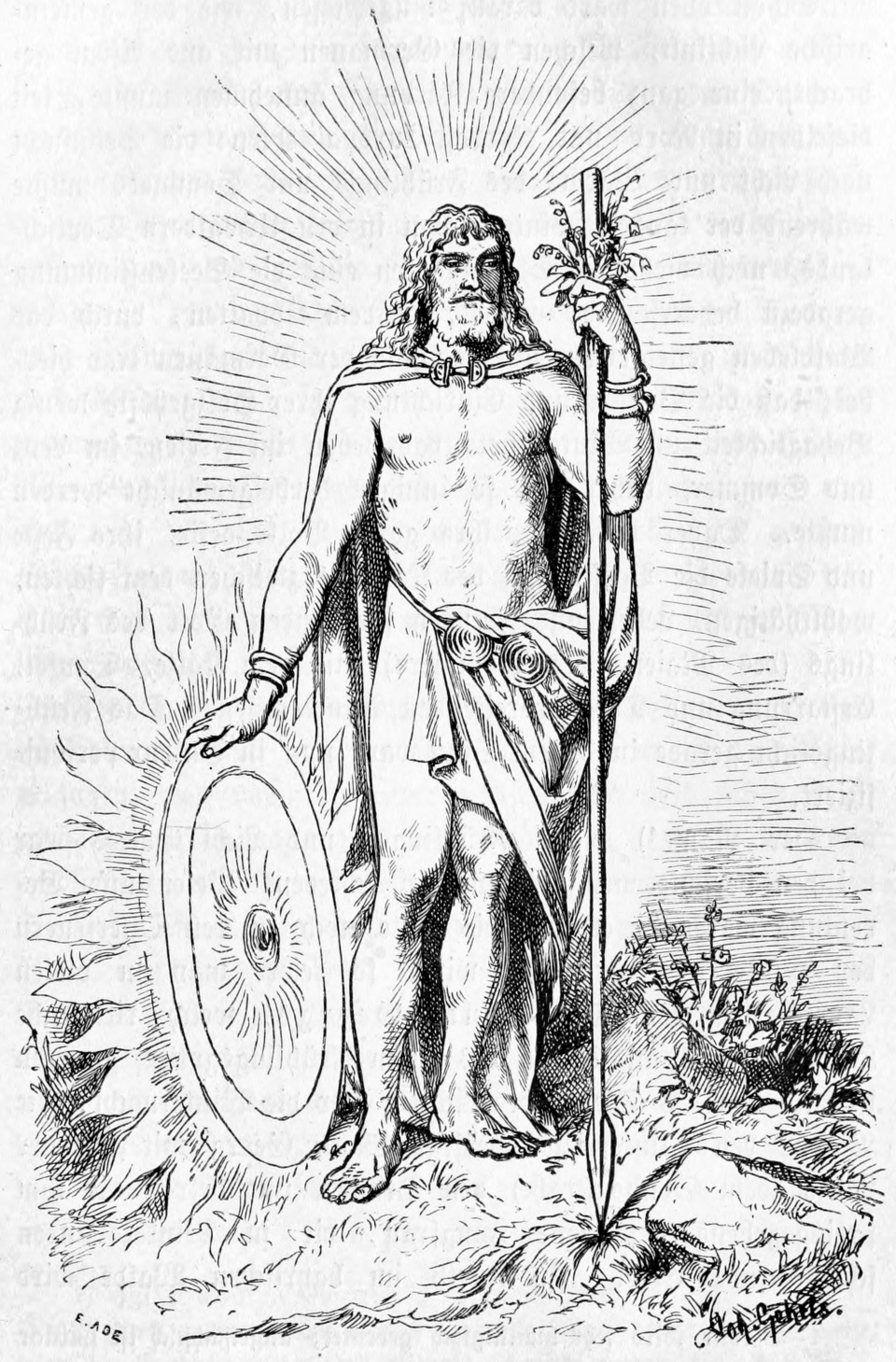
Baldr was, by every account that survives, the god the Norse world could least afford to lose. Son of Odin and Frigg, younger brother to Thor and half-brother to Hödr, he lived in Breidablik, a hall so beautiful that no place in the nine worlds was said to surpass it. He sailed the greatest ship ever built, Hringhorni. He had married Nanna, and together they had one son, Forseti. Sources agree he was loved by gods and mortals alike — warm, wise, eloquent, radiantly handsome — with only one notable exception to that universal affection: Loki.
The trouble began with dreams. Baldr started seeing visions of his own death, disturbing enough that Odin rode out to investigate. He went to Hel, the realm of the dead, and there spoke with a woman who told him preparations were already underway to receive Baldr. In the Eddic poem Baldrs draumar, Odin travels in disguise as Vegtam to a völva's grave, waking her with magic to demand answers about who will kill his son. The prophecy she gives is blunt: Höðr, Baldr's blind brother, will be the one to strike him down.
Frigg, hearing of the danger, took matters into her own hands. She went to every living thing — every plant, metal, stone, and creature — and extracted an oath that none would harm her son. The gods, delighted by this apparent invulnerability, turned it into sport, hurling weapons and objects at Baldr for amusement, watching them bounce harmlessly away. It became, by every account, a kind of game the Æsir played, confident in Frigg's protection.
But Frigg had forgotten one small, seemingly insignificant plant: mistletoe. Loki, ever alert to weakness, discovered this oversight. He fashioned a dart or arrow from mistletoe and brought it to Höðr, the blind god, who had no part in the games because he had nothing to throw. Loki guided his aim. The mistletoe struck Baldr in the heart, and he died instantly.
Grief swept through Asgard unlike anything before. Baldr was mourned not only by the Æsir but by all living things — a measure of how deeply his loss registered. Desperate, Odin sent Hermóðr riding on his own horse, Sleipnir, into Hel to plead for Baldr's return. Hel set a condition: if every single thing in the world would weep for Baldr, he could come back. And nearly everything did weep — until one giantess, Þökk, refused. Þökk, it turned out, was Loki in disguise, and so Baldr remained in the realm of the dead.
More from Mythology

The Doctor Who Sang a Nation Into Being
A country doctor rode into the forests of Karelia armed with nothing but a notebook — and rode out with the soul of a nation.

The Boat That Carried the Sun
Every sunset, the ancient Egyptians believed, the sun climbed into a boat and sailed straight into the realm of the dead — only to fight a monstrous serpent before dawn could return.

The Wild Man of the Snows
At 21,000 feet, a colonel found tracks in the snow that he blamed on a wolf — but his guides knew better, and gave the world a name that would echo for a century.

The Knight Who Went Mad for Love: Orlando Furioso
A hero so devoted to duty he was Charlemagne's greatest paladin loses his mind—not to a sword wound, but to heartbreak. To cure him, a friend must ride a flying horse to the Moon.

The Book That Turned the World Into Myth
A poet condemned to exile spent his final years in Rome finishing a poem that would outlive empires—a poem about nothing standing still, not gods, not lovers, not even the shape of a man.

Paradise Lost: Milton's Rebel Angel
A blind poet, dictating verses in the dark, dared to explain the ways of God to men — and in doing so, made Hell's ruler unforgettable.