The Hound of Culann: Cú Chulainn's Fury and Fate
A boy killed a guard dog with his bare hands and offered his own life in its place — and from that moment, a legend was born who would defend a kingdom alone.
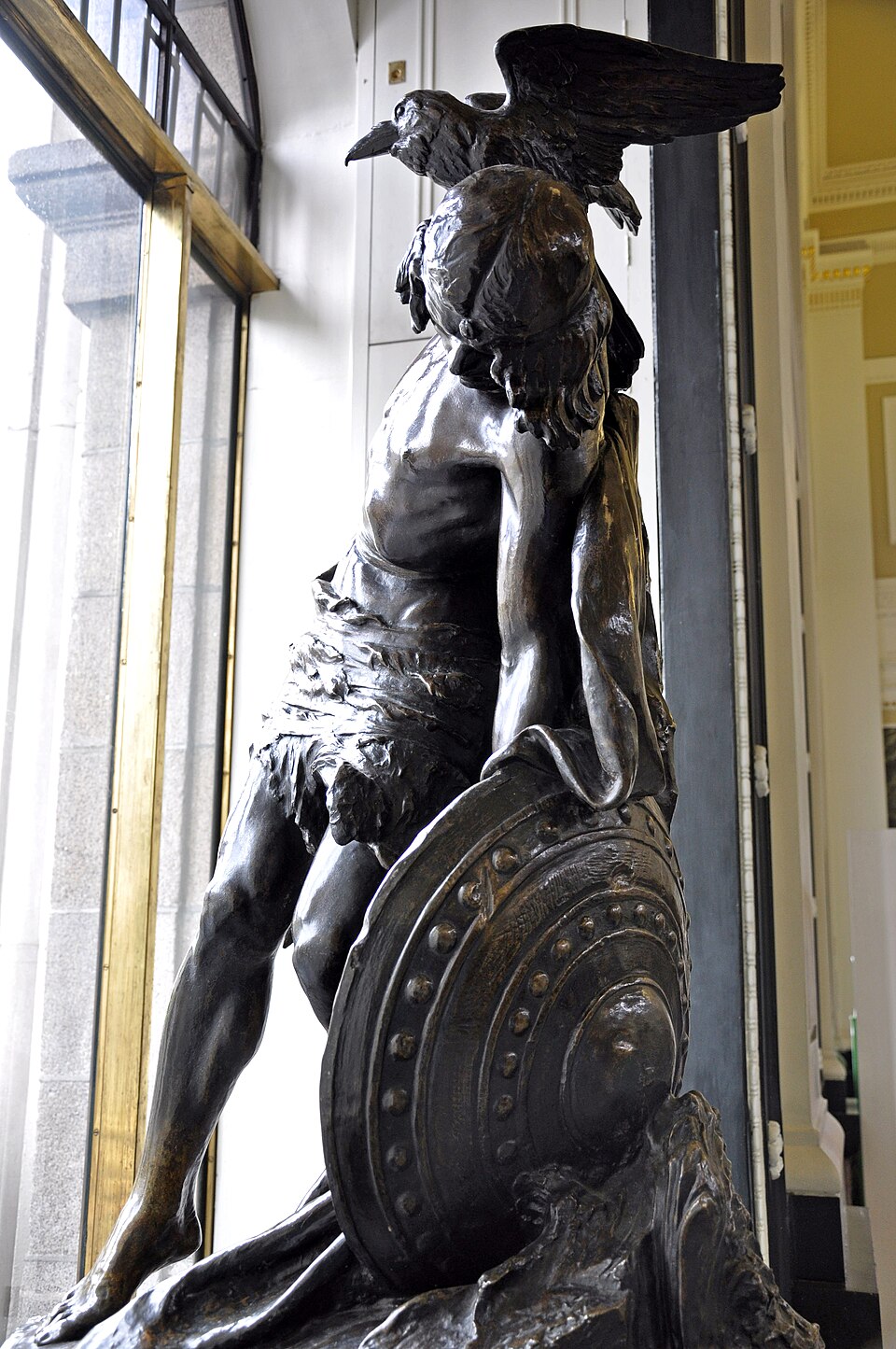
Long before he became Ulster's most feared warrior, he was simply Sétanta, a child so eager to join the boy-troop at Emain Macha that he set off alone, ignorant of the custom that required him to first ask for the boys' protection. When he ran onto their playing field unannounced, the boys took his sudden arrival as a challenge and attacked him — and he answered with the ríastrad, the terrifying battle frenzy that would define his life, beating fifty boys single-handed before Conchobar mac Nessa, King of Ulster, intervened.
His birth was itself woven from wonder and scandal. In the earliest version of the tale, his mother Deichtine was the daughter and charioteer of Conchobar, and she sheltered with the Ulstermen from a magical snowstorm in a house that vanished by morning, leaving behind a child and twin colts. The god Lug later revealed himself as the child's true father, and after complications of lineage and betrothal, Deichtine bore a son she named Sétanta. In the later and better-known version, Deichtine is instead Conchobar's sister, and Lug himself is revealed as her husband that night, the child born to her directly.
Either way, Sétanta was raised among many foster parents, each chosen for what they could offer him: Conchobar himself; Sencha mac Ailella, who taught him judgement and eloquent speech; the wealthy Blaí Briugu, who protected and provided for him; the noble warrior Fergus mac Róich, who cared for him and taught him to protect the weak; and the poet Amergin, who educated him alongside his wife Findchóem, who nursed him.
The name Cú Chulainn came later, and violently. As a boy, he killed the fierce guard dog belonging to a smith named Culann, acting in self-defense. Rather than face punishment, he offered to serve as Culann's guard himself until a new dog could be raised — and so he became known as Cú Chulainn, the 'Hound of Culann,' a name that could also be read as 'Culann's warrior.'
His martial education came from the warrior-woman Scáthach, who trained him and gave him the terrible spear Gáe Bulg, a weapon whose wounds could not be healed. It was prophesied that he would achieve everlasting fame but die young — a fate he accepted without flinching. At just seventeen, he proved the prophecy's first half true: single-handedly, he defended Ulster against the invading armies of Queen Medb of Connacht in the Táin Bó Cúailnge, the Cattle Raid of Cooley, one of the great epics of Irish mythology.
More from Mythology

The Doctor Who Sang a Nation Into Being
A country doctor rode into the forests of Karelia armed with nothing but a notebook — and rode out with the soul of a nation.

The Boat That Carried the Sun
Every sunset, the ancient Egyptians believed, the sun climbed into a boat and sailed straight into the realm of the dead — only to fight a monstrous serpent before dawn could return.

The Wild Man of the Snows
At 21,000 feet, a colonel found tracks in the snow that he blamed on a wolf — but his guides knew better, and gave the world a name that would echo for a century.

The Knight Who Went Mad for Love: Orlando Furioso
A hero so devoted to duty he was Charlemagne's greatest paladin loses his mind—not to a sword wound, but to heartbreak. To cure him, a friend must ride a flying horse to the Moon.

The Book That Turned the World Into Myth
A poet condemned to exile spent his final years in Rome finishing a poem that would outlive empires—a poem about nothing standing still, not gods, not lovers, not even the shape of a man.

Paradise Lost: Milton's Rebel Angel
A blind poet, dictating verses in the dark, dared to explain the ways of God to men — and in doing so, made Hell's ruler unforgettable.