The Look Back: Orpheus and the Song That Failed the Underworld
A grieving musician charmed death itself into mercy — but a single glance undid the miracle. This is the story of the price of doubt.
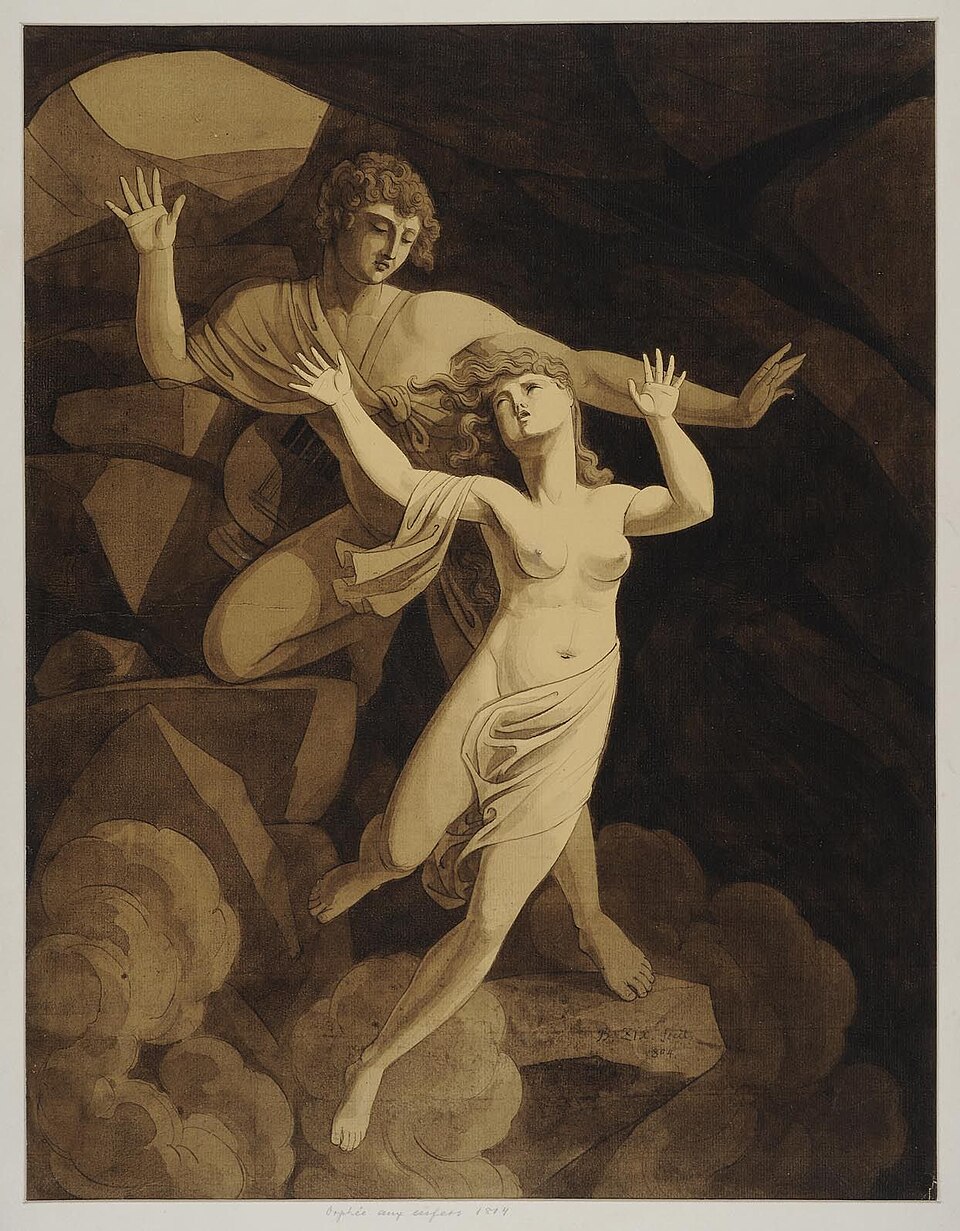
In the hills of Thrace, Apollo gave a young man named Orpheus a lyre, and with it, a gift no mortal had known before: music that nothing could resist, not wild beasts, not enemies, not even the dead. Orpheus was the son of Oeagrus and the Muse Calliope, though some said Apollo himself had fathered him. Whatever his origin, the songs he drew from the strings could still a storm or soften a heart of stone.
His love was Eurydice, a woman of beauty and grace. They married, and for a short while lived in the kind of happiness poets are wary of trusting. Even Hymen, the god summoned to bless their union, sensed something wrong — he predicted their perfection could not last.
He was right. Not long after, Eurydice wandered into the forest among the Nymphs. In one telling, the shepherd Aristaeus spotted her, was struck by her beauty, and chased her through the trees. In another, she was simply dancing with her companions on her wedding day, innocent of any pursuit. Whichever it was, a snake bit her, and she died where she fell.
Orpheus's grief became song, and his song moved everything in the world, living and dead, human and divine, until even the gods knew of his sorrow. Unwilling to accept the silence, he resolved to do what no mortal had dared: descend into Hades and bring his wife back through music alone.
Protected by the gods, he passed through the realm of shades, unrecognized ghosts drifting around him, until he reached the three-headed dog Cerberus, who — like everything else — could not resist his playing. He stood before Hades and Persephone themselves and played a song so full of sorrow that even the god of the dead was moved to pity.
More from Mythology

The Doctor Who Sang a Nation Into Being
A country doctor rode into the forests of Karelia armed with nothing but a notebook — and rode out with the soul of a nation.

The Boat That Carried the Sun
Every sunset, the ancient Egyptians believed, the sun climbed into a boat and sailed straight into the realm of the dead — only to fight a monstrous serpent before dawn could return.

The Wild Man of the Snows
At 21,000 feet, a colonel found tracks in the snow that he blamed on a wolf — but his guides knew better, and gave the world a name that would echo for a century.

The Knight Who Went Mad for Love: Orlando Furioso
A hero so devoted to duty he was Charlemagne's greatest paladin loses his mind—not to a sword wound, but to heartbreak. To cure him, a friend must ride a flying horse to the Moon.

The Book That Turned the World Into Myth
A poet condemned to exile spent his final years in Rome finishing a poem that would outlive empires—a poem about nothing standing still, not gods, not lovers, not even the shape of a man.

Paradise Lost: Milton's Rebel Angel
A blind poet, dictating verses in the dark, dared to explain the ways of God to men — and in doing so, made Hell's ruler unforgettable.